Horizon Walker Tier List (December 2025): A Real-Player Ranking Guide for Who to Build, Who to Skip, and Why the Meta Keeps Moving
If you’ve been playing Horizon Walker for more than a weekend, you’ve probably had the exact same moment I did: you hit a wall—maybe an event stage, maybe a rift/bounty route, maybe a “why is this boss suddenly deleting my squad?” kind of fight—and you realize you can’t brute-force your way through with “whoever looks cool.” You need a plan. And in a roster-based, turn-based RPG, the fastest way to get a plan is a horizon walker tier list you can trust… or at least a tier list that tells you why it ranks people the way it does.
Horizon Walker itself is a turn-based strategy RPG built by a Korean team with roots in the same talent pool that worked on Last Origin, which explains a lot about the game’s “tactical + fanservice + roster optimization” DNA. The global English rollout started in early November 2024 (initially as a beta-style launch for Android), and ever since then the English-speaking meta has been evolving fast—new units show up, balance shifts happen, and suddenly the character you thought was “mid” becomes a key piece in some disgusting combo.
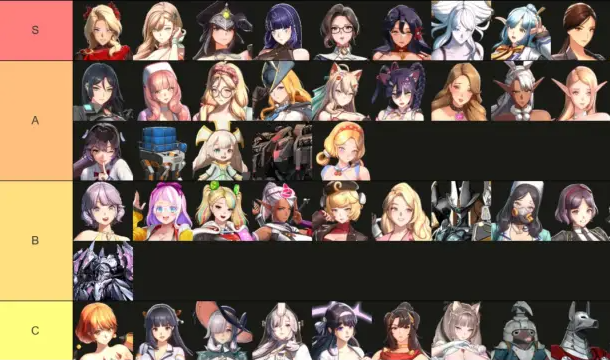
I. Why a Horizon Walker Tier List Matters (and why “just play favorites” eventually hurts)
Let’s be real: at the very beginning, you can absolutely play Horizon Walker like a vibe game. You pick a couple characters that look cool, you upgrade them, you clear early story maps, and you feel smart. Then the game starts asking you questions like, “Do you have reliable AoE coverage?” “Do you have a real taunt tank?” “Can you cleanse debuffs?” “Can you reposition without spending half your turn economy?” And suddenly your “favorites only” roster looks like a group project where nobody brought a calculator.
A tier list matters because Horizon Walker is one of those turn-based games where role compression is everything. A character who does damage and self-sustains and brings a shield or reposition tool is worth way more than a character who only hits hard. The harder content punishes one-dimensional kits. You’ll feel it in boss fights that demand survivability, in wave content that demands AoE and tempo, and in event modifiers that punish slow play.
Also, the meta shifts faster than people expect. The English playerbase has been in “catch-up mode” since the global expansion began, meaning guides and community rankings keep getting revised as more players test endgame loops. Every time a new Vanguard drops, people don’t just ask “Is she strong?” They ask “Does she invalidate my current best team?” That’s when tier lists become less like “opinions” and more like “resource management tools.”
And finally—this is the part nobody wants to admit—tier lists protect your currency. Pulling and building a unit is expensive. Enhancement materials, gear, weapon priorities, trait rerolls… it’s all a sink. If you invest wrong early, you don’t just lose time. You lose the ability to pivot when the game hands you a genuinely meta-defining unit.
II. Tier Ranking System Explained (S to D, but in plain English)
Before we start throwing letters at characters, we need to agree on what the letters actually mean in Horizon Walker, because different lists use the same letters to describe totally different things.
S-Tier in this guide means: “If you own them, your account feels easier.” These are characters that either define the meta outright or slot into almost any composition without feeling like dead weight. They’re usually strong in story/event progression and scale well into harder modes. They also tend to have kits that solve problems, not just deal damage.
A-Tier means: “You’re not missing out if you build them.” These are excellent units, often with one limitation—maybe they need specific teammates, maybe they want a certain weapon, maybe they’re slightly less universal than S-tier. But if you don’t have the S-tier option, A-tier is usually the next best investment.
B-Tier means: “Good enough, sometimes great, but not always.” These are units that can absolutely carry you through early or midgame, and some of them become monsters in niche comps. The issue is consistency: they may fall off in certain content or require more setup than your roster can afford.
C-Tier means: “Playable, but you need a reason.” C-tier units can still do work if you’re constrained by pulls, if you need a certain damage type, or if a specific event gimmick favors them. But in a vacuum, they’re behind the curve.
D-Tier means: “Only build if you love them or the game forces you.” D-tier doesn’t mean unusable. It means opportunity cost. The resources you spend building them could have made your main team significantly stronger.
One important caveat: Horizon Walker’s roster evaluations vary by mode. Some tier lists focus on “Map Clear / Mission” performance (story, events, wishes, bounties, rifts). Others rank based on “Special Ops” style content or overall endgame. That’s why you’ll see disagreements—and why I’ll keep separating “general progression” value from “mode-specific” value as we go.
III. S-Tier Vanguards (Meta-Defining Powerhouses)
Let’s start with the names you see constantly. These are the characters where, if someone says “Horizon Walker is easy,” there’s a decent chance they own at least one of these and built them correctly.
Olivia (the “just build her” answer to half the game)
Olivia is the face of “tier list practicality” in Horizon Walker. Multiple community rankings consistently place her at or near the top for map clear and general content, and for good reason: she’s the kind of carry who makes stage clearing feel automatic once her build stabilizes. As a player, what I notice most is that Olivia doesn’t just deal damage—she controls the pace. She’s the unit you bring when you want to reduce complexity: fewer turns wasted, fewer resets, fewer “why did my team suddenly die?” moments.
If you’re new, Olivia is also friendly because she rewards straightforward investment. You don’t need an advanced “five-piece combo” to feel her value. You build her, you protect her with a tank or positioning, and she starts printing clears. That’s why even players who disagree about other ranks often still agree Olivia is “the safe recommendation.”
Fammene (the tempo queen who makes teams feel faster)
Fammene is one of those characters that changes how your whole squad feels, because she contributes to tempo and survivability in ways that don’t always show up in raw damage charts. She’s been placed among top tiers in more recent community lists, especially those emphasizing overall value. As a player, Fammene is the kind of unit you notice after you remove her: suddenly everything is slower, your team takes more hits, and you realize she was quietly carrying the “smoothness” of your runs.
Her kit identity is basically: “I hit, I protect, I keep the machine moving.” In turn-based games, that’s priceless.
Yvonna / Juha / Nari / Valeta (the “high-end staples” group)
This cluster is where player experience really matters, because these units tend to have strong kits but shine differently depending on your account state. Some are better in pure map clear, some scale harder with gear, some become disgusting with faction synergy, and some feel “fine” until you learn the correct play patterns.
Valeta in particular is often valued for how she blends offense and defensive utility—shielding and sustain mechanics can make certain stages go from “random wipe risk” to “stable farm.” You’ll see her in high-tier placements often for that reason.
The best way I can explain this group: they’re the units that stop being “characters” and start becoming “tools.” You don’t pick them because you’re bored—you pick them because your next goal requires their specific brand of power.
Everette (EX rarity AoE that makes waves content feel illegal)
Everette is the classic AoE carry archetype: huge wave pressure, strong area coverage, and the kind of kit that makes you feel like you’re cheating when content spawns enemies in neat lines. She’s commonly discussed as an EX rarity powerhouse, and her AoE tools are a big part of why.
As a player, Everette’s biggest selling point is consistency. When you’re in content where you don’t want to “solve puzzles,” you want to delete waves. Everette is the answer. The tradeoff is that AoE carries sometimes feel less impressive in single-target boss phases unless the kit also provides other utility or your team can support the damage curve.
A quick note about “MC (Main Character)” and why some lists rank them high
Some tier lists place the Main Character surprisingly high because the MC tends to be accessible and flexible, and the game sometimes rewards investment in the MC with progression-friendly scaling. If you’re early in the game and your pulls are unlucky, a strong MC build can be the difference between “stuck” and “progressing while you wait for better summons.”
IV. A-Tier Vanguards (Strong Competitive Choices You Won’t Regret Building)
A-tier is where most players actually live, especially if you’re not rerolling aggressively. And honestly? Horizon Walker is generous enough with strategy depth that A-tier teams can clear a lot—if you build intelligently.
Ines (high single-target damage, clean boss pressure)
Ines is the kind of unit that feels straightforward in the best way: when you need one enemy gone, she helps make that happen. If you’re stuck on bosses or elites, single-target pressure is often what you’re missing, not more AoE.
What makes Ines feel A-tier rather than “just good” is that she tends to contribute reliably without demanding your whole roster bend around her. She’s not the queen of everything, but she’s the queen of making problem targets disappear.
Headless Knight (Unknown faction bruiser energy, great when you need wide threat)
Headless Knight shows up frequently as a strong option because the kit concept is simple: hit hard, hit wide, threaten multiple enemies. Players like units that reduce risk, and wide coverage reduces risk.
In actual play, Headless Knight often feels best when your other pieces can protect the unit long enough to do the job, because “wide sweep” characters sometimes attract more attention than they can comfortably survive without support.
TX-Manticore (the flexible pick that can plug holes)
TX-Manticore is the sort of character that becomes more valuable the more you understand your roster’s gaps. Early on, you may not feel the difference between “good kit” and “perfect kit.” Later, you start noticing that certain units are just easier to slot in.
That’s where TX-Manticore tends to shine: a useful tool that doesn’t demand a weird team tax.
Nyemset (the tank everyone eventually respects)
Nyemset is constantly brought up as one of the best tank-style characters because of how many survival problems she solves at once—provoke/aggro control, emergency sustain, and battlefield stability. If your team is dying, it’s often not because your DPS is weak; it’s because the enemy is allowed to hit whoever it wants. A real tank changes the rules.
As a player, Nyemset is also emotionally comforting. You can take fights you “shouldn’t” be able to take because she gives you time to play turns. Time is the resource that lets you win.
Griselda (Arcane Elemental burst, accuracy tricks, “delete button” energy)
Burst mages live and die by reliability. If you miss, you waste a turn; if you hit, you swing the whole fight. Griselda’s value often comes from how her burst feels dependable and how quickly she can convert turns into threat removal.
If your roster lacks magical/immaterial damage coverage, characters like Griselda become more than “nice”; they become “necessary.”
Yui Matsumoto / Efreeti / Matrotho / Vlissing (the “strong but needs context” group)
This is the part of A-tier where you’ll see the most disagreement across tier lists, because these units are very sensitive to mode and team construction. Some players rank them higher because they focus on map clear stability; others rank them lower because they value pure carry potential.
Vlissing is a special mention because healing + utility can be underestimated by players who haven’t hit the content that punishes mistakes. In difficult stages, a healer with extra effects (cleanse, AoE healing, supportive damage lines) can be worth more than another DPS.
V. Character Abilities & Skill Mechanics (How Horizon Walker Actually “Grades” Units)
Tier lists make more sense when you understand what the game system rewards.
Active abilities: why “two skills” matters more than it sounds
Most Vanguards have two primary active abilities. That sounds basic—until you realize Horizon Walker often builds identity around how those two skills interact. A unit with one “damage” skill and one “mobility/utility” skill usually feels better than a unit with two pure damage buttons, because the second unit becomes predictable and easy to counter by stage design.
In practice, when I evaluate a unit, I ask: does one of the skills solve a problem that my team commonly faces? If yes, that unit’s tier value rises fast.
Damage types: the secret reason some “lower tier” units still matter
Horizon Walker’s damage types (heat, slash, pierce, immaterial) matter because certain enemies and modifiers punish you for relying on one type. You can run a slash-heavy roster for weeks and feel fine, then an event shows up where slash feels awful and suddenly your “B-tier heat unit” becomes your MVP.
That’s why I never fully dismiss lower tiers—because damage coverage is a real strategic asset.
Crowd control and debuffs: why utility units sometimes out-rank bigger DPS
Stealth, shields, stuns, marking/nomination mechanics, purify—these effects decide fights when raw stats stop being enough. A unit that can reliably apply “disable counterattacks” or “force targeting” can trivialize fights that would otherwise require much higher gear.
So when you see a healer or tank ranked high, don’t assume it’s “because they heal.” It’s because they compress multiple utility roles into one slot.
VI. Faction System & Character Types (Synergy Isn’t Flavor—It’s Math)
Factions in Horizon Walker aren’t just lore labels. They influence how well certain units slot together, and sometimes how certain mechanics chain.
Elf kits often lean into ranged or magic-focused play patterns.
Human tends to feel balanced, with reliable frontline options.
Catsidhe often brings stealth/agility identity and reposition play.
Arcane Elemental leans into magical AoE and burst.
Unknown is the wildcard bucket—hybrid roles and unusual mechanics.
What this means in real play is simple: when two units share faction synergy or ability overlap that makes turn economy cleaner, your runs become smoother. And in turn-based games, “smooth” usually equals “strong.”
VII. Rarity Breakdown & Acquisition (EX Isn’t Everything, But It’s Usually Something)
EX rarity is often the headline because these units tend to have higher ceilings and more unique kits. But rarity isn’t a guarantee of usefulness. An EX unit with awkward skills can be less valuable than an SS unit with clean utility.
The real question is: how much does rarity translate into role dominance? Some EX units are dominant because they do something no one else does (or do it far better). Others are “strong but replaceable,” which matters a lot if you’re budgeting pulls.
Also, don’t ignore weapon/equipment synergy. An EX kit may feel underwhelming until you pair it with the right weapon effects or gear stats, and then it spikes.
VIII. Team Building & Composition Strategies (How I Build Teams That Actually Clear Content)
Let’s talk about practical team building—because tier lists don’t win fights, teams do.
Tanks: provoke tanks vs shield tanks (and why Nyemset is so loved)
If you’re progressing, a provoke/aggro control tank is usually the safest foundation. Nyemset is often cited as a top tank option because she does what tanks are supposed to do: keep your DPS alive long enough to work. If you don’t have Nyemset, you can use alternative tanks like Platina or other defensive units, but you’ll notice the difference in stability.
A shield tank can also work, but shield-based defense sometimes feels “swingy” if enemies hit multiple times or apply debuffs. Aggro control tends to be more consistent.
Damage dealers: single-target vs AoE (build both if you can)
You need one reliable AoE clearer and one reliable boss killer eventually. Everette-style units help in wave content; Ines/Matrotho-style units help in boss pressure. If you only build AoE, bosses feel miserable. If you only build single-target, waves overwhelm you.
Supports and healers: why Vlissing-type units become endgame staples
Healers are the difference between “I cleared once” and “I can farm this without sweating.” Vlissing is often highlighted as a strong healing support with offensive utility, which is exactly what you want: healing that doesn’t cost you your whole tempo.
Team cost management (the hidden limiter)
Some modes restrict how many heavy-cost units you can field, which makes “budget efficiency” a real tier factor. That’s why some lists rank “cheap but strong” units surprisingly high—they let you fit more power into limited slots.
IX. Game Mode-Specific Tier Rankings (Why One Global Tier List Is Never Perfect)
This is where many tier lists become misleading: they pretend one letter grade applies everywhere.
For Map Clear / Mission content (story, events, wishes, bounties, rifts), several community rankings consistently highlight top performers like Olivia (and sometimes Yui and Vlissing) as premium choices for stable clearing. That makes sense because map clear rewards consistency, wave handling, and survivability.
For Special Operations style content, value often shifts toward units with specific counters, reliable control, or burst windows. A unit that is “S-tier for story” might only be “A-tier for Special Ops” if the mode punishes their play pattern.
For “fun modes” (some communities call it dopamine-style rankings), the tier list becomes less about raw strength and more about “who feels satisfying.” I actually like those lists, but I treat them as entertainment, not optimization.
X. B-Tier Viable Options & Budget Teams (Where Most F2P Accounts Learn the Game)
B-tier in Horizon Walker is not “trash.” It’s “you need to play smarter.”
Luise (SS rarity fire/heat damage, useful early and sometimes beyond)
Luise is a classic early-game carry because heat damage and AoE-ish tools can smooth progression. She’s also often easier to access than the EX meta picks, which matters a lot when your roster is still forming.
Araha (SS rarity ranged DPS with anti-counter and stealth tools)
Araha’s value jumps in content where counterattacks punish you. “Disable counter” effects are the kind of utility that doesn’t sound sexy until it saves your run five times in one night.
Lisandria (hybrid healer/tank identity)
Hybrids are weird: they’re rarely “best in slot,” but they are often “good enough to keep you moving.” That’s valuable early when you don’t own a perfect healer and a perfect tank yet.
Nonoha (movement and shield utility)
Movement abilities matter more than people expect, especially when stage geometry and targeting rules create awkward turns. A unit that fixes positioning problems can out-perform their “damage tier” by a lot.
If you’re building budget teams, the key is to stop chasing perfect roles and start chasing coverage. One tank-ish unit, one AoE-ish unit, one boss-ish unit, one sustain-ish unit—then improve each slot over time.
XI. C-Tier & D-Tier Analysis (When to Invest, When to Walk Away)
I’m going to say something that saves players a lot of regret: C-tier and D-tier units are not “bad,” they’re “expensive.” If you build them, you are paying a resource tax for lower efficiency.
C-tier units often have a narrow niche: maybe they’re decent in one specific mode, or they counter one annoying mechanic, or they’re simply outclassed but still functional. If your account lacks options, C-tier can be your bridge.
D-tier units, most of the time, are “build only if you love them.” And that’s fine. This is a game. But if you’re asking for a tier list because you want to progress efficiently, you don’t want to spend your limited materials on units that a future pull will replace instantly.
One important detail: because meta shifts happen, some characters drift up and down tiers depending on new releases. So I don’t recommend permanently writing off a unit. I recommend not investing heavily until you see a reason.
XII. EX Weapons & Equipment Impact (Why Some Tier Disagreements Are Actually Gear Disagreements)
Here’s a sneaky reason tier lists conflict: some lists assume you have optimal weapons; others assume you don’t.
In Horizon Walker, a unit can jump a whole tier if an EX weapon turns their kit from “good” to “broken.” Likewise, a strong kit can feel mediocre if the unit is under-geared and missing key stats.
My practical investment priority as a player usually looks like this:
Build one stable main carry
Build one stable tank
Build one stable sustain/support
Then start improving weapons and gear for the core trio
Only then expand into specialized units
Enhancement material farming is a long game. Don’t burn everything on five half-built characters. Two well-built characters usually outperform five mediocre ones.
XIII. New Player Guide & Reroll Recommendations (How to Start Without Wasting Weeks)
If you’re a new player and you’re willing to reroll, the goal is simple: land an S-tier EX unit that carries map clear or a universally valuable unit like Olivia. Many community guides historically pointed to Olivia as a “must-pull” style starter because of how broadly she performs across content.
If you’re not rerolling, your early game plan should be:
Build a tank or tank-like unit early (survivability = more clears)
Build one consistent damage dealer (even if they’re B-tier)
Add sustain as soon as you can
Avoid spreading resources across too many characters
For your first 10-pull mindset: don’t chase “perfect.” Chase “functional.” You can optimize later; you can’t optimize if you’re stuck.
XIV. Meta Shifts & Update Patterns (How Rankings Change and How to Stay Sane)
Meta shifts in Horizon Walker usually come from three places:
New character releases that introduce stronger kits or new mechanics
Balance adjustments that nerf/buff existing units
Seasonal event modifiers that change what “good” looks like
If you rely on a tier list, the healthiest habit is to treat it as a snapshot, not scripture. I personally only “lock in” a tier list after a major patch settles for a week or two, because day-one rankings are often hype-driven.
A good rule: update your tier assumptions after major patches, and don’t panic about minor shifts unless your main team stops clearing content.
XV. Comparison Across Tier Lists (Why Kongbakpao, BlueStacks, and GachaWiki Don’t Match)
This is where I’ll be blunt: if you search “horizon walker tier list,” you’ll find multiple reputable English sources that disagree. That’s normal.
Kongbakpao (late December 2025) places characters like Olivia, Fammene, Yvonna, Juha, Nari, Valeta in S-tier, while putting some popular names like Nika lower.
BlueStacks (older, 2024-era) highlights specific EX units with detailed skill breakdowns (Everette, Nika, Fammene, Griselda, Matrotho, Vlissing) and tends to treat them as high-value choices for many players.
GachaWiki (mode-focused, 2025) ranks specifically for “Map Clear and Mission,” listing Olivia/Yui/Vlissing at the very top for that category.
Why the differences? Usually one of these reasons:
They’re ranking different modes
They’re using different assumptions about gear/EX weapons
Their update timing is different (meta moved since the last revision)
They value different things (speed clears vs stability vs flexibility)
My recommendation is to treat tier lists like weather reports: check more than one, then decide based on what you’re actually doing today.
XVI. Frequently Asked Questions (Player Answers, Not Marketing Answers)
Who is the best character?
Context matters, but for general map clear and progression stability, Olivia is one of the safest “best overall” answers. For tanking and survival, Nyemset is the name you’ll hear a lot. For AoE damage, Everette is often the poster child.
Should I pull for S-tier characters?
If you care about efficiency, yes. The difference between S-tier and B-tier isn’t “small.” It’s usually “weeks of time.”
Can I beat content with B-tier teams?
Absolutely. But you’ll need better decision-making: positioning, turn economy, knowing when to retreat, and not forcing bad fights.
How often does the meta change?
Typically around major updates and releases. Monthly-ish is a reasonable expectation in live-service cycles, but it can spike faster during heavy content seasons.
Can I skip EX weapons?
You can, but top performance usually assumes strong gear synergy. If you’re optimizing, EX weapons are part of the long-term plan.
XVII. F2P vs Whale Accessibility (How to Plan If You’re Not Spending Big)
F2P accounts can still thrive if you play smart:
Focus on one carry + one tank + one support
Don’t chase every banner
Build around what you actually own
Use B-tier and A-tier units as bridges, not forever projects
Whales can brute-force more, but even whales benefit from good team construction because endgame content can punish sloppy builds.
The biggest F2P advantage is patience. If you wait for the right banner and invest deeply in fewer units, you end up with a roster that feels much stronger than the “I built everyone a little” approach.
XVIII. Community Resources & Tier List Updates (How to Stay Current Without Doomscrolling)
If you want to stay updated, you don’t need to read tier lists daily. You just need a simple routine:
Check tier updates after major patches
Watch for community consensus shifts (forums/Discord/Reddit discussions)
Cross-check at least two sources before you rebuild your entire roster
Keep a personal “notes” list of which units are carrying your account and why
Bookmark one or two tier list hubs, then only revisit when you feel your clears slowing down.
XIX. Related Guides You’ll Want Next (Because Tier Lists Are Step One)
A tier list tells you who is strong. It doesn’t tell you:
How to gear them
Which traits matter
How to build around team cost
How to handle specific modes like Special Ops
How to route early progression efficiently
If you’re serious about optimizing, the next step is always: team comps and build priorities. The fastest accounts aren’t the ones with the best pulls; they’re the ones that invest correctly.
A horizon walker tier list isn’t about telling you what to “like.” It’s about helping you spend your limited resources in a way that keeps your account moving forward. If you’re new, prioritize a reliable carry (Olivia is the classic answer), a real tank (Nyemset-style stability is huge), and a support/healer that prevents random wipes. If you’re midgame, start building coverage: one AoE clearer, one boss killer, one sustain anchor, then expand into faction and damage-type counters. If you’re endgame, tier lists become less about “who is S” and more about “who is S for this mode with this team cost and this event modifier.”
The biggest advice I can give—player to player—is this: don’t let tier lists bully you into panic-building. Use them like a compass, not a leash. Build what makes your clears consistent, update your assumptions after patches, and keep your roster flexible enough that when the next meta unit drops, you can actually afford to pivot.