Destiny: Rising — A Player’s No-BS Deep Dive into the Mobile Destiny You’ll Actually Grind
I’ll be real with you: when I first heard “Destiny on mobile,” my brain instantly went to two extremes—either it was going to feel like a cheap knockoff with floaty controls, or it was going to be a surprisingly legit looter-shooter that eats my battery and my free time. After putting serious hands-on time into Destiny: Rising, I can say it lands closer to the second one… with some very “mobile game” caveats that you should absolutely know before you commit.
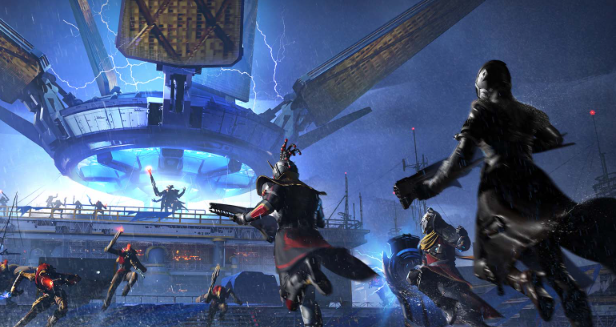
I. Introduction & Game Overview
Destiny: Rising is a free-to-play mobile MMO shooter developed by NetEase with Bungie licensing/oversight, set in the Destiny universe but not chained to Destiny 1/2’s exact timeline. The “vibe” is still Destiny—Ghosts, Lightbearers, iconic enemy factions—but it’s built as its own ecosystem where the game’s biggest design twist is: you don’t create one Guardian and endlessly subclass-mix. You collect and play distinct Lightbearers with locked kits.
From a “how it plays” standpoint, the headline is this: it’s a sci-fi shooter that lets you swap between first-person and third-person, and the core combat loop is about smart ability usage, weapon rhythm, and movement—rather than auto-combat stat checks. If you’ve ever played a mobile shooter that almost feels like console but falls apart the moment things get hectic, Rising is trying really hard not to be that. And most of the time, it succeeds.
Platforms and how people actually play it:
iOS and Android are the main show, obviously.
There’s also official emulator support (so yes, you can do the “mobile game on PC” thing without feeling like you’re breaking the game).
Control options include touchscreen, plus controller and mouse/keyboard support depending on your setup. In practice, this matters a lot: the difference between “this character is annoying” and “this character is god-tier” can literally be the difference between touch controls and a controller.
Release timing and the early hype reality:
The game’s launch window and pre-registration numbers became part of the marketing story early, and you can feel that “we want a big live-service audience” DNA in how the modes are laid out. Even if you’re mostly here to solo story content, Rising constantly nudges you toward multiplayer activities and repeatable endgame loops.
What you actually do minute to minute:
You shoot, obviously, but it’s not just “spray until loot drops.”
You rotate cooldown-based abilities, build Super energy, and pick your fights based on enemy pressure.
The game leans into “Destiny-like” activity structure: story missions, strikes-style PvE, PvP arenas, and raid-ish content through modes like Gauntlet.
If you want a one-line summary: Destiny: Rising is a mobile-first looter shooter that borrows Destiny’s feel and structure, but changes the identity of your “Guardian” into a hero-based roster system.
II. Game Premise & Lore Framework
If you’re worried this is going to be “Destiny fanfic with random mobile jargon,” it’s not that messy. The lore frame is actually one of the smarter choices: an alternate Destiny timeline set earlier—before the Tower era—so the writers aren’t trapped by every detail of mainline canon. That’s also why the game can bring in familiar faces without making you feel like you’re missing 400 hours of Destiny 2 expansions.
Timeline context (the version that matters as a player):
Humanity is in recovery mode after the Collapse-era chaos, and the world still feels like it’s hanging together with duct tape and hope.
The Traveller is damaged, Ghosts exist, and Lightbearers are getting resurrected into a world that’s still trying to decide whether heroes are saviors or walking disasters.
The “City Age” concept gives the game an excuse to show scattered refuges, dangerous travel routes, and early factions struggling for stability.
Main hubs and locations (how it feels to explore them):
Haven functions like your center of gravity: where you regroup, manage progression systems, and take on activities.
You’ll see Earth zones with distinct vibes—icy metro ruins, harsh desert-like rifts—plus areas that clearly exist to serve different enemy types and combat pacing.
The map design usually pushes you into a “lane with options”: you can wander, but the game still wants you to hit activity nodes.
Your protagonist and why the game doesn’t force “you” to be the only hero:
Your customizable lead is Wolf, a Lightbearer resurrected by a Ghost, with the narrative role of someone trying to rebuild hope—classic Destiny energy. But the key difference is: Wolf isn’t the only “main character” you’ll care about. Rising wants you to vibe with its roster.
Iconic characters and new faces:
Familiar names like Ikora Rey show up, and it’s the kind of thing that makes Destiny fans go “okay, we’re home.”
Iron Lord Jolder is a big deal here—both as lore weight and as a character kit that screams “frontline legend.”
New characters (Maru, Estela, Umeko, Gwynn, Ning Fei, Xuan Wei, and more) exist to build Rising’s own identity. Some of them are “cool concept, needs tuning,” and some are “why is this allowed.”
Enemy factions (the Destiny comfort food):
You’ll be fighting the usual suspects:
Vex (time-weird robot nightmares)
Hive (gross, dark, ritual horror energy)
Fallen (scrappy scavengers who will absolutely ruin your reload timing)
Cabal (military bulldozers that punish sloppy positioning)
The important gameplay note: enemy design pushes you to switch characters based on the job. Some kits melt Vex waves, others survive Hive pressure, and some are just built for PvP.
III. Character/Lightbearer System & Core Mechanics
This is the part where Destiny veterans either get excited or get grumpy.
In Destiny 2, your identity is “my Guardian + my build.” In Destiny: Rising, your identity becomes your roster. You’re not just optimizing one loadout—you’re picking which Lightbearer kit fits the activity and then gearing that kit to do its job better.
Launch roster and seasonal additions:
At launch, you’re looking at a strong starter lineup, with new characters added via seasons (Season 1 adds more options, and you can feel the live-service pipeline).
Locked loadouts (why it’s controversial, and why it’s also kind of clean):
Each character comes with:
A unique weapon loadout (locked)
Unique abilities (locked)
A distinct combat rhythm (also locked, because your kit defines you)
The upside: every character feels like a “designed playstyle,” not a spreadsheet template.
The downside: if you love Destiny’s “buildcraft freedom,” you’ll miss mixing subclasses and weapon choices.
Elements (Solar, Arc, Void) and how they actually feel:
Solar often leans offense with survival tools (healing/regen vibes).
Arc is movement and control—fast plays, pressure, disruption.
Void tends to be shields, tanking, denial zones, and “I’m not dying today.”
Weapon system in practice:
Primary weapons typically have that “infinite ammo” comfort loop—consistent damage, reliable uptime.
Power weapons are your limited, high-impact answers—delete threats, burst bosses, swing PvP fights.
Some characters do spicy stuff like dual-wielding, which changes their entire close-range identity.
Abilities and Supers:
Every character generally has:
A couple of signature abilities with cooldowns
A defining mechanic that makes the kit special
A Super/Ultimate that’s your “big moment”
Passives that quietly decide whether the character is mid or cracked
Progression systems you’ll actually interact with:
Team-level experience (shared progression) helps reduce the pain of leveling multiple characters.
Acclaim (post-campaign progression) is one of those systems that turns “I finished the story” into “now the real grind starts.”
Artifacts and mods are where you start to shape characters beyond their locked kits—stat tuning, set bonuses, and playstyle leaning.
If you’re a looter shooter addict, the core loop will feel familiar: fight → loot → upgrade → optimize → chase harder content.
IV. S-Tier Meta Characters — The Ones Everyone Builds Around
Let’s talk meta. Not “tier list for clicks” meta—the actual in-game reality of who carries, who enables, and who makes content easier even when you’re undergeared.
A. Wolf (Solar, Close-range Offense)
Wolf is the classic “starter character that is secretly insane.” The kit screams flexibility: you’re not locked into one job. Wolf can clear waves, survive brawls, and still contribute in PvP without feeling like dead weight.
Loadout: Auto Rifle + Grenade Launcher style pairing is the kind of combo that makes early progression feel smooth.
Signature identity: Cooldown resets on kills create a snowball loop. In content with lots of adds, Wolf can feel like a blender.
Utility: Overshields, debuffs, team speed support—Wolf has that “I’m always helpful” energy.
Where Wolf shines: Beginner progression, general PvE, and PvP where mobility and uptime matter.
If you’re new, Wolf is the safe main. If you’re not new, Wolf is still the “why is my starter still top-tier” main.
B. Tan-2 (Solar, Long-range Support)
Tan-2 is the “meta-defining Swiss Army knife.” If you like characters that can swap roles mid-fight and make your team feel immortal while also melting bosses, this is your pick.
Loadout: Scout Rifle + Sniper gives you clean long-range control.
Twilight Shift: Switching modes mid-combat is what makes Tan-2 absurd.
Duskstar: damage mode, boss deleting
Dawnstar: support mode, sustain and buffs
Why it’s meta: versatility is king in live-service games. Tan-2 is basically two characters in one.
In boss content, Tan-2 doesn’t just help—you feel like you’re playing wrong without them.
C. Umeko (Arc, Mid-range Hybrid)
Umeko is the “players didn’t expect this character to be THAT strong” pick. It’s a hybrid kit that does support and damage without the usual hybrid weakness of doing both poorly.
Precision-focused play rewards skill.
Invisibility / survivability tools let you reposition and keep uptime.
Weapon buff potential pushes Umeko into “team enabler” territory.
Umeko’s big win is that it doesn’t feel like a passive support—your decisions matter every second.
D. Jolder (Void, Close-range Defender)
Jolder is the tank that doesn’t sacrifice damage. That’s the secret sauce. In so many games, tanks exist to hold aggro and tickle enemies. Jolder exists to turn damage taken into power, which is terrifying in the best way.
Rage scaling: you get stronger as you take hits (played well, this is a power fantasy).
Bubble-style protection: creates safe phases for DPS and objective control.
PvP presence: point control, denial, team safety—Jolder makes teams hard to dislodge.
If you want the “Titan fantasy” but with a different flavor, Jolder scratches that itch.
E. Estela (Void, Mid-range Summoner)
Estela is for players who like smart aggression without constant exposure. Summons/illusions let you play safer while still pumping damage.
Misfortune-style debuffs that spread damage turn messy waves into quick clears.
Summons pulling aggro makes hard content feel manageable.
Boss + add-clear versatility is what keeps Estela in S-tier conversations.
In speed runs and farming, Estela can feel like cheating because your DPS continues even while you reposition.
F. Maru (Solar, Mid-range Artillery)
Maru is “steady power that scales.” The resonance mechanic makes you feel like you’re ramping into a boss fight rather than spiking once and praying.
Unique heavy weapon identity makes Maru feel distinct.
Tracking explosive volleys are satisfying and reliable.
Overshields and protection tools keep you alive while you keep firing.
Maru is a comfort pick: consistent DPS, decent safety, good in most modes.
V. A-Tier Characters — Strong Specialists
A-tier doesn’t mean weak. It means “amazing in the right hands or the right content, but not mandatory everywhere.”
A. Gwynn (Void, Close-range Melee DPS)
Gwynn is the “get in, don’t die, delete something” character. Dual-wielding is a huge identity shift, and it makes Gwynn feel fast and aggressive.
Self-healing during pushes is what enables the playstyle.
Elite deletion is Gwynn’s job.
The weakness: range. If you can’t safely close distance, you’ll feel the pain.
B. Xuan Wei (Arc, Close-range Melee Attacker)
This is the “skilled player reward” kit. If you love close-range burst and disruptive tools, you’ll have fun.
Crowd control/positioning tools let you set fights up.
Shotgun/fusion vibes mean you’re living on the edge.
Weakness: positioning mistakes punish hard.
C. Finnala (Solar, Close-range Defender)
Finnala is the “solid but overshadowed” pick. Good AoE, decent sustain, some defensive control—but if you have Jolder, you’ll constantly compare the two.
Ember stacks and scorch-like effects create a nice loop.
Aggro management issues can make Finnala feel squishier than expected.
VI. B-Tier Characters — Situational Powerhouses
A. Ning Fei (Arc, Close-range Mobile Attacker)
Ning Fei is pure fun: speed, clones, lightning chaos. The issue is the “fun doesn’t always equal top damage.”
Great for mobility-based play and confusion in fights.
Damage scaling can feel inconsistent compared to meta picks.
B. Ikora (Void, Long-range AoE Caster)
Ikora is iconic, and the kit has moments where you feel like a god—then cooldown reality hits you.
Nova Bomb burst is real.
Sustained DPS suffers if you rely on slow heavy weapons and long cooldown loops.
Ikora shines in short encounters, struggles in long grinds.
VII. C-Tier Characters — Niche and Underperforming
A. Attal (Arc, Mid-range Support)
Healing-only support is rarely king in looter shooters because prevention and damage pacing matter more. Attal’s issue isn’t “useless”—it’s “why bring this when other supports do more while also doing damage?”
B. Kabr (Arc, Mid-range Defender)
Hybrid kits live or die on synergy. If the pieces don’t click, you get the “identity crisis” feeling—tanky but not tanky enough, damage but not enough, utility but inconsistent.
VIII. Season 1 New Characters (September 2025)
Seasonal additions are where Rising can keep the meta fresh—or break it.
A. Helhest (Arc Support)
Helhest leans into layered survivability: amplifying healing value, boosting overshields, and making teams harder to delete. If Tan-2 is “support + DPS,” Helhest feels more like “support + defense stacking.”
B. Rossi-11 (Arc Defense)
Rossi-11 plays into the “overshield tank” identity—less rage scaling than Jolder, more consistent protection and resistance stacking. Great for teams that want stability.
IX. Tier List by Content Type (Because Context Matters)
Here’s the real talk: a universal tier list is a lie. Content decides value.
PvE Boss DPS:
Top picks usually include Tan-2, Estela, Maru—because bosses reward consistent damage and uptime.
Gwynn and Xuan Wei can spike hard but rely more on safe windows and positioning.
PvE Add-Clearing:
Wolf and Estela feel like the kings because they handle chaos well.
Maru also thrives because explosives + scaling = easy wave control.
PvP:
Wolf/Umeko/Jolder define different kinds of PvP dominance: speed, invis pressure, point control.
Ning Fei is annoying in a good way, but may lack finishing power.
Survivability/Support:
Tan-2 and Jolder are “top because they do two jobs.”
Pure healers struggle unless the game forces heal checks (and Rising tends not to).
X. Artifact & Build Customization
This is where you “build” a character even though the kit is locked.
Artifacts: you equip multiple pieces, chase set bonuses, and hunt stats like:
Health, Attack, Defense
Crit Rate, Crit Damage
The point is to push a kit toward its best version: more uptime, more burst, more survivability, or more speed.
Build archetypes:
Offense: ability damage, crit, spread damage (great for Maru and burst kits)
Defense: overshields, resistance, sustain (Jolder-style setups)
Support: healing value, buffs, utility uptime (Tan-2 and Helhest types)
Mobility: dodge, positioning, movement loops (Ning Fei vibes)
Weapon synergies:
Even with locked weapon types, mods and artifact stats can change how the same character feels: “sniper precision monster” vs “safe sustained chip DPS” is often just build choices.
XI. Gacha System & Character Acquisition
Yep—there’s gacha. The game’s hero-based structure practically demands it. The important part is how aggressive it feels and whether it blocks content.
How it usually plays out as a player:
You can progress without spending if you’re consistent and not chasing every shiny banner.
Meta characters being rare will always create “power gaps,” but the game’s content design matters more: if activities show up tuned for whales, that’s where F2P suffers.
Duplicates and power:
Duplicates usually mean upgrades, which is where “pay-to-win” fears live. The key is whether the game lets skill and grind bridge the gap. In my experience, it tries to—though competitive modes always magnify differences.
XII. Gameplay Modes & Content Types
This is where Rising is surprisingly stacked for a mobile game.
Story campaign:
Solo-friendly, structured, and often used as the onboarding for systems. The story quality can be hit-or-miss depending on what you expect, but the mission pacing is generally solid.
Endgame PvE:
Raid-like content via Gauntlet
Speed-run challenges
DPS leaderboards
Strike-style dungeons
Roguelike-ish wave modes
PvP:
Team fights, point control, and the classic “power ammo swings the match” feeling. Expect a meta. Expect salt. Expect to love it one day and hate it the next.
Social systems:
Clans (“packs”), shared spaces, side activities like racing and fishing—these are “mobile live-service glue” features designed to keep you logged in even when you’re not raiding.
XIII. Technical Specs & Development Notes (Player-Relevant)
From a player standpoint, the most important technical pieces are:
It’s built to feel like a real shooter, not a floaty auto-aim sim.
Multiple control options matter, especially for high APM characters.
Emulator support is huge for players who want better aiming and comfort.
Graphically, it aims for that “Destiny feel with a stylized twist,” and performance depends heavily on your device. On mobile, you’ll be balancing visuals vs. stable frames—because stable frames win fights.
XIV. Critical Reception & Player Response (What People Actually Argue About)
The community debates are predictable but still important:
People praise:
Controls (especially with controller/emulator)
Activity variety (for a mobile title)
The fact it feels like Destiny more than it “should” on a phone
People criticize:
Writing/story tone not matching mainline expectations
Voice acting/production inconsistencies
Gacha pressure and reduced build freedom compared to Destiny 2
The game lives in that space where the core gameplay is strong enough that players keep playing even while complaining loudly.
XV. Monetization Sustainability & Concerns
This is the “future health” topic.
If the game leans too hard into cosmetics-only, it risks not funding enough content long-term. If it leans too hard into gacha power, it risks pushing out the broader playerbase. The sweet spot is: paying speeds up collection and cosmetics, but skill and grind still clear content.
Right now, Rising tries to sit in that middle lane—but it’ll depend on seasonal design.
XVI. Comparison to Competitors
Vs Destiny 2:
Rising is more accessible and more “pick a hero, jump in,” but less flexible in buildcraft. It’s not a replacement—it’s a parallel addiction.
Vs Genshin-style games:
Similar in F2P and character collection vibes, but the core gameplay is shooter-first, and the “feel” comes from aiming and movement rather than elemental reaction math.
Vs other mobile shooters:
The biggest difference is activity structure depth. Rising is trying to be a real live-service looter shooter, not just a lobby shooter with skins.
XVII. Roadmap & Seasonal Content
Season structure is the heartbeat of this kind of game. New characters, balance patches, new raids or challenge content—if they keep that cadence healthy, Rising stays alive. If updates slow, the grind becomes repetitive fast.
XVIII. Community Meta & Synergies
Player-discovered synergies are already shaping how teams play:
Tan-2 enabling aggressive DPS windows
Jolder creating safe zones for damage phases
Estela making messy content feel clean
Element-focused comps when content encourages it
The meta will shift as new characters arrive, but the “do two jobs at once” kits will always be valuable.
XIX. FAQ (Quick, Real Answers)
Which character should I main as a beginner?
Wolf, Jolder, or Tan-2. They’re forgiving and always useful.
Is Destiny: Rising pay-to-win?
Competitive modes will feel pay-skewed because gacha power exists. But PvE progression is still very playable without spending if you’re consistent.
Can I play solo?
Yes for story and plenty of PvE. But endgame raids want teams.
Is the story good?
It’s serviceable. If you need AAA narrative magic, you may feel underfed. If you’re here for gameplay and world vibe, you’ll be fine.
Conclusion
Destiny: Rising is the rare mobile shooter that actually respects your thumbs (or your controller) and gives you enough real content loops to justify calling it a looter shooter instead of a “mobile shooter with loot.” The hero-based Lightbearer system is the biggest identity change—some Destiny veterans will hate losing buildcraft freedom, while others will love that each character feels distinct and purpose-built.
If you want the strongest experience: play with a controller or official emulator support, focus your resources on one or two S-tier kits early, and treat the roster as a toolbox—pick the right character for the activity instead of forcing a single main into everything. And if you’re free-to-play, the golden rule is simple: don’t chase every banner; chase the characters that do multiple jobs well (Tan-2 and Wolf energy).
Long-term, Rising’s success will hinge on seasonal updates, balance discipline, and whether the devs keep endgame fresh without turning power into a credit card contest. Right now, though? As a player: it’s surprisingly easy to log in “just to do one activity” and then realize two hours disappeared—so yeah, it’s got the Destiny addiction gene.