Project Spirits: Everything I’m Watching (and Worrying About) as a Player Waiting for SHIFT UP’s “Eastern Fantasy” Flagship
If you’ve been anywhere near the gacha/open-world corner of gaming lately, you’ve probably felt the same thing I have: the genre is packed, the hype cycles are loud, and most “new IP announcements” are basically one logo and a prayer. That’s why Project Spirits caught my attention in a different way—because it’s coming from SHIFT UP, the studio that already proved it can ship high-polish character-driven games, and because their own description leans hard into a concept we don’t see enough in the open-world gacha space: “Eastern Fantasy.”
And no, we don’t have a trailer with gameplay yet. But we do have enough official framing, staffing signals, and publishing context to start building a realistic “what to expect” picture—without turning it into fan-fiction. SHIFT UP originally revealed this project under the codename Project Witches, then reintroduced it publicly as Project Spirits while kicking off visible recruitment, and multiple reports point to a global release target of 2027.
I. Introduction & Why Project Spirits Is Special
Project Spirits is being positioned as a “subculture cross-platform title”—which, in plain player language, usually means it’s designed for the anime/ACG audience, it’s character-forward, and it wants to live on multiple platforms without treating any one of them like the “second-class” version. That phrase shows up in how the project has been described publicly, alongside the “Eastern Fantasy” theme.
What makes it feel special right now isn’t that it’s “open-world gacha action RPG” (we’ve heard that pitch a lot). It’s the combination of signals:
New IP following SHIFT UP’s recent successes (meaning: the studio is trying to build a third pillar brand, not just a side project).
Global publishing locked in with a major label that already publishes SHIFT UP’s biggest ongoing title worldwide (NIKKE), which suggests they’re planning for a broad launch, not a small regional test.
UE5 + cross-platform as the technical baseline, which usually implies a longer development runway but also higher visual ambition (and higher risk if scope creeps).
Now, about that “release date.” A lot of people repeat dates like gospel, but the safest way to phrase it as a player is: Project Spirits has been described as aiming for a 2027 global release, which is a target window, not a promise carved into stone.
And honestly? If you’re into C-drama vibes, wuxia/xianxia aesthetics, or mythic Eastern settings, the “Eastern Fantasy” angle is the hook—because most of the current giants in the genre blend multiple influences, while SHIFT UP is explicitly highlighting that identity as a core concept.
II. What Is Project Spirits? (FMV-Style Story Game? Nope—Think Gacha Open-World Action RPG)
Let’s clear something up: Project Spirits is not being framed as an FMV or branching video narrative game. The public descriptions point toward a cross-platform game for PC, consoles, and mobile, developed on Unreal Engine 5, with “Eastern Fantasy” concepting, and industry talk overwhelmingly expects a gacha-driven character collection model because that’s SHIFT UP’s proven wheelhouse and the market segment they’re entering.
So the best “current definition” (without over-claiming) is:
Genre / Category: Cross-platform, ACG-leaning, “Eastern Fantasy” themed, high-production-value RPG project.
Platforms: PC + console + mobile are explicitly mentioned in reporting around the publishing partnership.
Engine: Unreal Engine 5.
Dev structure: SHIFT UP + Tencent affiliate Yongxing Interactive in a co-development collaboration (as reported alongside the publishing announcement).
Now, the “open-world” part: SHIFT UP’s visible hiring/recruitment and general reporting around the project has repeatedly connected it to open-world production needs (large maps, dungeons, environment work, etc.), which aligns with the “new flagship” framing.
From a player perspective, that implies a gameplay loop that probably looks like:
Explore → fight → loot/materials → upgrade characters/weapons → pull new characters → repeat in events/endgame
Story chapters and character quests to keep the roster emotionally sticky
Seasonal updates (because live-service is basically mandatory for this category)
But—big but—we don’t have confirmed combat footage, so everything about exact mechanics (parry systems, elemental reactions, team swaps, stamina, traversal tools, etc.) is still speculation.
III. SHIFT UP’s Studio Track Record (Why Their Name Actually Matters)
When a studio announces a new open-world gacha-ish project, my first question is simple: Do they actually ship quality at scale, or do they ship marketing?
SHIFT UP has earned the benefit of attention because it has shipped and sustained major titles, and it’s been publicly positioned as having the expertise to create original IP with high visual polish. The public write-ups around Project Spirits explicitly frame it as the next flagship following NIKKE and Stellar Blade.
As a player, here’s what that track record translates to in practical expectations:
Character appeal will be a priority. SHIFT UP doesn’t do “forgettable roster” design. Even people who don’t play their games recognize their character art style immediately.
Presentation will be strong. If they’re leaning into UE5 and cross-platform, they’re probably aiming for a premium “this feels expensive” vibe.
Monetization will exist. I’m not saying it’ll be predatory, but I am saying it will be designed by people who understand how to run a live-service economy.
That last point isn’t cynical—it’s realism. If you want a game that gets updates for years, it needs a business model that actually sustains it.
IV. Project Spirits History & the Name Change (Project Witches → Project Spirits)
This is the part I love, because it tells you the project is moving from “internal/investor codename era” into “public-facing identity era.”
SHIFT UP’s upcoming cross-platform title was previously known publicly as Project Witches, and then the studio revealed the new name Project Spirits while also showing artwork and opening up recruitment visibility.
Why do name changes matter? Because in game development, codenames are cheap. A real product name is a commitment:
It’s what the marketing pipeline will be built around.
It’s what social accounts, communities, and localization start aligning to.
It’s the first step toward “we’re going to show this at events eventually.”
Also, the “Spirits” wording makes me curious. In an “Eastern Fantasy” concept, that could mean:
literal spirits/yokai/mythic entities
cultivation/immortal themes
or simply “spirit” as a cultural vibe, like folklore and metaphysics
Right now, we can’t confirm which direction they mean—so I’m filing it as a watch item.
V. Genre & Game Classification (What It’s Competing With, Whether It Likes It or Not)
Whether SHIFT UP wants to say it out loud or not, Project Spirits is entering a battlefield. Players will instantly compare it to:
Genshin-style open-world character swapping
Wuthering Waves-style action-combat focus
Honkai-style event pipelines and character story delivery
Even if Project Spirits is doing “Eastern Fantasy,” it still needs a differentiator beyond art direction. Because “pretty UE5 anime world” is no longer rare—it’s the baseline expectation.
So what could differentiate Project Spirits, assuming SHIFT UP plays to its strengths?
Character-first narrative delivery that feels more like a high-budget “drama arc” than a checklist of quests.
Combat identity (maybe a system that feels “SHIFT UP,” not a clone).
Cross-platform polish where mobile doesn’t feel like the compromise version.
Again, these are possibilities, not facts—but they’re the kinds of strategic choices SHIFT UP has to make to survive in this segment.
VI. Development Details & Technical Foundation (UE5 + Co-Development)
Here’s the most concrete chunk of information we have: Project Spirits is being developed on Unreal Engine 5, and the global publishing announcement frames development as a co-development collaboration between SHIFT UP and Tencent affiliate Yongxing Interactive.
As a player, that combination is exciting and scary at the same time.
Why it’s exciting:
UE5 can enable high-fidelity environments, lighting, and cinematic presentation.
Co-development can mean faster production, deeper technical bench, and more content throughput.
Why it’s scary:
UE5 + open-world + cross-platform can balloon scope fast.
Co-development introduces coordination risk (pipelines, standards, creative alignment).
The best-case scenario is: SHIFT UP sets the creative bar and Yongxing helps scale content and technical delivery. The worst-case scenario is: the project becomes “too many cooks” and the identity blurs.
But the fact that the publishing partnership explicitly mentions this co-development structure tells me it’s not an afterthought—it’s part of the core plan.
VII. Visual Style & Character Design (The Part We Can Actually React To)
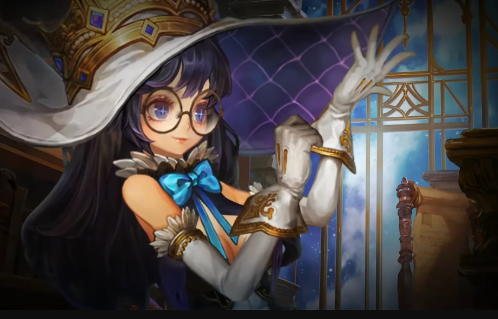
We’ve seen limited official artwork and key visuals associated with the Project Spirits reveal cycle.
And yeah, as a player, my immediate reaction was: “Oh, that’s SHIFT UP.” The character art direction feels aligned with what fans associate with the studio—high-contrast silhouettes, strong “poster appeal,” and designs that look like they’re already thinking about cosmetics/skins down the line.
There’s also been community chatter about potential AI involvement in concept stages, but at the “player guide” level, the only responsible stance is: treat it as unconfirmed discussion unless the studio makes a clear statement. What matters most to me (and probably to most players) is what ships in the final product: consistent, high-quality assets and a coherent art bible.
The bigger point: Project Spirits is being sold as an aesthetic experience, not just a mechanical one. If SHIFT UP nails that “Eastern Fantasy” identity—architecture, clothing, mythic motifs, creature design—it could stand out even in a saturated market.
VIII. Platform Availability & Cross-Platform Reality Check (PC, Console, Mobile)
The publishing announcement and coverage clearly position Project Spirits as coming to PC, consoles, and mobile.
As a player, here’s what I’m going to be watching like a hawk:
Does mobile get the “real game,” or a simplified build?
Will there be cross-save and cross-progression? (Most modern cross-platform live-service games do this, but it’s not always guaranteed.)
Will controls and UI be designed from day one for both touch and controller, instead of being awkward ports?
Cross-platform done right is amazing: you can do daily stuff on your phone and big story/combat sessions on PC/console. Done wrong, it’s a compromise everywhere.
The fact they’re building on UE5 and explicitly designing for cross-platform suggests they’re at least taking the problem seriously.
IX. The Level Infinite Publishing Deal (Why This Is a Big Deal)
Let’s talk about the business side, because it impacts you as a player more than people like to admit.
Level Infinite will publish Project Spirits globally, and multiple reports frame this as the second global collaboration between Level Infinite and SHIFT UP after the worldwide success of NIKKE.
This matters for a few reasons:
Global distribution muscle: Localization, platform relationships, marketing reach—these things decide whether a game launches smoothly worldwide or staggers with weird region gaps.
Live-service support: A global publisher with experience running ongoing titles increases the odds of stable updates, events, and community infrastructure.
Co-development clarity: The same announcement cycle ties in Yongxing Interactive as a Tencent affiliate co-developer, meaning this isn’t a “hands-off publisher” arrangement.
Now, I’m not naive: publisher involvement can also mean monetization pressure. But if there’s one thing I’d rather have than a “pure” indie dream, it’s a properly funded project that can actually deliver and keep updating.
X. Competitive Landscape & Market Positioning (How Project Spirits Can Win)
Project Spirits doesn’t need to “kill” any existing game. It just needs a reason for players to make it their second (or main) live-service title. That means it needs:
a world you want to live in
characters you want to invest in
combat that feels satisfying daily
a content cadence that doesn’t burn you out
The “Eastern Fantasy” concept is a positioning hook, but the real win condition is: does it feel different to play, not just different to look at?
If SHIFT UP leverages its strengths, the game could lean into:
story presentation that feels closer to prestige episodic drama arcs
character-driven progression where you care about roster identity beyond meta
visual spectacle that makes even routine fights feel cinematic
That’s the dream. The risk is: it becomes “another open-world gacha with SHIFT UP character art,” which would still be successful, but maybe not “flagship legacy” level.
XI. Recruitment & Development Progress (The Signals That Actually Matter)
We are still early in the reveal cycle, but one thing SHIFT UP has clearly done is make recruitment visible, which is usually a sign that the project is ramping up production rather than staying in concept limbo.
As a player, I look at recruitment like this:
If a studio is hiring broadly for environment, combat planning, content planning, writing, and technical roles, they’re building a pipeline for scale.
If they’re hiring specifically around UE5 and large-scale world content, it suggests the project scope is serious.
Of course, hiring doesn’t guarantee success—it just tells you they’re investing.
XII. Release Information & Timeline (What “2027” Really Means)
The project has been described publicly as aiming for a 2027 global release window.
Here’s the player translation of “2027”:
We might not see real gameplay until late 2026, depending on marketing strategy.
A 2027 target could mean anything from early 2027 to “end of 2027, maybe slip to 2028.”
If they plan cross-platform day one, testing and optimization will take serious time.
So if you’re the type of player who hates waiting, I’d treat Project Spirits as a “long watch.” If you’re the type who enjoys tracking development and jumping into betas, this is the kind of project where the first closed tests could be extremely telling.
XIII. Expected Game Mechanics (What We Can Predict Without Lying to Ourselves)
We don’t have official mechanics revealed, but we can responsibly outline what’s likely given the genre and the studio’s strengths:
Gacha character acquisition (because it’s the dominant model for character-driven cross-platform live-service RPGs, and SHIFT UP has deep experience operating in that space).
Real-time action combat (common for “open-world action RPG” competitors and aligns with UE5 presentation goals).
Exploration + traversal as a core loop (open-world basically demands it).
Event cycles that deliver materials, cosmetics, and limited rewards.
Now, what I’m personally hoping for (purely player wishlist):
A combat system with clear skill expression (timing windows, positioning, readable enemy tells)
A roster design that supports multiple viable playstyles, not just “pull newest unit or suffer”
An endgame that doesn’t feel like a second job
And because SHIFT UP calls this a “flagship” project, I’m expecting them to aim beyond “good enough.”
XIV. ACG Games & the “Eastern Fantasy” Identity (Why This Matters)
“ACG” (Animation, Comics, Games) isn’t just a buzzword. It usually signals:
anime-inspired character expression
stylized, collectible-driven design
narrative beats that feel like serialized arcs
heavy emphasis on art direction and presentation
Project Spirits explicitly frames itself within that subculture lane while emphasizing “Eastern Fantasy.”
If SHIFT UP commits hard to that, it could differentiate itself through:
mythic creature design grounded in Eastern folklore vibes
architecture and environmental storytelling that feels culturally distinct
music and mood that supports the fantasy identity, not generic “epic orchestra”
This isn’t about “accuracy lessons.” It’s about cohesive identity, the kind that makes you recognize a screenshot immediately.
XV. Yongxing Interactive Partnership (What It Could Mean for Quality and Scale)
The global publishing announcement describes Yongxing Interactive as a Tencent affiliate involved in co-development, with a team specializing in ACG games.
From a player standpoint, the optimistic interpretation is:
SHIFT UP provides the creative direction and core identity.
Yongxing helps scale production—world content, systems implementation, pipeline throughput.
The cautious interpretation is:
Cross-studio collaboration can produce mismatched content quality if standards aren’t enforced.
The “soul” of the game can get diluted if too many teams interpret the vision differently.
So I’m not labeling this as “good” or “bad” automatically. I’m labeling it as important.
XVI. Franchise/IP Legacy Expectations (Will This Be the Next Big SHIFT UP Universe?)
SHIFT UP has publicly framed Project Spirits as a new IP following its recent flagship successes.
That signals long-term ambition: a universe that can survive for years, expand with content, and build a fanbase that sticks around.
If Project Spirits hits, it could become the kind of IP that supports:
ongoing character releases
merchandising
possible transmedia (anime, manga, etc.) someday
That’s not guaranteed, and it’s not something I’d build expectations around yet. But the intent matters, because studios don’t call something “flagship” casually.
XVII. Community Reception & the Two Main Camps (Hype vs. Skepticism)
Every big project has two camps:
Camp A: “SHIFT UP never misses.”
These players are here for the art direction and character appeal and trust the studio’s polish.
Camp B: “Open-world gacha is oversaturated.”
These players want proof—combat, progression economy, pity systems, endgame loops—before they care.
I’m personally in the middle: I think SHIFT UP deserves attention, but I also think this market punishes mediocre systems no matter how pretty the game is.
XVIII. FAQ (Player Questions I Keep Seeing)
Q1: What is Project Spirits?
A new cross-platform title from SHIFT UP described as a “subculture” project with an “Eastern Fantasy” concept, planned for PC/console/mobile and built on UE5.
Q2: When will Project Spirits release?
Public reporting and the project reveal cycle have pointed to a 2027 global release target. Treat that as a target window, not a guaranteed date.
Q3: What platforms will it be on?
PC, consoles, and mobile have all been mentioned in coverage around the global publishing partnership.
Q4: Who is publishing Project Spirits?
Level Infinite will publish it globally, per the publishing announcement and coverage.
Q5: What engine is it using?
Unreal Engine 5.
Q6: Who is co-developing it?
Coverage around the publishing deal describes a co-development collaboration between SHIFT UP and Tencent affiliate Yongxing Interactive.
Q7: Is there a director attached?
Some reporting identifies Daehoon Han (noted for work on Metallic Child) as the project’s director.
XIX. What We Don’t Know Yet (The Honest List)
This is the part that actually builds trust, so I’m not skipping it.
We still don’t have confirmed information on:
Specific console platforms (PS5? Xbox? Switch successor? multiple?)
Exact gameplay structure (team swap? single character? stamina? mounts? grappling?)
Gacha details (pity, banner types, weapon vs character split, currency economy)
Co-op vs solo emphasis
Competitive modes (if any)
Exact story setup, factions, named characters, and world regions
Beta/pre-registration timelines
So if you’re the type who needs hard details before you care, the best move is to bookmark the project and wait for the first real gameplay reveal.
XX. How I’m Personally Tracking Project Spirits (Practical Player Checklist)
If you want to follow Project Spirits without doomscrolling every day, here’s the simple routine I’m using:
Watch for “first gameplay” reveal milestones (even a short combat clip changes everything).
Track platform confirmations (console specifics matter for performance expectations).
Look for early UI shots (they reveal monetization pressure and system complexity faster than trailers do).
Pay attention to recruitment changes (new roles can hint at feature focus).
Treat 2027 as a target, not a promise, and don’t emotionally commit until there’s a hands-on preview.
As a player, I’m excited about Project Spirits for one main reason: it looks like SHIFT UP is genuinely trying to build a new flagship IP with a distinct “Eastern Fantasy” identity, backed by a serious global publishing partner and a UE5 technical foundation.
But I’m also keeping my hype on a leash, because the open-world gacha space is unforgiving: pretty visuals aren’t enough anymore, and the winners are the games that balance combat feel, progression fairness, content cadence, and cross-platform polish without turning the experience into a chore.
So here’s my honest recommendation: put Project Spirits on your watchlist, don’t over-invest in rumors, and wait for gameplay proof. If SHIFT UP nails the “Eastern Fantasy” worldbuilding and brings its usual character-driven polish into a modern cross-platform action RPG, this could be one of the most important new entrants in the genre’s next wave.