SAMURAI SHODOWN R: A Player’s Deep Dive Into SNK’s Sword-Fighting MMO
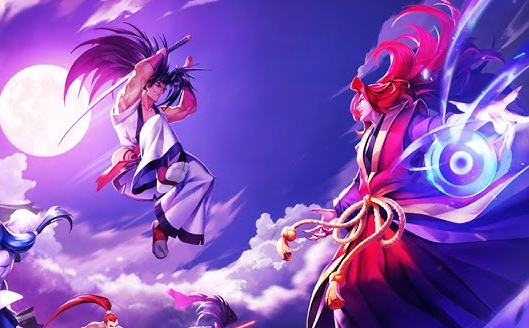
If you hear the words SAMURAI SHODOWN R and your brain instantly jumps to classic, weapon-based duels—yep, same. That “one clean read and the round is over” DNA is exactly why the Samurai Shodown name still hits different decades later. But SAMURAI SHODOWN R isn’t trying to be “just another port” or a nostalgia museum. It’s aiming at a very specific sweet spot: mobile-first MMORPG progression wrapped around high-stakes sword-fighting vibes, with real-time duels and recognizable SNK faces like Haohmaru and Nakoruru showing up to remind you what franchise you’re in.
And here’s the part that makes people argue in comment sections: the game leans into Sui blockchain features—dynamic NFTs, tokenized rewards, and “login with Google/Apple” onboarding—without forcing you to become a crypto wizard. Whether you love that, hate that, or just want to ignore it and swing a sword, it’s still part of the identity of SAMURAI SHODOWN R. So in this guide I’m going to talk about it the way most players actually want it explained: what it is, how it plays, what matters for progression, what’s optional, what’s a trap, and what you should do first—no weird hype-speak, and no “trust me bro.”
I. Introduction & What Is SAMURAI SHODOWN R?
At its simplest, SAMURAI SHODOWN R is presented as a mobile MMORPG built around the Samurai Shodown fantasy: sharp reads, big slashes, and iconic characters. It launched globally on mobile (Android/iOS) around July 9, 2025, and it’s positioned as a collaboration involving LumiWave and SNK—with broader ecosystem ties to Sui and even the SuiPlay0X1 device.
From a “player reality” perspective, what that means is: you’re not sitting in an arcade cabinet grinding matchups for pure competitive pride. You’re doing the MMO loop—progression systems, daily structure, power growth—while still being asked to respect timing and spacing in combat. The store listing’s vibe is very clear about the core fantasy: victory decided in an instant, with precise timing and high-stakes duels.
II. Samurai Shodown Franchise History & Legacy (Why the Name Carries Weight)
If you’re new to the series, here’s the “why you should care” in one sentence: Samurai Shodown was one of the early fighting games that put weapon-based combat front and center, and it originally released in 1993 under SNK. That’s why old fans talk about it like it’s a different species compared to pure fist-fighter games—spacing and punishment feel more lethal, and the threat of a single mistake is part of the appeal.
So when a modern title like SAMURAI SHODOWN R shows up, it’s not just borrowing a logo. It’s borrowing expectations: people want iconic fighters, recognizable moves, and a certain rhythm to combat. The marketing leans into that by name-dropping legacy characters (Haohmaru, Nakoruru, Ukyo) and framing fights as tense duels rather than endless button-mashing.
III. Gameplay & Combat Mechanics (What It Feels Like Moment-to-Moment)
Let’s talk about the part you’ll actually interact with: combat and pacing. The public-facing pitch focuses on “instant-decide” sword-fighting—big hits, careful timing, and duels that punish sloppy play. In practice, the way most players should approach it is: treat each engagement like you’re always one bad decision away from losing tempo. That mindset changes everything—when to commit, when to back off, when to bait a mistake, and when to cash out.
But because it’s also an MMORPG, you’re not only fighting for “win the match,” you’re fighting for resources, upgrades, and long-term progression. So the “correct” play is often a balance: do you play safe for consistency (better for farming and daily efficiency), or do you play aggressive for faster clears and higher ceilings? That’s where SAMURAI SHODOWN R tries to feel different from standard auto-grind mobile RPGs—your decisions can still matter even when you’re thinking about the long game.
IV. Character Roster & Classes (What You’re Really Choosing)
One thing I like about the way SAMURAI SHODOWN R presents itself is that it clearly wants to support different play tastes—ranged comfort, close-quarters pressure, stealthy nonsense, or supportive utility. You’ll see class-focused content and introductions (Ranger, Spearman, Ninja, Witch, etc.) floating around official channels, which is basically the devs telling you: “pick a style you can live with for hundreds of fights.”
For newer players, here’s the honest advice: don’t pick purely based on what looks cool (even though we all do that). Pick based on the kind of stress you can tolerate. If you hate being rushed down, lean ranged or control. If you get bored without action, pick something that forces you to take initiative. In an MMO structure, your class decision isn’t just “how do I win one duel,” it’s “how do I want to spend my time farming, climbing, and learning matchups.”
V. Character Tier List & Meta (The “Who’s Strong?” Question Everyone Asks)
Every game like this eventually becomes a debate club: “Who’s S-tier?” “Who’s bait?” “Who’s secretly busted?” The store page itself highlights the obvious headliners—Haohmaru, Nakoruru, Ukyo—because brand recognition matters.
From a player-centric view, I like to frame tier talk in three layers:
Brand icons (characters that will always be popular and frequently supported).
Efficiency picks (characters/classes that make daily content painless).
Punish machines (kits that become terrifying when you master timing, spacing, and matchups).
You’ll often see Haohmaru and Nakoruru described in ways that reflect that legend status—Haohmaru as the classic swordsman archetype, Nakoruru as the nature-linked fighter with her falcon companion, etc.
The important thing: meta shifts happen in any live game—balance, new systems, seasonal incentives. So don’t treat any tier list as scripture. Treat it like a weather forecast: useful, but you still bring a jacket.
VI. Game Modes & Content (What You’ll Actually Be Doing)
SAMURAI SHODOWN R positions itself with a mix of story quests, dungeon exploration, clan content, and PvP battles. That’s not just buzzwords—those are the pillars that define your daily routine. When the game says “you can explore dungeons, complete story-driven quests, team up with clans, or jump into competitive PvP,” it’s basically describing the loop you’ll live inside.
If you’re optimizing your time, here’s the simple approach: do the content that unlocks systems first, then do the content that gives the best upgrade value per minute. A lot of players burn out because they chase “fun fights” early and delay the boring unlock steps—then they hit a wall and blame the game. Whether you love MMO chores or hate them, the unlock path matters.
VII. Blockchain & Web3 Integration (Explained Like a Human Being)
Okay—Web3 talk. Here’s the only framing that matters: you can treat it as “under the hood,” unless you specifically want the ownership/reward layer. The Sui Foundation’s own write-up describes the game’s blockchain layer as background infrastructure for progression, economy, and multiplayer. It calls out four core pieces:
zkLogin (login with Google/Apple, no seed phrase required)
Dynamic NFTs (assets evolving based on play)
Shared Objects (real-time shared game assets enabling multiplayer features)
Closed-Loop Tokens (tokens intended to remain within the ecosystem)
The key player takeaway: you’re not forced to manually manage wallets just to play, because zkLogin is designed around OAuth credentials. In Sui’s own documentation, zkLogin is explicitly about using OAuth credentials without publicly linking identity on-chain.
VIII. Token & Reward Systems (SSR Points, $SSR, and What’s Optional)
If you’ve seen people talking about “earning,” it usually boils down to two terms: SSR Points and $SSR. The official LumiWave site frames SSR Points as a reward currency you can earn via missions and then spend in an SSR Shop or “Treasure” systems, while $SSR is the on-chain token tied to the INNO Protocol Reserve.
The INNO Protocol Reserve documentation describes distribution as performance-driven (KPIs like in-game activity, quests, season rankings) rather than arbitrary emissions. That’s a fancy way of saying: “play more, perform better, and you qualify for more rewards.”
Player advice, no sugarcoating: treat any token reward system as a bonus, not a plan. Do not build your “I’ll make money” fantasy on top of it. If you enjoy the gameplay, cool—rewards are a perk. If you hate the gameplay, rewards won’t magically make hundreds of hours feel good.
IX. NFT Marketplace & Ownership (Why Players Might Care—Or Not)
The “ownership” pitch is basically: if in-game assets exist as NFTs, they can be owned, traded, and tracked, and some of them can evolve as you progress. The Sui write-up highlights “dynamic NFTs” and explicitly mentions Mount NFTs leveling from 1 to 20, gaining attributes and visual changes, and unlocking a final on-chain form.
As a player, you can think of this in two ways:
Cosmetic/collection brain: “Cool, my mount evolves and I can show it off.”
Economy brain: “Assets can have value, but markets are volatile and rules can change.”
If you’re not into either, you can still play like a normal gamer and mostly ignore it—just don’t skip reading the fine print on any “trade” features, because the moment real value enters the chat, scams follow.
X. Team Building & Strategy (How to Win More Without Sweating Constantly)
Even if you’re mostly PvE, you still need a basic “combat sanity” strategy: build around what you can execute consistently. In a sword-fighting flavored game, consistency usually comes from three habits:
Don’t swing first when you don’t have to. Make them prove they can approach.
Cash out when you get the read. Hesitation is how you let people live.
Stop fighting the matchup and start fighting the player. Patterns beat kits.
For PvP, the store description emphasizes real-time duels against players worldwide—so latency, comfort picks, and simple game plans matter.
XI. Progression & Leveling (The MMO Part That Either Hooks You or Breaks You)
MMORPG progression means you’ll be upgrading systems—gear, skills, stats, maybe cosmetics, maybe mounts, maybe clan perks. The trap most new players fall into is trying to “max everything.” Don’t. Pick one main path that increases your ability to clear content faster, then branch out. Speed improves everything: daily tasks, event clears, resource farming, and even your motivation.
Also, don’t ignore “boring” upgrades. In games like this, boring upgrades are often the ones that turn your damage from “barely enough” to “comfortably enough,” and that’s what makes the daily loop sustainable.
XII. Multiplayer & Clan Systems (Where the Game Starts Feeling Alive)
Clans are not just social fluff here; they’re positioned as a core feature. The Sui write-up literally ties shared objects to enabling clan quests and PvP battles, and it frames closed-loop tokens as a way to reward collaboration and long-term progression within groups.
So if you’re the type of player who usually avoids guilds, I get it. But if you want the “MMO part” to actually matter, joining even a casual clan is usually worth it—more content access, more consistent coordination, and less “solo grind burnout.”
XIII. Platform Availability & Support (Mobile, PC, and the SuiPlay Angle)
On the normal side: Android and iOS are the core.
On the “yes, you can play with keyboard/mouse” side: MuMuPlayer promotes PC/Mac play support for SAMURAI SHODOWN R.
And then there’s the unique angle: SAMURAI SHODOWN R is associated with SuiPlay0X1, a Sui-powered handheld device. The SuiPlay0X1 official site has stated pre-orders were closed and units sold out (at least at the time of that page snapshot), which tells you the ecosystem is serious about the hardware tie-in.
XIV. Beginner’s Guide & Getting Started (What I’d Tell a Friend)
If you’re starting today, here’s the “do this first” checklist:
Pick a class/role you can execute under pressure. Don’t overthink tier lists yet.
Push main progression until systems unlock. Early unlocks are your power spikes.
Set a daily routine that doesn’t feel like a second job. If it’s miserable, you’ll quit.
Join a casual clan early. Even if you’re shy, the benefits add up.
Ignore token talk until you actually understand the game loop. Learn the game first; add extras later.
This is the best way to keep the game fun while you still build momentum.
XV. Frequently Asked Questions (Real Questions Players Ask)
“Do I need crypto knowledge?”
Not necessarily. The game’s onboarding pitch leans on zkLogin with familiar credentials, designed to reduce wallet/seed phrase friction.
“Can I play on PC?”
MuMuPlayer claims you can play on PC/Mac via emulation.
“Is this pay-to-win?”
There are monetization layers and Web3 layers, but whether it feels pay-to-win depends on how competitive modes and progression gates are tuned over time. My advice: judge it by your first two weeks—if you feel forced to spend to keep up in the modes you care about, that’s your answer.
“Will tier lists change?”
Always. Live games shift. Treat tier lists as a guide, not a religion.
XVI. Blockchain Technology Explained (For Players Who Want the 30-Second Version)
zkLogin: lets accounts use OAuth credentials to transact without exposing identity linkage publicly.
Shared Objects: a Sui concept used to enable real-time shared interactions (helpful for multiplayer).
Dynamic NFTs: assets evolve as you progress (mount leveling is the headline example).
Closed-loop tokens: intended to stay within the game ecosystem rather than being a “cash out everything” design.
That’s it. Everything else is detail.
XVII. Arcade Roots & Modern Innovation (Why This Combo Is Interesting)
The Samurai Shodown brand is historically about weapon-based tension and lethal reads, going all the way back to 1993.
The “modern innovation” here is the MMO structure and the Sui-backed infrastructure. If you’ve ever wanted a game where duels still matter but you also have long-term progression, clans, and a broader ecosystem, SAMURAI SHODOWN R is trying to be that crossover.
Whether it succeeds for you personally comes down to one question: do you enjoy the daily loop enough to keep showing up? Because if you do, the systems layer becomes content. If you don’t, it becomes chores.
XVIII. Related Guides & Cross-Links (How I’d Expand Your Learning)
If you want to get better fast, focus on these “skill buckets”:
Class deep-dives (what your kit wants to do, and what it’s scared of)
PvP fundamentals (spacing, punish windows, baiting, tempo control)
Progression efficiency (which upgrades give the biggest power spike per resource)
Clan optimization (how to contribute without burning out)
This is the difference between “I’m stuck” and “I’m climbing.”
XIX. Social & Community (Where Players Actually Share Useful Info)
For code drops, event announcements, and meta talk, communities tend to form around official channels and big discussion hubs. The Sui ecosystem posts official updates on Sui’s blog, and the LumiWave side uses social platforms for announcements and reward info.
My player advice: don’t rely on one source. Check two or three places so you don’t miss limited-time events, maintenance notices, or balance changes.
SAMURAI SHODOWN R is one of those “this shouldn’t work, but it might” projects: a classic weapon-fighter legacy poured into a mobile MMORPG structure, then layered with Sui’s Web3 tech in a way that’s supposed to stay mostly invisible if you don’t care about it. The game pitches itself on high-stakes sword-fighting, iconic characters, and real-time duels, while the ecosystem pitch is zkLogin convenience, dynamic NFTs (like evolving mounts), and multiplayer infrastructure built around shared objects and closed-loop tokens.
If you’re here for pure nostalgia, come for the characters and the duel fantasy. If you’re here for MMO progression, treat it like a long-term routine and optimize your time. And if you’re here because you heard “play and earn,” keep your expectations grounded: enjoy the game first, treat rewards as optional extras, and never let token hype be the reason you sink hours into something you don’t actually like. That’s how you get the best of SAMURAI SHODOWN R—without getting played by the systems.