Virtual Circle Guide 2026: Release Status, CBT, VTubers, Gameplay, 3v3 Teams, Builds, and Everything We Know
Virtual Circle is one of those games where the basic pitch immediately makes you stop scrolling: take real VTubers, move them into a parallel universe, transform them into combat idols, then build a strategy RPG around training, team composition, flashy battles, and alternate versions of V-Circle history.
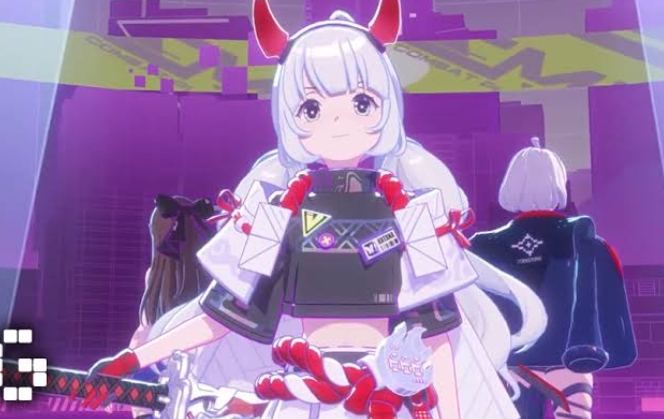
That is a lot more interesting than simply making another mobile RPG with fictional idol characters.
The people appearing in Virtual Circle already exist as virtual talents outside the game. Players may already know their personalities, streaming styles, fan communities, memes, relationships, and public histories before ever touching the game. Virtual Circle then asks a pretty fun question: what if those same VTubers lived another life in a parallel world where they fought as idols instead of simply streaming?
From a player's perspective, that is the part that grabbed me.
There are plenty of character-collection RPGs where I pull a new unit and then spend ten minutes reading a biography because I have no idea who that person is. Virtual Circle starts from the opposite direction. A fan might already have years of memories associated with a VTuber, and the game can build a completely different combat identity on top of that existing connection.
The actual gameplay is also more unusual than the phrase “VTuber game” suggests. Virtual Circle has been presented as a strategy and character-training RPG, combining everyday training and interaction scenes with high-production battle sequences. The major 2025 gameplay showcase included story content, character growth, stat training, team-building, and battles inside the parallel-world setting. Recent reporting continues to describe its central loop as training virtual talents and forming squads for strategic combat.
There is one important reality check before we go any further.
As of August 11, 2026, Virtual Circle has not officially launched worldwide. It does not have a confirmed public global release date, an announced English-language version, or a finalized worldwide platform list. The originally planned January 2026 test was postponed after harsh feedback from participating virtual talents, recruitment reopened in late February, and a small-scale test targeting Android players was prepared for late March with only around 2,000 participants. The game later appeared at Bilibili World 2026 in July, where it drew a large crowd, but no major international launch announcement followed.
That also means some parts of a normal RPG guide—especially permanent tier rankings, final skill builds, launch-system requirements, and global download instructions—simply cannot be treated as settled facts yet.
I would rather say “not confirmed” than invent an S-tier character because a search keyword wants one.
With that in mind, this Virtual Circle guide covers what is actually known, what early gameplay tells us about the combat and team-building systems, how I would approach the game as a new player, and what global players should watch for next.
I. Virtual Circle: Everything You Need to Know
A. What Is Virtual Circle?
Virtual Circle, also known by its Chinese title Xu Huan, is a VTuber-themed strategy and character-development RPG being developed by CDD under Tencent Games.
The basic premise is simple but clever: VTubers who are popular virtual entertainers in our world exist as powerful “combat idols” in another dimension called Virtual Circle.
Instead of treating the real VTuber and the game character as completely separate people, the project plays with parallel identities.
The streamer you recognize still matters.
Her personality still matters.
Her existing fan history still matters.
But the game asks what her life might look like under completely different circumstances.
Public gameplay material has shown players training characters, raising statistics, interacting with them during everyday scenes, forming teams, and taking those trained combat idols into strategic battles.
That immediately separates Virtual Circle from a standard anime gacha RPG.
This is not simply “collect original fantasy girls who happen to livestream.”
The VTuber culture itself is the subject.
B. Virtual Circle Game Overview and Core Features
The game currently appears to revolve around three interconnected ideas:
character development, story, and combat.
During the development/training side, players spend time improving their chosen virtual talents, increasing attributes, learning or strengthening skills, and interacting with characters through daily-life sequences.
Then comes team construction.
Instead of developing one character in isolation, you create a lineup designed to work together. Public descriptions have repeatedly emphasized building your own squad and testing different theories about which virtual idols form the strongest combination.
Finally, those decisions feed into combat.
The battles are designed as visually dramatic performances with anime-style 3D character models, special attacks, weapons, effects, and team interactions.
For me, the interesting question is whether the final game can keep all three parts meaningful.
A lot of mobile RPGs technically have “training,” but training just means pressing Upgrade until a number changes.
Virtual Circle looks more ambitious than that.
If the relationship and development sequences genuinely influence how I build characters, and those builds then create different tactical options in battle, the whole loop could become surprisingly addictive.
C. Why the VTuber RPG Concept Is Getting Attention
The obvious reason is fandom.
When a normal RPG announces ten new characters, players have to learn who they are.
When Virtual Circle shows Nanami, Shizuku Lulu, Xingtong, Shanbao, A-SOUL talents, and other recognizable virtual personalities, many existing fans already have strong opinions before seeing a single combat stat. Early promotional coverage specifically highlighted those names and groups, while later gameplay footage continued to feature Nanami and Shizuku Lulu prominently.
That changes the emotional relationship between player and roster.
Imagine following a VTuber for years, watching streams, concerts, collaborations, funny clips, and major career moments, then getting an RPG that creates an alternate-history version of that same persona.
Suddenly team-building becomes partly personal.
Maybe the mathematically strongest lineup does not matter to you.
Maybe you want three talents you already follow.
Maybe you want to recreate an existing friendship.
Maybe you want to put two people together who rarely interact in reality.
The game can turn fan discussion into actual team-building decisions.
That is a very strong hook.
II. Virtual Circle Release Date and Global Release
A. Virtual Circle Release Date
As of August 11, 2026, Virtual Circle does not have a confirmed full release date.
This distinction matters because older articles may say “January 2026,” but January was originally associated with the game's first Beta test rather than the final commercial launch.
That planned test did not happen on schedule either.
The first Beta had originally been announced for January 2026, but it was delayed. Recruitment resumed on February 27, with reporting at the time stating that the test had been pushed toward late March.
So if you see an old result saying “Virtual Circle releases January 2026,” that is outdated.
January 2026 was never a reliable global launch date.
B. Current Development and Release Status
The current status is best described as active development after an early limited test phase.
This project has had a somewhat unusual testing story.
Before the originally planned January test, participating virtual talents reportedly tried the game and gave the developers strong negative feedback. Rather than pushing the test out anyway, the team delayed it for additional improvement.
By late February, recruitment reopened for what was described as a small-scale technical/initial test. Japanese reporting stated that only around 2,000 players would be admitted and that Android was the target platform for this round.
Then in July 2026, Virtual Circle appeared at Bilibili World 2026.
According to Japanese coverage, the booth attracted more than ten thousand visitors across the three-day event and included playable demonstrations and other fan activities. The same report noted that there had not been a major new release announcement and that attention was shifting toward what might come next, including the possibility of another CBT.
That is where things stand now.
The game is alive.
People are still playing public demos.
The promotional accounts are still active.
But we are not at launch yet.
C. Virtual Circle Global Release Possibilities
A worldwide version is possible, but it is not something I would call confirmed.
Tencent obviously has enormous international publishing experience, and the VTuber concept itself can travel well across borders.
That does not automatically mean Virtual Circle will launch globally.
The current roster is closely tied to a particular virtual-talent ecosystem, and the first major testing/recruitment activity has been focused on the domestic market.
There are several ways the developers could eventually expand.
They could release the same roster globally with localization.
They could add more internationally recognizable VTubers.
They could create region-specific collaborations.
Or they could keep Virtual Circle primarily focused on its existing domestic audience.
Until there is an official international announcement, everything beyond the current market should be treated as possibility rather than release confirmation.
D. English and International Version Expectations
There is no confirmed English-language client as of August 11, 2026.
There is also no public international pre-registration campaign comparable to what we normally see before a global mobile launch.
That is why I would ignore websites already offering “Virtual Circle Global APK” downloads.
There is no established official Global client to download yet.
If the project does move internationally, English would be the obvious localization language, but localization is not as simple here as translating menus.
VTubers have specific speech patterns.
They have jokes.
They have nicknames.
They have fan terminology.
Their stories can reference real events from V-Circle culture.
A good English version would need to translate that personality rather than just turn every sentence into technically correct English.
III. Virtual Circle Platforms and Download Options
A. Virtual Circle PC Version
There is currently no confirmed public PC release for Virtual Circle.
The development footage often looks polished enough that people assume there must be a PC client, but presentation quality is not platform confirmation.
The first limited 2026 test was reported as being targeted at Android players, not PC.
Could Virtual Circle eventually come to PC?
Absolutely.
Character-collection RPGs increasingly launch on both mobile and PC, especially when they use detailed 3D environments.
But “likely” and “announced” are different words.
Right now, I would not include Steam, Epic Games Store, or a proprietary PC launcher in any confirmed platform list.
B. Virtual Circle Android and iOS
Android is the strongest confirmed platform so far because the first small-scale 2026 test specifically targeted Android users.
iOS is less clear.
Some secondary reports around early CBT recruitment described the project more broadly as a mobile title, but the better-documented March test information specifically points to Android participation.
That does not mean iOS has been cancelled.
It means we do not yet have enough public information to treat an iPhone release as finalized.
For a major commercial launch, Android and iOS together would make business sense.
Still, I would wait for an official launch-platform announcement.
C. Virtual Circle Mobile Download
At the moment, ordinary players outside the active test ecosystem should not be searching for random Virtual Circle APK downloads.
The early test was limited.
Participation required recruitment.
Slots were restricted.
It was not a normal public-release client.
This is especially important for pre-release games.
Fake APK pages appear extremely quickly once a game gets attention.
The safest approach is simple:
wait for official registration or an official app-store listing.
You are not missing progression right now because there is no worldwide live service everyone else is secretly playing.
D. Cross-Platform Support and Account Progression
Cross-platform support has not been finalized publicly.
Neither has cross-save.
If the final release includes both PC and mobile, I would definitely want one account shared across platforms.
Virtual Circle looks like the kind of game where I might do quick training tasks on my phone, then play longer story or combat sessions on a larger screen.
But that is a personal expectation—not a confirmed feature.
Until the developers announce the final account system, do not assume Android test data will transfer anywhere.
Early tests are commonly wiped anyway, especially during technical development.
IV. Virtual Circle CBT and Beta Test Guide
A. Virtual Circle Closed Beta Test
Virtual Circle's first planned Beta became one of the more interesting parts of its development story.
The game was originally targeting January 2026 for its first test.
That schedule changed after participating virtual talents got hands-on time with the game and reportedly gave the development team extremely critical feedback. The developers chose to delay the public test and spend additional time improving the experience.
As a player, I actually consider that encouraging.
A delay is annoying.
Shipping a bad first impression is worse.
VTuber fans are especially sensitive to whether a game understands the people it is adapting.
If the featured talents themselves thought something felt wrong, fixing it before a wider test was probably the better choice.
B. How to Register for Virtual Circle CBT
For the first small test, recruitment reopened on February 27, 2026.
The application period ran into early March and required players to participate through the relevant recruitment system and complete a questionnaire. Only around 2,000 players were expected to receive access.
That recruitment period has already ended.
So an old guide telling you to “register now” is no longer useful.
For future tests, watch official Virtual Circle announcements and major regional gaming events rather than third-party key sellers.
Never pay someone for a “guaranteed CBT account.”
C. Beta Test Schedule and Eligibility
The first test had an unusually small audience.
Japanese reporting described it as a limited-scale test aimed at Android users with a maximum of approximately 2,000 participants.
That tells me the developers were still collecting foundational feedback rather than stress-testing a nearly finished live service.
When a test is that small, balance data can also be misleading.
One broken character might dominate simply because players have not discovered counters yet.
A particular team might look overpowered because only a handful of people own the right alternative.
That is why early CBT tier lists age terribly.
D. What Players Can Expect From Future Tests
The July Bilibili World appearance showed that Virtual Circle remains actively promoted, but as of late July there had been no large new announcement about a second closed Beta. Japanese reporting specifically pointed toward a future second CBT as something fans were waiting for rather than something already scheduled.
If another test happens, I would expect four things to receive attention:
combat clarity,
character balance,
training progression,
and overall pacing.
I would also watch platform expansion.
If the next test suddenly includes iOS or PC, that would tell us a lot about launch planning.
V. Virtual Circle Story and Parallel-World Setting
A. Virtual Circle Story Overview
The story begins from a fun piece of meta-fiction.
In our reality, the featured characters are virtual streamers and entertainers.
In another dimension—the Virtual Circle—those same personalities are battle idols.
They fight.
They train.
They join different groups.
They experience alternate histories.
The player travels through these timelines and builds teams capable of confronting legendary idols from different factions.
That setup gives the writers enormous freedom.
They can reference reality without being trapped by it.
B. The Parallel-Universe Concept
Parallel universes solve one of the biggest problems with turning real virtual entertainers into RPG characters.
You do not need to claim that their normal streaming lore suddenly includes giant swords and tactical battles.
Instead, you create another reality.
That means the real VTuber persona remains recognizable while the combat version can be much more dramatic.
I think that is smart.
The game can say:
“What if this person's personality developed under totally different circumstances?”
That is more interesting than simply giving every VTuber armor.
C. Real VTubers Becoming Combat Idols
The phrase combat idol is central to Virtual Circle's identity.
Promotional footage shows familiar virtual talents fighting with weapons and powerful abilities while retaining stylized anime versions of their recognizable appearances.
Even Xingtong—whose normal presentation can lean toward a more realistic 3D look—was shown adapted into the game's more unified anime-like visual direction.
That consistency matters.
If every VTuber used a completely different visual pipeline, team battles would look like characters from six unrelated games accidentally met each other.
Virtual Circle is trying to create one coherent RPG world.
D. “What If” Stories and Rewriting V-Circle History
This may become the game's strongest narrative tool.
Public descriptions specifically emphasize alternate “what if” timelines and the idea of rewriting V-Circle history.
That opens the door to questions fans already love discussing.
What if two talents met earlier?
What if a different group formed?
What if a famous partnership became a rivalry?
What if one VTuber took a completely different path?
The developers do not need to rewrite real history.
They can create a fictional timeline where anything is possible.
For fans who know the references, those stories could hit surprisingly hard.
VI. Virtual Circle VTubers and Character Roster
A. Virtual Circle Playable Characters
There is not yet a single finalized worldwide launch roster.
However, promotional footage and non-Mainland coverage have confirmed or highlighted several virtual talents.
Among the most visible names are Nanami, Shizuku Lulu, Xingtong, Shanbao, and members connected with A-SOUL.
The 21-minute 2025 gameplay showcase particularly highlighted Nanami and Shizuku Lulu while introducing additional battle idols.
Because development is ongoing, I would avoid calling any current list the “complete launch roster.”
B. Featured VTubers and Virtual Talents
Virtual Circle benefits from using performers who already have strong identities.
Nanami is not being introduced from zero.
Lulu is not being introduced from zero.
Xingtong is not being introduced from zero.
The game can assume some players already understand these talents and then build RPG-specific versions around them.
For someone entering without any VTuber background, the effect works in reverse.
You might meet a character in Virtual Circle first, like her story, then become curious about the actual streamer.
That creates a powerful loop between the game and the VTuber scene.
C. Combat Idol Versions of Real VTubers
The combat versions are not simply meant to copy streaming avatars one-to-one.
They adapt those designs into an RPG visual language.
Weapons, costumes, battlefield animations, character roles, and ultimate-style sequences all push them toward the “combat idol” concept.
That gives designers more freedom.
A cute or relaxed VTuber persona does not automatically mean a weak support character.
Someone known for jokes could become an aggressive attacker.
Someone with an elegant public image might receive a brutal combat style.
That contrast can be part of the fun.
D. Future Character and Roster Expansion
The project's entire concept practically invites roster expansion.
More VTubers mean more fandoms.
More fandoms mean more team combinations.
More team combinations mean more story possibilities.
Early development comments also emphasized wanting players to create their own dream teams around different virtual talents.
The real challenge will be balance.
Adding a popular VTuber is easy.
Making her mechanically distinct without invalidating everyone who came before is much harder.
VII. Virtual Circle Character Roles and Playstyles
A. Offensive Characters
Until the final skill database is public, I would define offensive characters by function rather than inventing permanent labels for individual VTubers.
An attacker should do one of several things well:
burst damage,
sustained damage,
single-target elimination,
area damage,
or finishing weakened enemies.
When the game launches, do not automatically stack three damage dealers because all three have impressive ultimates.
Damage only works if your team survives long enough to use it.
B. Defensive and Support Characters
Defensive characters normally create value through shielding, mitigation, disruption, protection, or enemy control.
Supports may heal, buff stats, accelerate allies, weaken enemies, generate resources, or create combo opportunities.
These characters are almost always underrated during a game's first week.
Players see one attacker make a huge number appear and instantly call them S-tier.
Then competitive players discover that a support enabling three characters is actually more valuable.
C. Character Positioning and Battle Roles
Virtual Circle's battle footage emphasizes formation and team composition, so positioning should be treated as part of the build rather than decoration. Public footage has shown team-oriented strategic battles rather than a straightforward solo action system.
When I build a lineup, I want to know:
Who absorbs pressure?
Who needs protection?
Who creates the opening?
Who converts that opening into damage?
Who keeps the team functional during a long fight?
Those questions matter more than rarity.
D. Choosing Characters for Different Team Strategies
Build around a plan.
If your main character deals huge burst damage but needs setup, choose teammates who create that setup.
If your favorite character survives forever but does mediocre damage, bring attackers who benefit from the extra time.
If a support amplifies one damage type, do not pair her with two characters who barely use it.
Simple synergy beats three individually powerful characters fighting three different battles.
VIII. Virtual Circle Gameplay and Combat System
A. Virtual Circle Gameplay Basics
Virtual Circle should not be confused with a fully manual action RPG.
Public descriptions consistently call it a strategy training/development game, and coverage of earlier gameplay specifically noted that tactical planning and lineup construction mattered more than constant real-time action inputs.
That does not mean battles look passive.
Quite the opposite.
The presentation is intentionally dramatic.
Characters move dynamically, perform skills, clash with opponents, and trigger elaborate attacks.
The “action” is heavily present in the animation.
The player's deeper job appears to be preparing the right characters and tactical conditions.
B. Strategy and Action Combat Elements
This is where terminology can confuse people.
Virtual Circle has action-heavy combat presentation, but its underlying gameplay is strategy-focused.
That distinction matters.
If you expect Wuthering Waves-style manual dodging and combo execution, you may be expecting the wrong game.
Think more about:
team selection,
skill interactions,
growth decisions,
battle roles,
and tactical matchup planning.
The visual spectacle makes those choices feel like an anime fight.
C. Character Skills and Special Attacks
Skills appear to be tied closely to each combat idol's identity and development.
Training footage has shown characters improving statistics and acquiring abilities before taking those developed builds into combat.
That means two accounts using the same VTuber may not necessarily perform identically if their progression choices differ.
I hope the final game leans heavily into that.
Character training is much more interesting when there are actual build decisions instead of one obvious upgrade tree.
D. Battle Timing, Positioning, and Tactical Decisions
Even in a strategy-oriented system, timing still matters conceptually.
You need to understand when your lineup reaches its strongest phase.
Some characters may be early burst specialists.
Others may scale through longer battles.
Supports may need time to establish buffs.
Defenders may exist specifically to survive dangerous opening attacks.
The better you understand the flow of a battle, the less you rely on raw combat power.
That is where strategy games become satisfying.
IX. Virtual Circle 3v3 Combat Guide
A. How 3v3 Battles Work
The extended 2025 showcase included 3v3-style team/tag combat, with virtual talents fighting as squads inside the parallel-world setting.
There is one development detail worth knowing, though.
Earlier promotional coverage had described teams involving four characters, while later footage emphasized 3v3 battles.
That suggests the battle format has evolved during development.
So I would treat the current 3v3 structure as the strongest recent indicator, but not assume every mode in the final version will use exactly the same team size.
B. Character Switching and Team Coordination
The exact degree of direct manual character switching has not been documented clearly enough in international coverage for me to call it a finalized system.
What is clear is that coordination between your selected characters matters.
You are building a squad, not three unrelated stat sticks.
The ideal sequence looks something like this:
one character creates pressure,
another adds control or setup,
and your primary damage dealer converts the opportunity.
The details will depend on the final skill system.
C. Offensive and Defensive Battle Strategies
An offensive team should create momentum.
You want characters whose strongest windows overlap.
For example, a debuff followed by a damage amplifier followed by a high-burst finisher.
A defensive team wants the opposite.
Survive the opponent's first power window.
Stabilize.
Then win the longer battle.
Neither approach is universally better.
The matchup decides.
D. How to Build Synergy Between Three Characters
My favorite way to think about 3v3 composition is:
engine + payoff + safety.
The engine makes the team work.
The payoff wins the fight.
The safety keeps the plan from collapsing.
An engine might be a support.
A payoff might be your favorite attacker.
Safety might be a tank, healer, crowd-control character, or defensive specialist.
You do not need those exact RPG labels.
You need those functions.
X. Virtual Circle Best Team and Team-Building Guide
A. Best Balanced Team Compositions
Because the game is not fully launched and does not have a stable public global meta, there is no honest way to name one definitive “best Virtual Circle team” yet.
What I can recommend is a structure:
1 damage dealer + 1 support/enabler + 1 defensive/flexible character.
Balanced teams are good for learning because they reveal why you are losing.
If you die immediately, improve defense.
If you survive but cannot finish, improve offense.
If your characters never connect properly, improve synergy.
B. Best Offensive Teams
For offense, I would use:
main DPS + secondary damage/debuffer + offensive support.
The goal is not three attackers.
The goal is three characters contributing to the same damage window.
If Character A increases enemy vulnerability, Character B buffs allies, and Character C has a giant finishing skill, that is real synergy.
Three independent nukes can easily be worse.
C. Best Defensive and Sustain Teams
A defensive setup could be:
durable frontline + healer/support + scaling attacker.
This composition sacrifices immediate burst for consistency.
It is especially useful against opponents who rely on one explosive opening.
Survive it, and their whole plan may fall apart.
These teams are usually less exciting in promotional clips.
They are also usually much more annoying to fight.
D. Character Synergy and Team Formation Tips
Do not only compare individual power ratings.
Compare:
skill timing,
damage type,
buff compatibility,
debuff compatibility,
survival needs,
targeting behavior,
and position.
Then look at the battle as a sequence.
What does Character 1 accomplish before Character 2 acts?
What changes for Character 3 because of the first two?
If your answer is “nothing,” the lineup probably needs work.
E. Building Teams Around Your Main Character
This is how I expect most VTuber fans will actually play.
Pick your favorite.
Then make her work.
Do not start with a tier list and force yourself to love the result.
If Lulu is your favorite, build around Lulu.
If Nanami is why you downloaded Virtual Circle, build around Nanami.
Your other two slots exist to solve your main character's problems.
That is often the most satisfying way to play a character-collection game.
XI. Virtual Circle Character Development and Training
A. How Character Progression Works
Training is not a side feature in Virtual Circle.
It is one of the core pillars.
Gameplay footage has shown players setting training activities, increasing character statistics, interacting with virtual talents, and preparing them for combat.
That development side is one reason comparisons with idol-training or character-raising games have appeared around Virtual Circle.
You are not just obtaining a unit.
You are developing the combat idol.
B. Leveling and Character Growth
We do not yet have a finalized English database showing every level cap, growth curve, or upgrade material.
So I would avoid guides that already claim things like:
“Level Skill 3 exactly to 8 before Ascension 4.”
That level of optimization requires launch-quality data.
For now, the important concept is that training decisions improve the statistics and skills your characters carry into battle.
C. Improving Character Combat Power
Once the game launches, character power will probably come from several layers rather than one level number.
Expect to evaluate:
base growth,
skills,
training results,
team synergy,
and whatever additional equipment or progression systems survive into release.
The biggest mistake will be focusing on combat power alone.
A lower-power team with proper synergy can outperform three high-power characters whose kits do not connect.
D. Prioritizing Upgrade Resources
My early rule would be:
one core team first.
Do not upgrade everyone because you recognize everyone.
VTuber fans are particularly vulnerable to this trap.
You pull five people you like.
Then six.
Then ten.
Suddenly nobody is properly developed.
Choose three.
Make them functional.
Then expand.
E. Which Characters to Invest In First
Invest in three categories:
Your favorite main character.
A broadly useful support.
A broadly useful defensive or secondary option.
That gives you emotional motivation and practical flexibility.
If your favorite later falls out of the meta, you still have supporting pieces that can move into another lineup.
XII. Virtual Circle Skills, Builds, and Combat Optimization
A. Understanding Character Skills
The first thing I want to know about any Virtual Circle character is not her damage number.
I want to know her job.
Does the skill start a combo?
Does it finish one?
Does it protect?
Does it debuff?
Does it scale?
Does it require another effect first?
Skills only make sense in context.
A 300% attack can be worse than a 150% attack that enables your entire team.
B. Best Skill Upgrade Priorities
My general priority would be:
core passive/mechanic,
main frequently used skill,
team-enabling ability,
situational utility,
then expensive ultimate improvements.
Why?
Frequency.
A skill used every battle cycle often provides more total value than an ultimate you see once.
Obviously some characters will break that rule.
That is why final builds need actual launch data.
C. Character Build Strategies
Build strategies should fall into three broad directions.
Specialist build: maximize the character's strongest function.
Balanced build: improve power without creating an obvious weakness.
Counter build: sacrifice general efficiency to solve a specific encounter.
Beginners should usually start balanced or specialized.
Counter builds become more important once you understand the meta.
D. Optimizing Damage, Survivability, and Support
Damage optimization is not simply “equip damage everywhere.”
Dead characters deal zero damage.
Likewise, survivability is not valuable if the team never wins.
You need enough defense to reach your win condition.
Then everything beyond that can move toward offense or utility.
Support optimization works the same way.
Buff the stats your teammates actually use.
Do not chase impressive support numbers that benefit nobody in your lineup.
E. Building Characters for Different Battle Situations
I expect Virtual Circle to reward multiple builds eventually.
Boss fight?
Prioritize sustained damage and survival.
Short competitive encounter?
Burst may matter more.
Wave content?
Area damage becomes valuable.
Hard single target?
Debuffs and focused damage rise.
The best player is not the person with one perfect build.
It is the person who understands why that build is perfect in one situation and terrible in another.
XIII. Virtual Circle Tier List and Best Characters
A. S-Tier Virtual Circle Characters
As of August 11, 2026, there is no trustworthy permanent Virtual Circle S-tier list I would recommend treating as authoritative.
The game is still in development.
The first small test had a tiny player pool.
Balance can change.
Character kits can change.
Numbers can change.
Even team-size presentation changed between earlier and later development footage.
So my current S-tier is:
No character officially deserves permanent S-tier status yet.
That may be less exciting than inventing five names, but it is much more useful.
B. Best Damage Dealers
The eventual best damage dealer should be judged by:
damage consistency,
burst ceiling,
team requirements,
survivability,
target access,
and resource cost.
Do not judge only from ultimate animation footage.
Promotional trailers intentionally make everybody look broken.
Wait for real combat data.
C. Best Support Characters
Supports often age better than damage dealers.
A damage character can be replaced when somebody releases with 20% higher numbers.
A unique support mechanic can remain valuable for years.
When the full roster is available, I would look first for supports offering:
teamwide buffs,
unique debuffs,
resource generation,
turn/action manipulation,
or rare defensive utility.
Those abilities are harder to replace.
D. Best Characters for Beginners
Beginner characters should be easy to understand.
I want:
simple conditions,
reliable damage,
low dependence on rare teammates,
good survivability,
and cheap progression.
The strongest tournament character can be a terrible beginner character if she only works inside one expensive team.
E. Best Characters for Different Team Compositions
Instead of asking “Who is best?” ask:
Who is best for burst?
Who is best for sustain?
Who is best with my favorite?
Who is best against bosses?
Who is best when I lack defensive options?
Who works with low investment?
Those questions produce useful tier lists.
One giant S-to-D chart usually does not.
XIV. Virtual Circle Beginner Guide
A. What New Players Should Do First
When Virtual Circle eventually opens broadly, my first-day plan would be:
Complete the tutorial.
Push the main story until major systems unlock.
Pick one favorite combat idol.
Learn how her skills actually work.
Build two teammates around her.
Use early resources only on that core.
Do not start farming endgame materials before understanding why they matter.
That sounds boring.
It also prevents most early account mistakes.
B. Choosing Your First Characters
Choose based on both gameplay and attachment.
This is a VTuber RPG.
Enjoying your character matters.
If two starting options are similar in strength, pick the person you actually want to spend time training and watching in story scenes.
Then make sure your second and third characters provide different functions.
Three favorites can still work if their kits cooperate.
C. Understanding the Main Gameplay Loop
The basic loop appears to be:
interact → train → develop → build lineup → battle → unlock more story and progression → repeat.
That combination of everyday development and parallel-world combat has been visible throughout the major gameplay presentation.
Understanding that loop is important because players who only care about battle may underestimate the training side.
Your preparation is part of combat.
D. Early Character Upgrade Priorities
Upgrade what immediately improves your core lineup.
Main DPS first.
Then the support mechanic enabling that DPS.
Then enough defense to survive.
Do not upgrade every optional branch because the notification icon annoys you.
Mobile RPG menus are designed to create the feeling that everything needs attention.
It does not.
E. Common Beginner Mistakes to Avoid
Mistake one: Building too many characters.
Classic gacha problem.
Mistake two: Copying a test-era tier list months later.
The game is still changing.
Mistake three: Ignoring team synergy.
Three rare characters are not automatically a team.
Mistake four: Spending premium currency because the first banner exists.
Future banners also exist.
Mistake five: Assuming CBT systems are final.
They are called tests for a reason.
Mistake six: Playing only for meta.
If your favorite VTuber is the reason you joined, remember that.
XV. Virtual Circle Resource Management and F2P Guide
A. How to Manage Upgrade Materials
Treat early materials like information you have not understood yet.
Do not spend rare resources until you know:
how quickly they regenerate,
what systems compete for them,
and whether later upgrades require the same item.
Common materials can usually be spent freely.
Anything with limited weekly supply deserves caution.
B. Which Characters Are Worth Investing In
A character is worth investment when at least two of these are true:
You love the character.
The character fills a key team role.
The character has flexible synergy.
The character works at reasonable investment.
The character solves difficult content.
That is much healthier than “S-tier = upgrade.”
C. Saving Premium Resources Efficiently
If Virtual Circle uses a gacha-style premium currency—and the final monetization model still needs confirmation—my approach would be conservative.
Never pull just because you can.
Set a target.
Know the guarantee.
Know the cost.
Then decide.
A banner ending tomorrow is not an emergency.
That is marketing pressure.
D. Building Strong Teams as a F2P Player
F2P strength comes from concentration.
Whales can build fifteen characters.
You may only be able to build five properly.
That means your five need to make sense.
Develop reusable support and defensive units.
Choose one or two major damage dealers.
Do not replace your main character every patch.
Learn the systems deeply enough that efficiency becomes your advantage.
E. Avoiding Wasteful Early-Game Investments
The worst early investment is usually not one “bad” character.
It is twelve half-finished characters.
The second-worst investment is an expensive character whose team you cannot afford.
Always calculate the whole lineup.
If one premium combat idol requires two other premium units before she becomes amazing, her actual cost is three characters.
That changes the decision.
XVI. Virtual Circle Story Mode and Character Stories
A. Main Story Progression
Story is clearly part of the core package rather than a throwaway tutorial.
The 21-minute gameplay reveal specifically showed story-driven content alongside battles and character development.
That matters because the parallel-world premise needs room to breathe.
If the entire narrative were only “VTubers fight tournament, next stage,” the concept would lose most of its potential.
B. Individual VTuber Character Stories
Character stories are where Virtual Circle could become genuinely special.
Players already know the public persona.
The game can explore a fictional alternate version.
Maybe the same personality reacts differently because her history changed.
Maybe a familiar friendship takes another direction.
Maybe a joke fans recognize becomes a serious plot reference.
Those moments are exactly what fan-focused games are good at.
C. Alternate-History and “What If” Scenarios
The developers have explicitly described traveling through “what-if” timelines and rewriting V-Circle history as part of the game's concept.
This gives writers permission to be creative without pretending the game's events happened in reality.
A fictional rivalry can remain fictional.
A dramatic breakup can remain fictional.
A completely different team can exist in one timeline.
The parallel-universe framework protects the fun.
D. Character Relationships and Story Development
Relationships will probably matter as much as individual character stories.
VTuber fandom naturally revolves around interactions.
Collaborations create memories.
Recurring pairings develop their own identity.
Fans recognize chemistry between particular talents.
Virtual Circle can use those existing expectations and then surprise us by changing them.
That is much stronger material than random RPG characters meeting for the first time.
E. Unlocking Additional Narrative Content
We do not yet know the final requirements for unlocking every character story.
They may be tied to training, affinity, story progression, character ownership, achievements, or another system.
Whatever the final mechanism becomes, I hope narrative content is not locked too aggressively behind duplicate pulls.
Story is one of the main reasons many fans will play.
Let people experience it.
XVII. Virtual Circle Graphics, Animations, and VTuber Presentation
A. Anime-Style Character Models
Visually, Virtual Circle is aiming high.
The combat idols use detailed anime-style 3D models, and the developers have worked to create a relatively unified style even when the original virtual talents use very different presentation methods outside the game.
That is a smart art-direction choice.
Consistency makes the alternate world feel believable.
B. Combat Animations and Ultimate Skills
Combat is designed to look like a performance.
Weapons flash.
Characters move aggressively.
Camera angles emphasize impact.
Special sequences feel closer to anime cinematography than ordinary turn-based attack animations.
That visual ambition has been a major part of promotional footage since the project's early reveals.
The challenge will be repetition.
An ultimate looks incredible the first ten times.
By the thousandth time, I want a skip or speed option.
C. VTuber Personality and Character Presentation
This is arguably more important than polygon count.
If a VTuber looks perfect but talks like a generic RPG NPC, the adaptation failed.
Fans know speech habits.
They know personality.
They know what kinds of reactions feel natural.
That is probably one reason feedback from participating talents matters so much.
These performers understand their own public personas better than an external writer ever could.
D. Story Cutscenes and Visual Production Quality
The everyday scenes shown in gameplay footage use polished environments, character interaction sequences, menu transitions, and a presentation style that seems designed to make the player feel close to the virtual talent rather than simply watching static dialogue boxes.
That production quality gives Virtual Circle an advantage.
The game does not have to choose between idol-life presentation and combat spectacle.
It is trying to sell both.
Whether mobile hardware can run everything smoothly is another question.
XVIII. Virtual Circle Latest News, Updates, and FAQ
A. Is Virtual Circle Free to Play?
The final global business model has not been officially detailed enough for me to state a confirmed worldwide free-to-play structure.
The game clearly belongs to the mobile character-development space where free-to-play distribution would be unsurprising, but “unsurprising” is not official confirmation.
More importantly, we still need details about monetization itself.
Will characters be recruited directly?
Will progression be monetized?
Will cosmetics be important?
Will duplicates matter?
Those answers can completely change how F2P-friendly the game feels.
B. When Will Virtual Circle Release Globally?
There is no confirmed Virtual Circle global release date as of August 11, 2026.
The January 2026 date you may see online referred to an early Beta plan, and that test was delayed. A smaller Android-focused test followed recruitment in late February/early March, while the game remained active enough to appear at Bilibili World 2026 in July. No worldwide launch date was announced there.
So the accurate answer is:
Global release: unannounced.
C. Is Virtual Circle Available in English?
No confirmed English version has been announced.
That could change if Tencent decides to push the game internationally.
For now, however, players should not confuse English fan translations, English news coverage, or translated gameplay footage with an official English client.
D. Can You Play Virtual Circle on PC and Mobile?
Android has been used for the limited 2026 testing phase.
A finalized public PC version has not been confirmed.
A finalized worldwide iOS launch has also not been confirmed.
Therefore the safest current platform summary is:
Android testing confirmed; final PC/iOS/global platform lineup still TBA.
E. Will More VTubers Join Virtual Circle?
Everything about the project's design makes roster expansion likely, and the development team has emphasized the idea of creating teams from a growing virtual-talent ecosystem. Promotional footage has already expanded beyond the earliest featured characters.
Still, individual future VTubers should not be treated as confirmed until officially announced.
Do not believe fake roster leaks just because someone placed twenty recognizable VTuber portraits beside a Virtual Circle logo.
F. Where to Follow Future Virtual Circle Updates?
The most meaningful milestones to watch are:
new official promotional videos,
future CBT recruitment,
major gaming and VTuber events,
new character announcements,
platform confirmation,
and regional publishing announcements.
The game's appearance at Bilibili World 2026 from July 10-12 showed that active promotion is continuing even without a final launch date. Japanese reporting after the event specifically noted that fans were now waiting for more substantial information and a possible second CBT.
For global players, the biggest news will not be another character trailer.
It will be an official international publishing announcement.
Conclusion
Virtual Circle is still difficult to write about like a normal released RPG because, as of August 2026, it is not a normal released RPG yet.
We have seen enough to understand its identity.
We know it is being built as a VTuber-focused strategy and character-training game.
We know its parallel-world concept transforms real virtual talents into combat idols.
We know character development, interactions, team construction, alternate-history stories, and high-production battles are central to the experience.
We have seen familiar virtual personalities such as Nanami, Shizuku Lulu, Xingtong, Shanbao, and talents associated with A-SOUL represented in promotional material.
We also know development has not been completely smooth.
The first Beta was originally expected in January 2026, but the developers delayed it after strong criticism from participating virtual talents. Recruitment reopened in late February for a much smaller test, with Japanese reporting describing around 2,000 Android participants.
That is worth remembering whenever somebody posts a definitive Virtual Circle tier list right now.
This is still a moving target.
Skills can change.
Balance can change.
Character progression can change.
Even the battle format has evolved across different development presentations, with earlier material describing four-character teams and later gameplay focusing on 3v3 encounters.
As a player, that actually makes me more interested in following the project rather than less.
I would much rather watch a development team change something before release than stubbornly keep a system that testers dislike.
The most exciting part of Virtual Circle remains the relationship between real VTuber culture and fictional RPG storytelling.
This is not a game borrowing a few virtual influencers for promotional skins.
The entire world is being built around the idea that those virtual personalities have another existence.
In our reality, they stream, sing, talk with fans, collaborate, joke around, and build communities.
Inside Virtual Circle, they become combat idols with alternate histories, new relationships, different conflicts, and entirely different destinies.
That gives the writers access to something most character-collection RPGs do not have: history that exists before the player installs the game.
If you already follow one of the featured talents, every fictional event can carry extra meaning.
If two people are close in reality, seeing them as enemies in a parallel world becomes interesting.
If two talents rarely interact, putting them on your personal team becomes fun.
If one character's fictional story references something fans already recognize, the emotional payoff can be much stronger than generic exposition.
From a gameplay perspective, the team-building system is the part I would pay most attention to when the next test arrives.
Do not become obsessed with individual power ratings immediately.
A strategy RPG lives or dies on interactions.
The best attacker is only as useful as the team enabling her.
The best defender needs something worth defending.
The best support needs teammates who benefit from her tools.
That is why my early Virtual Circle approach will be simple:
choose one VTuber I genuinely want to use,
understand her battle role,
find two characters who solve her weaknesses,
invest resources into that core team,
and only expand after I understand the progression economy.
For F2P players, that approach becomes even more important.
A VTuber game is dangerous for your saved currency because the developers already know players are emotionally attached to multiple characters.
You are not pulling Random Fire Mage No. 7.
You may be pulling somebody whose streams you have watched for three years.
That makes resource discipline harder.
If the final game uses character recruitment or another premium acquisition system, decide in advance which talents matter most to you.
Do not let every banner become an emergency.
The same restraint applies to upgrade materials.
Training ten characters at once because you love the whole roster is a nice emotional idea and a terrible progression strategy.
Start with one functional squad.
Make that squad strong.
Then give the next favorite her turn.
The other thing I hope Virtual Circle gets right is the balance between spectacle and interaction.
The game already looks impressive.
The 3D models are polished.
The combat sequences are dramatic.
The parallel-world environments have visual ambition.
The everyday training scenes have much more presentation than the static menus found in many mobile RPGs.
But graphics are the easy part to show in a trailer.
The hard part is making players care after three months.
That requires meaningful character growth.
Interesting strategic choices.
Stories worth discussing.
Teams that can be built in multiple ways.
And enough respect for the real talents' personalities that fans feel like the game understands why they followed these people in the first place.
The January delay may ultimately become a positive moment if it helped the developers recognize that problem early.
A VTuber RPG cannot treat VTubers like generic licensed skins.
Their personalities are the product.
Their fan relationships are the product.
Their histories are the product.
Virtual Circle needs to preserve that while still allowing its parallel universe to become something new.
The latest sign of life is encouraging. Virtual Circle drew a substantial audience at Bilibili World 2026 in July, with playable content and a busy event presence, even though the developers did not use the occasion to announce a final release date.
That means the project is still moving.
What we need next is clarity.
When is the second major test?
Will PC join Android?
Will iOS be supported?
What does the final progression model look like?
How much of the first test feedback has changed combat?
Which VTubers are joining next?
Will there be a global version?
Will English localization happen?
And most importantly, when can ordinary players actually start building their own combat-idol lineup without needing limited test access?
Until those questions are answered, I would treat every “Virtual Circle best character,” “Virtual Circle global download,” and “Virtual Circle release date confirmed” article with a healthy amount of skepticism.
There is already enough real information to make the game worth watching.
We do not need to invent the rest.
For now, Virtual Circle remains one of the more unusual character RPG projects on my radar. Plenty of games let us collect idols. Plenty let us collect anime fighters. Plenty use virtual performers for collaborations.
Very few are trying to turn an entire VTuber culture into a parallel-history strategy RPG where the performers themselves become the heroes.
If the final game can make its training meaningful, its team-building deep, its combat readable, and its alternate-history stories feel authentic to the talents involved, Virtual Circle could become much more than a novelty for existing fans.
It could become a place where the V-Circle gets to imagine a completely different version of its own history—and where players get to decide which three combat idols write the next chapter together.