summoners war tier list (2026): A Player’s “Build Smart, Don’t Waste Runes” Guide to PvE, RTA, Siege, LD5 Hype, and Collab Chaos
When people search “summoners war tier list”, they’re usually not asking for a pretty ranking chart. They’re asking the real question: “Who do I actually build so my account gets stronger instead of just looking busy?” Because in Summoners War, you can absolutely sink months of runes, artifacts, devilmons, and grinds into a monster that ends up sitting in storage like a sad museum exhibit.
A tier list is basically a shortcut—a way to prioritize monsters so you’re not rune-dumping into units that are only “good” on YouTube thumbnails or only work with Guardian-level rune quality. But the biggest trap is treating a tier list like gospel. Summoners War isn’t one game mode. It’s like five games wearing the same UI: PvE progression, Arena offense/defense, RTA, Siege/Guild, and special formats like Special League. A monster can be insane in Siege but mid in RTA, or hard-carry PvE but be irrelevant in PvP.
So in this guide, I’m going to break down tier lists the way actual players use them in 2026: by mode, by rarity, by rune requirements, and by what makes a monster “meta” versus “meme.” I’ll also talk collabs (because yes, collabs have been influencing the pool and player priorities), and I’ll point you to the tier list ecosystems people actually follow—like Seiishizo’s global lists and RTA tier discussions.
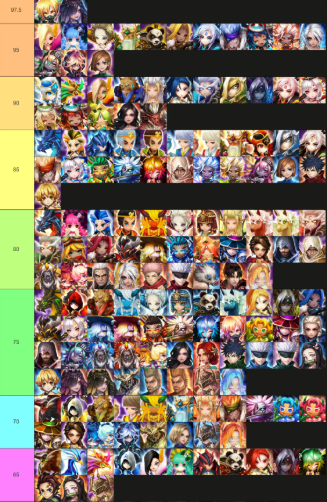
I. Introduction to “summoners war tier list”
A. What a Summoners War tier list is (and how it helps prioritize monsters)
A Summoners War tier list is a ranked evaluation of monsters based on how much value they bring in the current game environment—usually split by mode and sometimes split by rune requirement. The key idea is priority:
Who deserves your best Swift/Vio/Despair sets?
Who deserves devilmons?
Who deserves high-end artifacts and reapps?
Who is a “build later” monster even if they look cool?
The real reason tier lists matter is that Summoners War is an investment game. Your monster doesn’t become “good” because you pulled it. It becomes good because you can:
rune it well,
speed tune it,
build the right team around it,
and use it in the right content.
B. Differences between PvE, PvP, Siege/Guild, RTA, and Special League tier lists
This is the part newer players miss:
PvE tier list values consistency, safety, and speed clears (GB/DB/NB, artifact dungeons, rifts, raids, DHole).
Arena offense values reliable wins and fast cleaves; Arena defense values annoying disruption and anti-cleave tech.
RTA tier list is its own universe—drafting, counterpicks, turn order control, and “can you survive being stripped/stunned?”
Siege/Guild War values repeatability, safe offense teams, and defenses that force bad matchups.
Special League changes rules (4★ only, funky bans, etc.) so whole tiers flip.
So a single “overall tier list” is always incomplete. The best tier list mindset is: tier by mode, then pick your priorities.
C. How often tier lists change (balance patches, collabs, new units)
Tier lists shift mainly because of:
Balance patches (direct buffs/nerfs can flip staples overnight).
New monsters / new mechanics (a new stripper or new turn-cycler can redefine drafts).
Collabs (limited units enter the ecosystem, sometimes bringing new speed leads, new passives, or new counter tools). Official collab hubs like the Summoners War x LOTR site show how Com2uS packages whole new character groups into the game.
Also: community tier lists get refreshed often. For example, you’ll see people circulating updated “2026 Global Normal N5 tier list” posts credited to Seiishizo, and seasonal RTA tier list videos are a recurring thing.
II. Tier List Methodology and Criteria
A. How monsters are graded (SS/S/A/B/C)
Most modern Summoners War tier lists use something like:
SS / S+: meta-defining, high pick/ban impact, works in multiple comps, hard to replace
S: top-tier, reliable, broadly useful, often a draft anchor or core PvE unit
A: strong but more conditional (needs better runes, specific teams, or specific matchups)
B: usable, often niche or outclassed, still worth building if it fits your box
C: mostly outdated or too rune-hungry for the payoff
But here’s the player truth: the difference between S and A is often “how forgiving the monster is.” Some monsters are “S-tier” if you have 300 speed and perfect artifacts. For most people, those behave like A or B.
B. Weighting PvE, PvP, and Siege value differently
If I’m doing “account value” tiering, I weight like this:
Early game / returning players: PvE > Siege offense safety > Arena offense
Mid game: PvE speed + Siege/Guild stability + some RTA
Late game / competitive: RTA draft impact + Siege defense value + SWC meta counters
Because your priorities change as your rune quality improves. A monster that’s “only good in RTA” isn’t your first priority if you can’t even farm consistent GB12/DB12/PC10 (or the current standard content for your progression level).
C. LD5, normal nat 5, nat 4, and LD4 are treated separately
This is non-negotiable. LD5s exist in a different economy than normal nat 5s—pull rates, scarcity, and “most wanted” culture are real. You’ll see dedicated LD5 tier lists and “most wanted LD5” discussions as their own category.
Nat 4 and LD4 also deserve separate treatment because:
Nat 4s are more accessible (skillups easier, dupes happen)
LD4s can be “secret meta” picks in siege/RTA
Some nat 4s are simply better ROI than mid-tier nat 5s
III. Overall Summoners War Meta Snapshot (2026)
A. Current meta-defining nat 5 monsters across modes
In 2026 discussions, you’ll see “meta-defining” used in two ways:
RTA meta anchors: units that control turn order, strip + control, punish passives, or enable dominant drafts.
Siege anchors: defenses that force awkward counters and offenses that win safely over and over.
A lot of community tier content is concentrated around high-rank RTA and siege play, especially in Seiishizo’s seasonal tier lists and the community threads that share them.
If you want a “high-level meta radar,” a site like SWRT exists specifically to surface rankings/data and even mentions AI-tier-style features for RTA.
B. Impact of recent collabs on the tier list
Collabs matter because they add limited monsters with unique kits and speed leads, and players will test them aggressively. The LOTR collab is a good example of a full official campaign with multiple collab characters and boss characters promoted directly by Com2uS.
The realistic impact looks like this:
Some collab units become meta staples (especially if they bring unique passives, strong control, or strong speed lead utility).
Some are “collector tier” (fun, usable, but not worth rerouting your entire rune inventory).
Most sit somewhere in between and become matchup tools in Siege or counter picks in RTA.
C. Monsters rising/falling after patches
The community is constantly reacting to balance patches. Even in late 2025 / early 2026 you can see statistical tier list discussions around post-balance environments, with players debating placements (“Why is X so high?” “Why is Y low?”).
Player takeaway: tier lists are patch notes in human form—they reflect what’s winning right now.
IV. Normal Nat 5 Tier List (Global)
A. Top S/SS-tier normal nat 5s (why they’re prioritized)
Instead of pretending I can publish a perfect global ranking in one article (and have it stay correct), I’ll explain what makes a normal nat 5 “S/SS” in practice:
Draft impact: they force bans or force specific counters in RTA.
Low rune dependency: they work even without perfect stats.
Teamwide value: speed leads, reliable strips, team buffs, team control.
Mode flexibility: useful in more than one place (RTA + Siege, Arena + Siege, etc.).
When you watch high-level tier list breakdowns (like the recurring “global normal N5 tier list” content), the units that rise to the top usually do at least two of those things.
B. Strong A-tier monsters with niche/mode-specific power
A-tier nat 5s are often:
insane in Siege but mid in RTA
or great in Arena offense but useless on defense
or require better rune thresholds to shine
These are still worth building if:
you have runes to support them, and
you actually play the mode they dominate.
C. B/C-tier nat 5s and when they’re still worth building
Here’s where player psychology gets messy:
B/C-tier doesn’t mean “unplayable.”
It often means “outclassed as a general pick.”
They’re still worth building when:
they counter your server’s popular siege defenses,
they fit a specific Special League rule set,
you have god-tier runes that let them do something unfair,
or you simply love them (and you’re okay with investing for fun).
V. LD5 Tier List and Most Wanted Units
A. LD5 S/SS-tier units and their strengths
LD5 S/SS units usually share one trait: they do something other monsters can’t replicate cleanly, or they do a common job at an unfair power level (strip/control/turn cycling/damage mitigation).
You’ll see dedicated LD5 tier lists and build/usage breakdowns because the LD pool is so scarce and high-stakes.
B. “Most wanted LD5” culture and why some are chase targets
“Most wanted LD5” lists are basically:
a mix of meta evaluation + emotional wishlist + scarcity flex.
Creators literally make “most wanted LD5 tier list” videos because it’s a shared Summoners War obsession: everyone has that one LD5 they’d sell their soul for.
The chase targets tend to be:
RTA draft anchors (ban magnets),
siege defense nightmares,
or units that enable unique win conditions.
C. LD5 units that are overrated or situational
Yes, overrated LD5s exist. Usually for three reasons:
They look broken on paper but need perfect runes/teams.
They only shine in very specific drafts.
They’re famous because of streamer clips, not because they win consistently for normal players.
This is why “tier list with explanation” content matters more than just the ranking image.
VI. Nat 4 and LD4 Tier Lists
A. Best nat 4 monsters that still compete with nat 5s
Nat 4 value is about ROI:
easier skillups,
easier dupes,
and many are foundational in PvE and Siege.
In practice, the best nat 4s are those that:
bring reliable strips or control,
bring unique utility (heals, cleanse, turn cycling),
or enable speed teams in dungeons.
B. LD4 units core in PvP/PvE
LD4s can be disgusting in Siege and RTA because many have unique passives or awkward mechanics that are hard to replace. You’ll see dedicated LD4 tier list content because the “build or feed” question matters for LD4s more than RGB nat 4s.
C. Safe-to-feed vs must-keep (practical player rule)
My personal rule:
Never feed an LD4 until you’re absolutely sure it’s useless for your account and modes.
For RGB nat 4s: keep anything with unique utility until you have duplicates and know what you’re doing.
A lot of “safe feed” decisions become regret later when Special League formats rotate.
VII. PvE Tier List: Dungeons, Raids, and Progression
A. Best monsters for GB12 / DB12 / NB12 / Steel Fortress / Punisher’s Crypt
PvE tiering is simpler than PvP: consistency beats style.
What makes a monster top-tier in PvE:
reliable debuffs (def break, atk break, slow, glancing),
turn cycling and cooldown control,
safe sustain (heals/cleanse/shields),
and wave control (so you don’t randomly die on trash waves).
Most serious PvE players still build around farmable staples and proven dungeon cores first, then add premium nat 5 “speed clear upgrades” later.
B. Top monsters for Rift Beasts, Raids, and Dimensional Hole
Rift/Raid value is about:
team synergy,
debuff uptime,
and survival under burst.
Dimensional Hole adds another twist: some monsters are mediocre elsewhere but become great in 2A/DHole because of how their kits scale and how content is structured.
C. PvE all-rounders versatile across multiple dungeons
The best PvE all-rounders are monsters that:
bring universal debuffs,
don’t require special conditions,
and are stable in multiple teams.
If you’re F2P or returning, all-rounders are your biggest progression shortcut because you can reuse them everywhere while your rune pool grows.
VIII. PvP Tier List: Arena and RTA
A. Best monsters for Arena offense and defense
Arena offense is about reliability and speed:
cleave if you can outspeed,
bruiser if you can’t,
and always have an answer to common defenses.
Arena defense is psychological warfare:
you want to waste attackers’ time,
punish lazy cleaves,
and force high rune requirements to win consistently.
B. RTA top-tier monsters and why they dominate
RTA tier lists are the most volatile because drafting changes everything. That’s why seasonal RTA tier list content is so popular—it’s basically a snapshot of what wins at the highest levels.
RTA S/SS monsters often dominate because they:
control tempo (turn cycling, speed leads),
strip reliably,
apply control without needing perfect RNG,
punish common passives,
or create “if you let this through, you lose” draft pressure.
C. Special League (4★ and other formats) highlights
Special League flips the table. When 5★ are restricted, nat 4 and LD4 meta becomes everything. This is why feeding 4★ units thoughtlessly is a long-term mistake.
IX. Siege and Guild War Tier Lists
A. Core Siege offense teams (bruiser, cleave, control)
Siege offense is about repeatable safety. You want teams that:
win reliably into common defenses,
don’t rely on perfect RNG,
and can be used repeatedly across towers.
Offense archetypes:
bruiser sustain (safe wins),
cleave (fast wins if your runes allow),
control (deny enemy turns and grind them down).
B. Best Siege defense anchors and anti-cleave units
Good Siege defenses:
punish predictable cleaves,
survive first-turn pressure,
and create “multiple lose conditions” for attackers.
Defense anchors are often those frustrating units that:
cut in,
punish AoE,
force awkward targeting,
or turn a single mistake into a wipe.
C. Why Siege priorities differ from Arena
Arena is one defense, one offense at a time. Siege is a war of attrition:
multiple attacks,
repeated use constraints,
and matchup depth.
A monster that’s “mid in Arena” can be “S-tier in Siege” because it fits a specific defense formula that wins on repetition.
X. Element-Specific Tier Lists (Fire/Water/Wind/Light/Dark)
A. Fire tier highlights (Vanessa, Amber, Masha, etc.)
Fire is often stacked with:
speed lead value,
bruiser threats,
and strong tempo units.
The names you mentioned (Vanessa, Amber, Masha) show up in player conversations because they each represent different fire roles—lead/control/bruiser pressure depending on build and mode. (Exact tier placements vary by list and patch, so treat them as “commonly discussed,” not fixed.)
B. Water and Wind standouts
Water and Wind typically carry:
many of the best utility supports,
strong control picks,
and a lot of siege staples.
In practical terms: if your rune box is mid-tier, Wind/Water bruiser builds are often more forgiving than glass cannon cleaves.
C. Light/Dark highlights beyond LD5 headliners
Not every valuable LD monster is LD5. LD4s often define Special League and siege defense weirdness. This is why LD4 tier content exists as its own category.
XI. Collab and Limited Monster Tier Rankings
A. Collab unit placements (Witcher, Tekken, JJK, LOTR, Cookie Run)
Collab tiering is always spicy because players want a clear answer to:
“Is this unit meta or just shiny?”
The LOTR collab has a dedicated official site and introduced specific collab/boss characters, which is a good example of how big these releases can be.
Creators and community lists will often tier collab units quickly, but the best advice is:
watch how they settle after patch cycles,
and see if they show up in siege defense templates or high-rank RTA drafts consistently.
B. Meta-relevant vs collection-only limited units
Meta-relevant limited units usually:
fit existing strong archetypes (strip + control, speed lead utility, bruiser passives),
or introduce something unique that forces new counters.
Collection-only units:
look cool,
can still be usable,
but don’t replace established staples.
C. How to value limited monsters vs permanent pool units
As a player, I value permanent pool staples higher unless the collab unit is clearly:
a meta anchor,
or a direct upgrade to a role I’m missing.
Limited units are tempting, but your account needs foundations first.
XII. Mode-Focused Tier Lists (Event and Special Content)
A. 11th Anniversary selective summon tier advice
Selective summon events are huge because they let you choose a nat 5 from a broad pool, and tier advice becomes especially important because it’s a “one big decision” moment. There are dedicated tier discussions and guides for this event format.
Player advice:
pick something that helps your account now (progression, RTA core, siege anchor),
not something that’s only cool on paper.
B. Special League and event modes (4★ league, SWC formats)
Event formats rotate, which means “trash” monsters can become top-tier temporarily. This is why long-term players keep a broader bench and don’t feed weird utility.
C. Labyrinth, TOA, special content rankings
Lab/ToA value is about control consistency, safe clears, and not getting RNG’d. Monsters with:
stuns,
cooldown reset,
turn denial,
and safe sustain
tend to climb in these modes even if they’re not RTA staples.
XIII. Build and Rune Considerations Within Tier Lists
A. Rune quality changes a monster’s “real tier”
This is the most important tier list truth:
A monster’s tier assumes a certain rune baseline. If your runes aren’t there, the monster drops tiers for you.
That’s why two players can argue about the same unit:
Player A has insane Swift and says “SS-tier.”
Player B has mid runes and says “overrated.”
Both are correct—for their rune box.
B. Common builds for top-tier monsters
Most top-tier monsters generally fall into build categories:
Speed control (Swift/Violent, high speed, accuracy, turn cycling)
Bruiser (Violent/Will, tanky stats, sustain, consistent damage)
Damage dealer (Rage/Will, high crit, clean nuke thresholds)
Support (Violent/Will, tanky, res/acc depending on role)
Your build determines what mode they dominate in.
C. When a lower-tier unit becomes powerful with specific builds
Some “lower-tier” units become monsters when:
runed extremely fast,
built on unconventional sets (Despair, Nemesis traps),
paired with the right teammates,
or used as a hard counter into common siege defenses.
This is why tier lists are guides, not laws.
XIV. Community and Creator Tier Lists
A. Influential community tier lists (Seiishizo global lists)
Seiishizo’s global tier content is commonly circulated in the Summoners War community, including “2026 global normal nat 5 tier list” posts and seasonal RTA tier list breakdowns.
B. YouTube lists vs written site lists
YouTube tier lists:
often focus on high-rank play,
usually include context and builds,
but can skew toward “content-friendly” takes.
Written lists:
easier to scan,
but sometimes lack nuance about rune thresholds and draft context.
Best move: use both.
C. Using multiple tier lists together
My cross-check method:
Check a global nat 5 tier discussion (community/creator).
Check an RTA/siege-focused snapshot (seasonal tier list).
Check a data-oriented site if you want trend signals (like SWRT-style resources).
If the same monster shows up as top-tier across multiple perspectives, it’s probably a safe investment.
XV. F2P and Progression-Oriented Tier List Reading
A. How F2P players should prioritize tier lists
F2P rule: build what helps you farm first.
If you can’t farm, you can’t rune. If you can’t rune, your nat 5 doesn’t matter.
So early priorities:
stable PvE teams (dungeons, raid)
safe siege offense staples
then RTA toys later
B. Monsters that carry early–mid–late game without heavy spending
The best F2P carries are often:
farmable or accessible monsters that scale with rune quality,
utility supports that are always relevant,
and PvE staples that enable faster farming.
A “good F2P box” beats a “random nat 5 box” every time.
C. When to chase meta nat 5s vs investing in strong nat 4s
Chase meta nat 5s when:
they solve a real gap in your account (speed lead, strip, sustain, RTA anchor)
you actually have runes to support them
Invest in nat 4s when:
you need immediate ROI
you’re still building your farming base
you want special league readiness
XVI. FAQ and Updates for Summoners War Tier Lists
A. How often you should re-check tier lists
In 2026, I’d re-check tier snapshots:
after major balance patches,
during collab periods,
and at least once per RTA season if you care about RTA.
B. Why low-tier favorites can still be viable
Because Summoners War is matchup-driven:
a “low-tier” unit can be a perfect counter,
or a siege specialist,
or a special league monster.
If you love a unit, build it—just be honest about whether it’s a “fun build” or a “meta investment.”
C. Where to follow future tier list updates
Good update sources include:
community tier threads and creator posts (Seiishizo-related lists are frequently shared)
seasonal RTA tier list videos for meta snapshots
official collab pages for understanding what limited units are entering the pool
A summoners war tier list is only useful if you read it like a real player:
What mode do I care about?
What runes do I actually have?
What gaps exist in my box?
Will this monster help me win consistently—or just look cool?
In 2026, meta conversations are still heavily shaped by RTA seasonal shifts, siege repeatability, and collab waves entering the ecosystem.