Sword of Justice Classes Guide: Best Class Tier List, Builds, PvE, PvP, and Beginner Picks
Choosing between sword of justice classes is one of those decisions that feels simple for about five minutes, and then suddenly you realize it affects almost everything you do. Your dungeon role, your PvP comfort, your solo farming speed, your team value, your gear priorities, and even how stressful boss mechanics feel can all change depending on which school you pick. Sword of Justice launched globally with six main schools: Sylph, Numina, Celestune, Bloodstrom, Nightwaker, and Ironclad, while later guides also mention additional future or newer classes such as Dragonsvelte depending on the version and update cycle. For this guide, I’m focusing on the six schools in your outline, because those are still the core class choices most new players compare first.
The fun part is that none of these classes are truly useless. Sword of Justice is not the kind of MMORPG where only one class gets to play and everyone else just exists to suffer. But that does not mean every class is equally easy, equally efficient, or equally beginner-friendly. Some schools feel smooth right away. Some look amazing in PvP clips but are painful if your timing is bad. Some classes are not flashy, yet every serious team quietly loves having them around. So instead of pretending there is one perfect answer for everyone, this guide breaks down sword of justice classes from a practical player angle: what each class does, how hard it is, where it shines, and whether it fits your actual playstyle.
I. Sword of Justice Classes Overview
When people talk about sword of justice classes, they are usually talking about the game’s martial schools. Each school works like a class identity: it decides your weapon style, combat rhythm, party role, strengths, weaknesses, and how much effort you need to put in before the class starts feeling good. The six core schools are Sylph, Numina, Celestune, Bloodstrom, Nightwaker, and Ironclad. At a glance, Sylph is the healer/support, Ironclad is the tank/frontline, Celestune is a ranged burst DPS, Nightwaker is an assassin-style melee burst class, Bloodstrom is a spear-wielding bruiser with mobility and pressure, and Numina is more of a flexible utility/support-damage school.
What makes these classes interesting is that they are not just “damage class one, damage class two, damage class three.” They have very different comfort levels. Ironclad lets you stand in front, absorb pressure, and control enemy movement. Sylph gives you team-saving healing and defensive tools. Celestune lets you fight from range with big elemental output, but you have to respect positioning. Nightwaker rewards fast hands, clean burst windows, and sharp target selection. Bloodstrom gives you that aggressive spear fighter feeling, with mobility and sustain, but it can be rough if you overextend. Numina sits in that valuable middle space where you bring utility and support damage instead of only chasing personal numbers.
Class choice matters because Sword of Justice has different types of content. In PvE, you care about dungeon consistency, raid mechanics, survivability, clear speed, and team support. In PvP, you care more about burst timing, crowd control, mobility, evasion, reaction speed, and whether your class can survive being focused. A class that feels smooth in dungeons may feel awkward in arena. A class that deletes players in PvP may feel tiring during long PvE progression. That is why a good sword of justice classes guide should not only say “this class is S-tier.” It should explain why that class is good and what kind of player actually enjoys it.
II. How the Class Tier List Works
For this tier list, I’m judging classes by five main factors: damage, survivability, utility, mobility, and ease of use. Damage is obvious. If a class cannot kill mobs, clear waves, or pressure bosses, it falls behind quickly. Survivability matters because dead players do zero damage and make dungeon runs messy. Utility is huge because healing, shielding, crowd control, buffs, and team protection often decide whether a group clears hard content smoothly. Mobility matters more in PvP and mechanic-heavy fights. Ease of use matters because a class can be strong on paper but frustrating if only expert players can get consistent results.
PvE and PvP rankings are not the same. In PvE, a stable tank or healer can be more valuable than a glass-cannon burst class. In PvP, a class with high mobility, burst, and control can jump higher because fights are shorter and mistakes get punished faster. For example, Ironclad is loved in group content because teams need a reliable frontline. Sylph is always useful because healing and damage reduction never stop mattering. Nightwaker may not be the easiest PvE class for casual players, but in PvP, a skilled Nightwaker can feel terrifying because assassins are built to punish openings.
For tier meaning, I keep it simple. S-tier means the class is strong across many types of content and brings high value without needing unrealistic investment. A-tier means the class is very good but has clearer tradeoffs, such as higher difficulty, lower survivability, or more specific team needs. B-tier does not mean “trash.” It means the class is more niche, more demanding, or less efficient for the average player. In Sword of Justice, a B-tier class can still be fun and strong if you love its playstyle and invest properly.
III. Overall Sword of Justice Class Tier List
My overall tier list for the six core sword of justice classes looks like this:
S Tier: Ironclad, Sylph, Celestune, Numina
A Tier: Nightwaker
B Tier: Bloodstrom
This ranking is based on general usefulness across PvE, PvP, beginner progression, group demand, and long-term comfort. Ironclad and Sylph score high because tanks and healers are always valuable, especially in group content. Celestune scores high because ranged burst and AoE are extremely useful for progression and dungeon clears. Numina scores high because utility classes usually age well in MMORPGs, especially when team content gets harder. Recent English guides also commonly place Ironclad, Sylph, Numina, and Celestune among the strongest overall picks, although exact order varies by source and patch.
Nightwaker sits in A-tier because the class has amazing potential, especially for PvP and burst-focused players, but it is not as forgiving. If you love assassins, fast combos, and outplaying people, Nightwaker can absolutely feel like an S-tier personal pick. But if you are new, casual, or playing on mobile with less mechanical comfort, it can punish you hard. Bloodstrom lands in B-tier not because it is bad, but because it often needs better timing, matchup knowledge, and build investment to feel as reliable as the top classes. Some guides describe Bloodstrom as aggressive, mobile, and durable, but also harder to optimize compared with safer beginner choices.
The important thing is this: tier lists are not commandments. They are shortcuts. If you love Bloodstrom’s spear playstyle, play Bloodstrom. If Nightwaker’s assassin fantasy is exactly what you want, play Nightwaker. A class you enjoy and practice will usually outperform a “meta” class you hate logging into.
IV. All Six Classes at a Glance
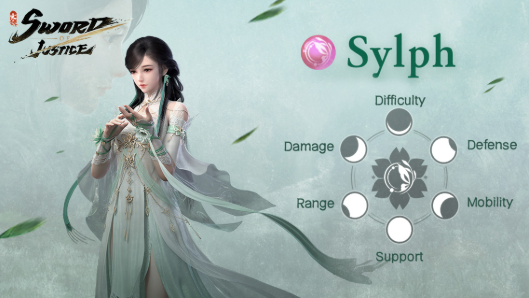
Sylph is the healer and support pick. If you like keeping teammates alive, saving bad runs, and being wanted in group content, Sylph is the comfortable choice. The downside is lower solo damage and slower farming compared with true DPS classes.
Numina is the flexible support-damage option. It fits players who want utility, team value, and smoother group performance without being locked into pure healing. Numina is popular because it can feel useful in many types of content and does not rely only on raw personal DPS.
Celestune is the ranged caster DPS. If you enjoy flashy elemental attacks, big AoE, and safer distance-based combat, Celestune is easy to like. The catch is that ranged does not mean brainless. Poor positioning can still get you killed, especially in PvP.
Bloodstrom is the spear bruiser. It gives you mobility, pressure, sustain, and a very aggressive feel. It is great for players who want to be in the enemy’s face without playing a full tank, but it is less forgiving than it looks.
Nightwaker is the assassin. Fast movement, burst combos, sharp engages, and high punishment potential define the class. It is one of the coolest schools visually and mechanically, but it is also one of the hardest to master.
Ironclad is the tank and frontline controller. If you like being the wall that keeps the team alive, Ironclad fits perfectly. The official class preview describes Ironclad as a heavy defensive school with strong frontline value, crowd control, and team protection, which matches how most players talk about the class.
V. Sylph Class Guide
Sylph is the class I recommend to players who want to be useful everywhere without needing to chase damage charts. In group PvE, a good Sylph is priceless. Healing, shielding, damage reduction, and emergency recovery tools make dungeons much smoother. If your team is learning mechanics, Sylph can cover mistakes. If your tank gets chunked, Sylph can stabilize. If your DPS players greed too hard, Sylph is often the reason they survive long enough to pretend it was “calculated.”
The weakness is obvious: solo speed. Sylph is not the class you pick if your only goal is deleting mobs as fast as possible. You can still quest, farm, and progress, but compared with Celestune or Nightwaker, you will feel the slower damage pace. That is the tradeoff. You give up personal burst for team reliability. In return, you get one of the safest and most wanted roles in the game.
For a healing-focused Sylph build, I would prioritize healing power, cooldown reduction, survivability, and defensive utility. You want to stay alive first, because a dead healer is the fastest way to turn a clean run into chaos. After that, focus on stronger heals, better uptime, and tools that reduce incoming team damage. In PvP, Sylph also needs anti-burst awareness. Do not stand still like a free target. Your value comes from surviving pressure and making the enemy waste resources trying to finish your team.
Is Sylph the best healer class? Among the six core schools, yes, Sylph is the main healer identity and the safest answer for players who specifically want that role. English class guides consistently describe Sylph as the primary healer/support class with strong healing and team protection, which makes it one of the most stable choices for both PvE and organized PvP.
VI. Numina Class Guide
Numina is one of those classes that can be harder to explain than to feel. It is not as straightforward as “I tank” or “I heal” or “I assassinate.” Instead, Numina sits in a flexible support-damage space where your value comes from helping the team while still contributing meaningful output. That makes it attractive for players who do not want to play a pure healer but still want to be more useful than a selfish DPS.
In PvE, Numina is strong because utility ages well. Raw damage can be replaced. A useful class that makes the whole party smoother often keeps its value even when patches shift numbers around. Numina can fit into group content comfortably because it helps with consistency, and consistency matters a lot once bosses start punishing sloppy runs. For solo play, Numina is also more comfortable than many players expect because it is not as fragile or all-in as some burst classes.
For a PvE Numina build, I would lean into support damage, cooldown uptime, team utility, and balanced survivability. You are not trying to out-burst every pure DPS class. You are trying to make every fight cleaner. That means your build should avoid going too greedy. A Numina that dies while chasing damage loses the exact value that makes the class good.
In the current meta, Numina usually lands high because it is flexible and popular. The Sword of Justice Wiki’s school-selection tips mention Numina as one of the popular classes, and newer tier lists often place Numina near the top for overall performance.
VII. Celestune Class Guide
Celestune is the class for players who like ranged damage, flashy elemental effects, and strong PvE clearing. If you enjoy standing at a safer distance and unloading skills while melee players are busy dodging boss feet, Celestune is probably going to catch your eye quickly. The class is often described as an elemental ranged DPS with strong burst and AoE pressure, which makes it especially attractive for dungeon clearing and progression.
In PvE, Celestune feels great because ranged damage is comfortable. You can watch boss animations more easily, keep safer spacing, and contribute strong AoE when mobs stack up. For leveling and dungeon progression, that is a huge advantage. If you are the kind of player who wants smooth damage without being glued to the boss’s face, Celestune is one of the best picks.
The PvP story is different. Celestune can still be strong, but ranged classes need positioning discipline. If you get caught by a Nightwaker or pinned by control, your damage means nothing. This is why some players call Celestune strong but not exactly beginner-proof in competitive modes. You need to understand spacing, cooldowns, defensive timing, and when to kite instead of greed.
For builds, focus on ranged damage, elemental burst, cooldown efficiency, and enough defensive stats to survive pressure. In PvE, you can lean harder into damage. In PvP, I would not go full glass cannon unless you are confident in your positioning.
VIII. Bloodstrom Class Guide
Bloodstrom is the class you pick when you want to fight aggressively without playing a pure assassin. It has that spear-user identity: mobile, forceful, and built to keep pressure on enemies. Some guides describe Bloodstrom as a bruiser-style class with crowd control, durability, and strong forward pressure, which makes it appealing for players who want melee action but do not want to be the team’s main tank.
The best part of Bloodstrom is how active it feels. You are not standing in the back. You are not waiting for someone else to engage. You are pushing, trading, controlling space, and forcing enemies to respond. In solo play, that can feel satisfying because you have enough tools to keep moving and enough sustain to avoid folding instantly.
The problem is that Bloodstrom can be easy to misunderstand. If you play it like Ironclad, you may overestimate your tankiness. If you play it like Nightwaker, you may overcommit and get punished. Bloodstrom lives in the middle, and that middle space requires good judgment. You need to know when to dive, when to peel, when to retreat, and when to use sustain tools instead of burning everything at once.
For PvP and solo builds, I would prioritize mobility, survivability, control duration, and burst windows. Bloodstrom gets better when your gear lets you survive long enough to use your kit properly. If you are undergeared, it can feel awkward because you are close enough to take punishment but not always tanky enough to ignore it.
IX. Nightwaker Class Guide
Nightwaker is the class everyone watches in highlight clips and then immediately underestimates how hard it is to play well. Official class previews describe Nightwaker as an elite assassination school built around speed, precision, fast mobility skills, invulnerability timing, cleansing, and vanishing tools. That sounds amazing because it is amazing, but it also means the class expects you to react quickly and make sharp decisions.
The core Nightwaker fantasy is simple: get in, burst hard, avoid retaliation, and punish vulnerable targets. In PvP, this can feel ridiculous when done properly. You can pressure backlines, delete careless players, and create chaos. In PvE, Nightwaker can still deal strong damage, but melee positioning and burst timing matter a lot. If you mess up, you do not have the same safety net as Ironclad or Sylph.
For advanced players, the best Nightwaker build should focus on burst damage, mobility, critical stats, cooldown cycling, and survival tools that help you escape after committing. You want to kill or heavily pressure the target during your opening window. If the fight drags on and your cooldowns are down, you become much easier to punish.
Nightwaker is often called one of the hardest classes because its mistakes are obvious and expensive. A Sylph mistake might be recoverable. An Ironclad mistake might be absorbed by tankiness. A Nightwaker mistake often means you dash in, fail to secure value, and get deleted. But if you enjoy high-skill classes, that danger is exactly what makes Nightwaker fun.
X. Ironclad Class Guide
Ironclad is the classic “I am the wall” class, and honestly, every MMORPG needs one. The official class preview describes Ironclad as a heavy-armored frontline school with strong defense, steady damage, crowd control, and the ability to protect allies in dungeons and team fights. That is exactly why Ironclad is one of the safest and most valuable sword of justice classes for both new players and organized groups.
In PvE, Ironclad is excellent because teams need someone who can stand in front, hold pressure, and create safe openings. A good Ironclad makes everyone else’s job easier. DPS players can focus on damage. Healers can heal more predictably. Mechanics feel less chaotic because the boss is not constantly ruining the backline. That kind of value does not always show up on damage meters, but it absolutely shows up in clear consistency.
For raids and dungeons, build Ironclad around defense, damage reduction, crowd control, threat stability, and team protection. You do not need to chase top damage. Your job is to make the fight playable. In PvP, Ironclad can also be annoying in the best way: hard to kill, disruptive, and capable of locking down enemies so your team can follow up.
Is Ironclad the best tank class? Among the six core classes, yes. It is the main tank identity and one of the most beginner-friendly options. Multiple English guides recommend Ironclad for new players because its durability gives more room to learn mechanics without exploding every time you make a mistake.
XI. Best Classes for PvE
For PvE, my top picks are Ironclad, Sylph, Celestune, and Numina. Ironclad brings frontline stability. Sylph brings healing and survival. Celestune brings ranged AoE damage and smooth clearing. Numina brings utility and flexible support damage. Together, these classes cover almost everything PvE asks from you: tanking, healing, damage, control, and consistency.
For solo PvE and progression, Celestune and Numina are especially comfortable. Celestune clears mobs well and plays from range, which makes questing smoother. Numina has enough flexibility to handle different situations without feeling too one-dimensional. Ironclad is slower but safe. Sylph is safe but slower. Nightwaker can progress quickly if you are mechanically comfortable. Bloodstrom is fun for solo players who like aggressive melee but can feel gear-sensitive.
For world bosses and group PvE, the most valuable classes are usually the ones that help the whole team stay alive and keep uptime. Ironclad and Sylph are the obvious core. Celestune adds strong ranged DPS. Numina supports the group’s flow. Nightwaker and Bloodstrom can absolutely contribute, but they usually need cleaner play to avoid losing uptime or dying during heavy mechanics.
XII. Best Classes for PvP
For PvP, the ranking shifts. Nightwaker, Bloodstrom, Ironclad, Sylph, and Celestune all have real value, but for different reasons. Nightwaker brings burst and mobility. Bloodstrom brings aggressive pressure and control. Ironclad brings frontline disruption. Sylph brings healing and team sustain. Celestune brings ranged punishment if protected well.
If you want raw PvP kill pressure, Nightwaker is the obvious attention-grabber. Its mobility and burst make it scary in the hands of a skilled player. Bloodstrom is also strong because it can pressure targets while bringing more bruiser-style staying power. Guides often mention Nightwaker and Bloodstrom as strong PvP choices because of their mobility and burst potential.
If you prefer team-based PvP, Sylph and Ironclad become extremely important. A good healer can completely change a fight. A good tank can control space and force the enemy team to waste cooldowns. Celestune is powerful too, but positioning is everything. If your team protects you, you can deal serious damage. If you get jumped, the match can go downhill fast.
The PvP classes that reward high mechanical skill the most are Nightwaker, Celestune, and Bloodstrom. Nightwaker demands engage timing. Celestune demands spacing. Bloodstrom demands judgment between aggression and survival.
XIII. Best Class for Beginners
For beginners, the safest picks are Ironclad and Sylph. Ironclad gives you durability, which means you can survive mistakes while learning boss mechanics, positioning, and class systems. Sylph gives you a valuable team role, and healers are always wanted. Both classes are recommended as beginner-friendly by multiple English guides, mainly because they offer survivability and party value without requiring assassin-level mechanics.
For casual and F2P players, I also like Numina and Celestune, depending on your comfort level. Numina is flexible and useful. Celestune has strong ranged PvE comfort. If you mostly play solo, Celestune may feel smoother. If you like being useful in groups, Numina is a smart long-term pick.
The classes I would avoid early are Nightwaker and Bloodstrom, unless you already know you enjoy high-action melee gameplay. They are not bad classes. They just punish mistakes harder. New players often pick the cool assassin, get destroyed in PvP, and then blame the class. The truth is Nightwaker is powerful, but it asks more from you. Bloodstrom is similar: strong when played well, but not as naturally forgiving as Ironclad.
XIV. Best Traits and Gear by Class
For Sylph, focus on healing power, cooldown reduction, survivability, and defensive utility. You want gear that helps you stay alive and keep teammates alive. In PvP, add resistance and anti-burst stats where possible.
For Numina, go for a balanced setup: support damage, cooldown efficiency, survivability, and utility scaling. Numina should not build like a selfish DPS unless you are doing a specific solo setup.
For Celestune, prioritize ranged damage, elemental burst, critical scaling, cooldown efficiency, and enough defensive stats to avoid getting instantly punished. PvE Celestune can go more offensive. PvP Celestune needs more survival and mobility awareness.
For Bloodstrom, build around attack, sustain, crowd control value, mobility, and durability. You want enough toughness to stay in melee range without melting, but enough damage to make your pressure matter.
For Nightwaker, focus on burst, critical stats, cooldown cycling, mobility, and escape safety. Glass-cannon builds are exciting but risky. If you are dying before finishing combos, add survivability.
For Ironclad, prioritize defense, damage reduction, control, threat stability, and team protection. Your gear should make you harder to kill and better at controlling fights, not just slightly better at dealing damage.
XV. Team Composition and Class Synergy
A strong dungeon or raid party usually wants a stable core: Ironclad + Sylph + damage dealers + utility. Ironclad controls the frontline. Sylph keeps everyone alive. Celestune provides ranged AoE and burst. Numina adds support damage and utility. Nightwaker or Bloodstrom can fill melee DPS slots depending on player skill and fight requirements.
For casual players, a comfortable party might look like Ironclad, Sylph, Celestune, Numina, and one flexible DPS. That setup is safe, balanced, and forgiving. For more aggressive teams, you can run heavier damage with Nightwaker and Bloodstrom, but you need better coordination. If everyone dives randomly, the party becomes chaos.
In endgame content, synergy matters more than individual ego. A top DPS class cannot carry if the tank loses control or the healer gets deleted. A support class cannot save a party that refuses to dodge. The best teams are not just stacked with high-tier classes; they are built around clear jobs and players who understand those jobs.
XVI. Which Sword of Justice Class Should You Choose?
Choose Sylph if you want to heal, support, and always be useful in teams. Choose Ironclad if you want to tank, protect allies, and learn the game safely. Choose Celestune if you want ranged DPS, strong AoE, and smooth PvE progression. Choose Numina if you want utility, support damage, and flexible team value. Choose Nightwaker if you want fast assassin gameplay and do not mind a higher skill ceiling. Choose Bloodstrom if you want aggressive melee bruiser combat with mobility, pressure, and sustain.
If difficulty matters, Ironclad and Sylph are the easiest safe picks. Numina is moderate. Celestune is easy to enjoy but harder to master in PvP. Bloodstrom is more demanding than it first looks. Nightwaker is the most mechanically punishing.
If solo potential matters, Celestune, Numina, Nightwaker, and Bloodstrom are all reasonable, but Celestune is the most comfortable for many players because ranged PvE is simply easier to manage. If team demand matters, Ironclad and Sylph are the safest long-term choices.
Conclusion
The best way to think about sword of justice classes is not “which class is objectively perfect?” It is “which class matches the way I actually like to play?” If you want the safest beginner route, pick Ironclad or Sylph. If you want strong PvE progression and ranged damage, pick Celestune. If you want flexible team value, pick Numina. If you want high-speed assassin gameplay, pick Nightwaker. If you want aggressive spear bruiser pressure, pick Bloodstrom.
My overall six-class ranking is Ironclad, Sylph, Celestune, and Numina in S-tier, Nightwaker in A-tier, and Bloodstrom in B-tier for general players. But again, that does not mean Bloodstrom is unplayable or Nightwaker is worse than a beginner class in skilled hands. It only means some classes give more reliable value across PvE, PvP, progression, and team content.
If you are still unsure, choose by role. Want to heal? Sylph. Want to tank? Ironclad. Want ranged DPS? Celestune. Want flexible support damage? Numina. Want assassin burst? Nightwaker. Want mobile melee bruiser? Bloodstrom. That simple role-based decision will usually make you happier than blindly chasing a tier list.