Anime Crusaders Tier List Guide: Best Units to Build, Summon, and Use in Every Mode
If you are trying to figure out the current anime crusaders tier list, the first thing I want to say is this: do not treat any tier list like a stone tablet dropped from the sky. Anime Crusaders is one of those Roblox anime tower defense games where a unit can look insane on paper, then feel awkward when you actually place it in a real run. Damage matters, sure, but so do SPA, range, cost curve, placement type, passives, evolution value, trait scaling, and whether that unit actually fits the mode you are farming. I have seen players pull a shiny-looking Mythic, dump everything into it, and then realize later that a cheaper support or farm unit would have helped their account more.
That is why this guide is written from a player’s point of view rather than just throwing names into S, A, B, C, and D tiers with no context. I am going to break down which units are worth chasing, why some units stay strong across multiple patches, how Update 5.5 and Update 5.0 changed priorities, and which characters are better for Story, Infinite, farming, bosses, and beginner progression. The goal is not just to say “this unit is good” or “that unit is bad.” The goal is to help you understand what to build first so you do not waste gems, rerolls, evolution materials, or time on units that only look good because of rarity.
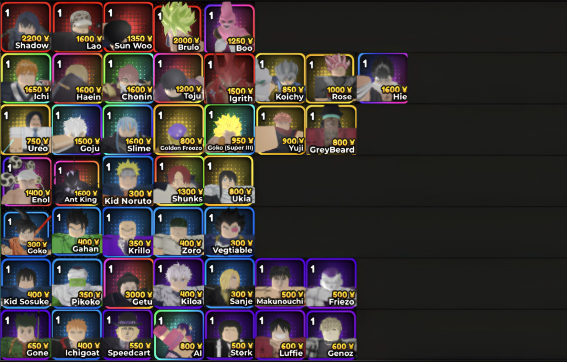
I. Anime Crusaders Tier List Overview
The main thing this anime crusaders tier list measures is overall unit value. That means I am not only looking at raw damage numbers. A unit with huge damage but awful SPA, bad range, high cost, and no utility can still feel worse than a unit with slightly lower damage but smoother uptime and better map coverage. In tower defense games, consistency is often more important than flashy burst. A unit that helps every run, fits several team comps, and works in multiple modes usually deserves a higher ranking than a unit that only shines in one perfect setup.
I also judge units by how much they help account progression. For example, a strong beginner unit that clears Story cheaply can be more valuable to a new player than a late-game Secret they cannot evolve or upgrade yet. On the other hand, once you are pushing Infinite or boss-heavy content, your priorities change. You start caring more about scaling, placement limits, support buffs, true damage, hybrid targeting, and how well a carry handles tankier waves. That is why one unit can be amazing for early Story but fall off hard in endless runs, while another unit feels expensive early but becomes a monster later.
Rankings also change based on team composition. A DPS carry that looks average alone can become top-tier when paired with damage buffs, slows, stuns, cooldown support, or a farm economy that lets you upgrade faster. Support units are especially easy to underrate because they do not always produce the biggest damage number on the end screen. But in actual high-pressure runs, a well-placed support can be the difference between clearing a wave smoothly and watching enemies walk through your defense like your team was made of paper.
Some units stay meta across multiple patches because their kits solve universal problems. Hybrid units stay valuable because they cover more enemy types. True damage units stay relevant because they ignore annoying defensive scaling. Strong supports stay useful because buffing your best carry remains powerful no matter which DPS is currently popular. Units with excellent range, good SPA, reliable AoE, and useful passives age better than units that only offer one big number. The best Anime Crusaders units are not just strong today; they have kits that are hard to replace.
II. How the Tier System Works
For this guide, S-tier means meta-defining. These are the units you build around, not just units you toss into an empty slot. S-tier units usually bring elite damage, excellent scaling, strong passives, hybrid coverage, high-impact utility, or some combination of all of those things. If you pull one of these units, it is usually worth checking whether you can evolve it, trait it, and make it part of your main team. These are the units that can carry Story, remain relevant in Infinite, and still feel useful after several account upgrades.
A-tier units are very strong and often easier to fit into real teams. They may not be the absolute best in the game, but they perform well enough that most players will not regret building them. Some A-tier units are slightly weaker versions of S-tier carries. Others are strong supports, flexible hybrids, or reliable damage dealers that do not need perfect conditions. For many players, especially free-to-play players, A-tier units are the backbone of progression because they are realistic to obtain and strong enough to clear most content.
B-tier units are usable, but you should start asking questions before investing heavily. A B-tier unit may be good in Story, decent for early waves, or useful if you lack better options. However, these units often have clear weaknesses: awkward SPA, limited range, poor scaling, expensive upgrades, low boss pressure, or a kit that depends too much on a specific map. C-tier units are mostly early-game or niche picks, while D-tier units are usually placeholders. They can help when your roster is empty, but they should not be your long-term investment plan.
The ranking criteria include damage, SPA, range, placement type, AoE shape, passive effects, support utility, cost efficiency, evolution value, trait scaling, and mode performance. Rarity matters, but it is not everything. Mythic, Secret, and evolved units often rank higher because their ceilings are stronger, but a unit being rare does not automatically mean it is worth maxing first. Likewise, a Legendary can be useful early if it gives you a cheap clear path or fills a role your roster lacks. The smartest players do not build by rarity alone; they build by function.
III. Overall Best Units Ranked
For the current overall meta, I would place units like Akuzo Vs Renkuro, Sun Woo, Zero, Kurimi, Claw, Brulo, Beyond Heaven, Sun God vs Dragon, Puci-style evolved support/carry units, and other high-impact Mythic or Secret options near the top. These are the names that keep coming up because they either carry damage, offer rare utility, or scale well enough to matter in harder content. When you see players talking about top-tier Anime Crusaders units, they are usually talking about units that can handle more than one job or dominate one job so hard that the team can be built around them.
Akuzo Vs Renkuro is the kind of unit players like because it feels strong in practical combat, not just in theory. Good range, strong damage profile, and boss-killing value make it a premium carry-type option. Sun Woo is another top pick because summon or shadow-style mechanics tend to scale well when waves get thicker. Zero is valuable because strong support or damage-boosting utility can make your entire team better. Kurimi and Claw are also popular because they bring strong performance in the kind of content where timing, pressure, and enemy control matter.
A-tier units are your reliable workhorses. These include strong damage dealers, flexible supports, and units that can replace harder-to-get meta picks. Not every player will have every Secret or evolved Mythic, so A-tier matters a lot in real progression. A good A-tier unit can clear Story, help farm resources, and keep your account moving while you wait for better banners or evolution materials. These are the units you should not feel bad about building if they solve a current problem on your roster.
Lower-tier units are not automatically useless, but they are usually temporary. Early units like basic anime-inspired starters, cheaper damage dealers, or simple Legendary/Epic picks can help you through the first stages, but they fall behind once enemies get tankier and waves move faster. The mistake is not using them. The mistake is overinvesting in them after you already have access to better options. Use low-tier units as stepping stones, then move your resources into units with better scaling.
IV. Update 5.5 Tier List
Update 5.5 is important because newer update units can shake the meta, but they also need time before players know exactly where they land. Fresh units often look overpowered during the first few days because everyone is excited, showcase videos are everywhere, and players have not fully tested weaknesses yet. That is why I treat Update 5.5 units as a watchlist first. If a new JJK-style unit has strong damage, good utility, or a unique passive, it may become S-tier. But I would be careful about spending every rare reroll immediately before the unit’s final role is clear.
The most interesting Update 5.5-style picks are the ones with either high burst, strong crowd control, or unique late-game scaling. Units inspired by characters like Goju, Sukuno, Kashymu, Hikari, Chosu, Zen, or judgement-themed kits can become very strong if their abilities interact well with bosses or dense waves. In Anime Crusaders, new units become meta not just because they are new, but because they solve something existing units struggle with. If a new unit clears shields, controls enemies, boosts team output, or scales into Infinite, then it deserves attention.
The newest meta is usually shaped by three groups of players: showcase testers, Infinite pushers, and practical farmers. Showcase testers show the big numbers. Infinite pushers reveal whether the unit survives late-game pressure. Practical farmers decide whether it is worth using every day. A unit that only looks good in a showcase but is too expensive or too awkward may fall quickly. A unit that quietly clears multiple modes without drama can rise over time.
For Update 5.5, I would avoid panic-building every new unit just because it is from the latest banner. If you pull a new high-rarity unit, test it, compare its cost curve to your current team, and wait for more mode-specific results before burning premium traits. Build immediately only if the unit clearly improves your account or fills a missing role. Otherwise, save some resources. In gacha-style tower defense games, patience often saves more progress than hype.
V. Update 5.0 and Hunter Mayhem Changes
Update 5.0 and Hunter Mayhem were important because they pushed summon priorities toward stronger scaling and more specialized units. When an update adds new modes, tougher waves, or more demanding boss patterns, players start valuing different things. A unit that used to be fine for basic Story may suddenly feel weak if new content demands better burst, better AoE, or more utility. That is how older units rise or fall after a major update.
The best new units from Update 5.0 were generally the ones that gave players stronger late-game options or better team flexibility. Units connected to hunter-style scaling, shadow mechanics, or high-pressure boss content naturally became more attractive because they fit the update’s demands. When new content hits harder, players do not just need bigger numbers; they need units that keep working when enemies become faster, tankier, or more resistant to simple damage spam.
Older units rose after Hunter Mayhem if their kits happened to match the new content. For example, a unit with reliable stun, slow, multi-hit pressure, or good range can become better when waves are harder to control. Meanwhile, older pure DPS units may fall if their damage no longer keeps up or if their SPA feels too slow. This is why tier lists change even when a unit itself does not get directly nerfed. Sometimes the content changes around the unit, and that is enough to shift its value.
Update 5.0 also changed summon and build priorities. Instead of summoning randomly whenever you get gems, it became smarter to watch banners for units that improve your actual team plan. If you already have a main DPS, you may need support more than another damage unit. If your team lacks hybrid coverage, a hybrid unit can be more valuable than a slightly stronger ground-only carry. If Infinite is your goal, late-game scaling matters more than early-wave comfort. Good players summon for holes in their roster, not just for shiny names.
VI. Best Units for Story Mode
Story Mode is all about reliable progression. You need units that are affordable, cover waves well, and do not require perfect setup to function. Early on, cost matters more than people admit. A super expensive unit can be amazing later, but if you cannot place or upgrade it in time, it will not save your run. That is why some beginner-friendly units can feel better than higher-rarity units during the first few chapters.
The best Story units usually balance damage, range, and cost. You want something that can handle groups without needing too many upgrades, plus at least one unit that can help with bosses or tougher enemies. If your roster includes a strong carry like Akuzo Vs Renkuro, Sun Woo, Brulo, Kurimi, or Claw, Story becomes much easier. But if you do not have those, A-tier and even decent B-tier units can still carry you if they are placed well and upgraded at the right time.
For new players, I recommend building a roster with one main DPS, one secondary AoE unit, one support or control unit, and one farm unit if available. Do not bring six expensive units that all want upgrades. That looks strong on the team screen but feels terrible in the match. Story Mode rewards smooth pacing. You need to clear early waves cheaply, then slowly transition into your stronger upgrades before the stage gets serious.
Best picks for new rosters are usually units that are simple to use and do not require complicated synergy. If a unit needs a specific support, max evolution, perfect trait, or rare curse to feel good, it is not beginner-friendly. A beginner unit should work even when your account is messy. That is why reliable A-tier units and strong Legendaries can be better first investments than a Secret you cannot afford to upgrade properly yet.
VII. Best Units for Infinite Mode
Infinite Mode is where the tier list becomes stricter. Early-wave comfort matters less, and late-game scaling matters much more. Units that dominate Story can fall off once enemy HP starts climbing hard. For Infinite, I care about sustained damage, high-value passives, hybrid coverage, true damage, boss pressure, and support synergy. If a unit cannot contribute when waves get thick and enemies stop dying quickly, it will eventually become a weak slot.
Top late-game scaling units are usually S-tier carries and premium evolved units. Sun Woo-style scaling, Akuzo Vs Renkuro’s boss pressure, Brulo’s destructive output, Beyond Heaven’s utility, Sun God vs Dragon’s AoE value, Zero’s team impact, and Kurimi’s strong performance all matter more in long runs. The best Infinite teams usually do not rely on one unit doing everything. They stack damage, control, buffs, and economy so the team keeps up as waves get nastier.
Support and utility are extremely important in Infinite. Slows, stuns, buffs, cooldown help, and enemy control can extend a run much more than adding another random DPS. If your carries are already strong, adding the right support can multiply their value. This is where players who only chase damage numbers often make mistakes. A support unit may not top the damage chart, but it can create the conditions that allow your carry to deal damage safely for longer.
Placement also matters more in Infinite. A unit with huge range can cover multiple lanes or key turns. A unit with poor range may need perfect placement and still miss important enemies. Hybrid units are also valuable because they reduce the chance that one enemy type ruins your run. Infinite Mode exposes roster holes brutally, so your team needs to be balanced rather than just expensive.
VIII. Best Farming Units
Farming units are not always glamorous, but they are some of the most important units for account growth. A good money or resource-generating unit lets you place and upgrade your real damage units faster. In Story, farming can help smooth difficult stages. In Infinite, farming can be the difference between reaching your power spike in time or falling behind. Players who ignore economy often wonder why their expensive units feel bad; the answer is usually that they cannot upgrade them quickly enough.
The best time to use farming units is when a stage gives you enough breathing room to set up. If early waves are manageable, place your farm early and let it pay off. If the stage starts aggressively, you may need to place damage first, then farm once stable. Farming is not about blindly placing economy every match. It is about knowing when the extra income will actually help before the stage punishes you.
You should replace or reduce farming units when your team already has enough economy or when the mode does not reward slow setup. Some boss fights or shorter stages may not give farming enough time to pay for itself. In those cases, bringing another support or damage unit may be better. A farm unit is strong when the match length allows it to generate value. If the fight ends too quickly or kills you too early, farming becomes a wasted slot.
For progression speed, farming units are huge because they let you clear harder content sooner and upgrade expensive carries more consistently. Even if your main goal is collecting S-tier units, do not sleep on economy. In many tower defense games, the strongest team is not six damage monsters. It is a team that can afford its damage monsters before the enemies overrun the map.
IX. Best Units by Role
For pure DPS, the best units are usually the ones with strong scaling, good range, manageable SPA, and useful attack patterns. Akuzo Vs Renkuro, Sun Woo, Brulo, Claw, Kurimi, Sun God vs Dragon, and other top carries fit this category depending on your mode and evolution state. A DPS unit should not just hit hard once. It should keep pressure on waves and bosses throughout the stage.
Support units are the hidden backbone of strong teams. Zero is a great example of why support value matters. Units that buff damage, improve cooldowns, stun enemies, slow waves, or help control dangerous targets can make your whole team better. In late-game content, support can matter as much as DPS because enemies become too tanky to brute force without setup. If your team already has a strong carry, the next upgrade may be support, not another carry.
Hybrid or flexible units are valuable because they reduce team-building stress. A unit that can hit multiple enemy types or perform well across several modes gives you more freedom. Beyond Heaven and Sun God vs Dragon-style units are popular partly because they are not locked into only one narrow use. Flexible units are especially good for players who do not have a deep roster yet. One strong flexible unit can cover several problems while you build out the rest of your account.
The best teams usually mix roles instead of stacking one type. A balanced team might include one main DPS, one secondary DPS or AoE unit, one support, one control unit, one farming unit, and one flexible slot for the mode. If you are doing Story, that flex slot might be cheap damage. If you are doing Infinite, it might be another support or late-game scaler. If you are fighting bosses, it might be your strongest single-target option.
X. Best Traits and Evolution Value
Traits can completely change how a unit feels. A top-tier unit with a strong trait can become ridiculous, while the same unit with a bad trait may feel only decent. The best traits usually improve the unit’s main strength. If a unit is already a high-DPS carry, damage or cooldown-style traits can push it further. If a unit relies on range or uptime, traits that improve consistency may matter more. The point is to match the trait to the unit’s job.
Evolution is often what separates “good” from “meta.” Many units are not ranked only by their base form. They are ranked by what they become after evolution. An evolved Mythic or Secret can gain better stats, improved abilities, stronger passives, or new utility that changes its entire placement in the tier list. This is why beginners sometimes get confused. They pull a unit that everyone says is S-tier, but in its unevolved state it does not feel amazing yet. The power may be locked behind evolution.
The units most worth upgrading first are the ones that will stay in your team for a long time. Do not spend rare evolution materials on a unit you are already planning to replace. Prioritize main carries, premium supports, and flexible units that work in multiple modes. If a unit helps Story, Infinite, bosses, and farming efficiency, it is a safer investment than a unit that only shines in one specific stage.
Rerolls should also be used carefully. It is tempting to chase perfect traits immediately, but early accounts usually need more units before they need perfect optimization. A decent trait on a top unit is often good enough until your roster is stable. Save premium rerolls for units you know you will keep. Nothing feels worse than burning rare resources on a unit that gets benched two days later.
XI. Best Teams and Synergy
A strong Story team should be affordable and stable. I would build around one reliable main DPS, one AoE wave-clear unit, one cheap early-game unit, one support, and one farm unit if the stage allows it. The final slot can be flexible depending on what you struggle with. If bosses are the problem, add single-target damage. If waves leak, add control or better AoE. Story teams should not be too greedy because you need to survive before your expensive upgrades come online.
A boss-focused team needs strong single-target damage, buffs, and enough control to keep dangerous enemies from slipping through. Akuzo Vs Renkuro-style boss pressure is valuable here, while supports like Zero can boost your carry’s output. If the boss has adds, you still need some wave clear. Many players fail boss stages because they bring only boss killers and forget that normal enemies still exist. The best boss teams handle both the boss and the surrounding pressure.
An Infinite team should scale. That means strong carry units, supports, control, economy, and flexible coverage. Sun Woo, Brulo, Kurimi, Beyond Heaven, Sun God vs Dragon, and similar top units can be excellent pieces, but the exact team depends on what you own. Do not copy a whale team if you do not have the same traits, evolutions, and resources. Build around your strongest realistic unit, then support it properly.
Support units boost top DPS carries by making their damage easier to deliver. A damage buff increases output. A slow gives more attack cycles. A stun buys time. A range or cooldown advantage can let a carry hit more enemies more often. This is why synergy matters. A good team is not just six inaixiaoidually strong units. It is six units that make each other better.
XII. Best Units for Beginners
Beginners should focus on units that are easy to use, cheap enough to upgrade, and helpful across early Story stages. You do not need the rarest unit in the game to start progressing. You need a team that can clear waves consistently while you farm gems and unlock better banners. Early units like Killoa/Kiloa-style fast attackers, Friezo-type damage options, Genoz-style beginner DPS, Speedcart-style utility or economy picks, Rose, and Golden Freezo-style Legendaries can help until your roster improves.
Beginner-friendly units usually have simple kits. They do not need perfect placement, max evolution, or rare traits to function. If you can place them early, upgrade them naturally, and watch them clear waves, they are doing their job. A simple reliable unit is better than a complicated unit you cannot afford or do not understand yet. Early progression is about momentum, not perfection.
Beginners should avoid overinvesting in low-ceiling units. It is okay to level and use them, but do not dump rare materials into units that fall off quickly. Save your best resources for units that remain useful later. If you are unsure whether a unit is worth heavy investment, use it lightly first. Test it in Story, see how it handles waves, and compare it to newer pulls before committing.
The best beginner strategy is to build enough to progress, not to max everything. Clear Story, farm gems, redeem aixiaos, summon on good banners, and slowly replace weak units. Once you pull a real carry or strong support, shift resources toward that unit. This keeps your account moving without locking you into bad investments.
XIII. Top Meta Character Spotlights
Akuzo Vs Renkuro is one of the top units because it brings the kind of practical power players actually feel in matches. Strong damage, good range, and boss pressure make it valuable in several modes. It is the kind of unit you can build around, especially if you have support to boost its output. The main downside is availability, because top units are usually hard to pull or expensive to finish.
Sun Woo is strong because summon or shadow-style mechanics tend to perform well as content gets harder. A unit that creates extra pressure or scales through its unique system can carry waves in a way simple attackers cannot. Sun Woo may feel resource-hungry, but the payoff is strong if you can support and upgrade it. For Infinite and harder stages, this kind of scaling is exactly what players want.
Zero is valuable because support power does not expire easily. Even if newer DPS units arrive, a unit that improves team performance can stay relevant. This is why Zero often appears near the top in player discussions. Damage carries may rotate as updates add stronger units, but premium support usually remains useful because every new carry wants buffs.
Kurimi, Claw, and Brulo all represent different flavors of top-tier pressure. Kurimi is valued for strong performance and flexible use. Claw is often mentioned as a high-value meta pick when players want serious output. Brulo brings destructive power and can be a major carry when properly upgraded. These units are strong because they do not just fill space; they actively shape how your team handles difficult waves.
XIV. Strong Alternatives and Underrated Picks
Not everyone has S-tier units, and that is fine. Good A-tier units can replace harder-to-get meta picks while you build your roster. Toju, Shaoten, Goju, Haein, Boo, Shunks, Rain, and similar strong alternatives can keep your account moving. These units may not be the absolute best, but they are far from useless. If they fill a role you need, they are worth using.
Underrated units often overperform because players judge them only by tier placement. A B-tier unit with good placement and a strong trait can outperform an S-tier unit that is unevolved, underleveled, or badly supported. This is especially true in Story and mid-game content. Do not throw away a unit just because it is not ranked at the top. Test it in your actual team first.
Niche units are worth building when their niche matches your problem. If you struggle with early waves, a cheap wave-clear unit matters. If bosses are killing you, single-target pressure matters. If enemies are too fast, control matters. A unit does not need to be universally top-tier to be useful. It only needs to solve the problem in front of you.
The danger is mistaking niche value for universal value. A unit that is great in one mode may not deserve your best trait rerolls. Use niche units strategically, but keep premium resources for units with broader value. That balance is how you progress efficiently without ignoring useful tools.
XV. Update-Specific Tier List Sections
HxH-style updates usually reward players who understand speed, burst, and utility. Units inspired by hunter-type characters often bring specialized kits that can shine in certain modes. Some may be excellent boss killers, while others may offer control or fast attack patterns. The key is to test whether the unit scales beyond the update event itself. A good event unit should still feel useful after the event hype fades.
DBZ-style updates usually bring big damage expectations. Players naturally expect units inspired by powerful fighters to hit hard, but raw damage is not enough. The best DBZ-type units are the ones with strong AoE, good scaling, or transformation/evolution value. If a unit hits hard but costs too much or attacks too slowly, it may not rank as high as expected. In Anime Crusaders, even the flashiest unit needs practical performance.
JoJo-style updates often shift support and utility discussions because time stop, stands, control effects, and unusual passives can be very valuable in tower defense. A JoJo-inspired unit may not always be the highest DPS, but if it manipulates enemies, boosts allies, or controls key waves, it can become extremely important. This is why update-specific tier lists should not only ask “who hits hardest?” They should ask “who changes what teams can do?”
Patch shifts happen because new content changes what matters. If an update adds flying enemies, hybrid and hill units rise. If bosses become tankier, single-target damage rises. If waves become faster, slows and stuns rise. If a new support buffs a specific damage type, units of that type may climb. A smart tier list watches the content, not just the units.
XVI. Common Tier List Mistakes
The biggest mistake is ranking units without considering mode-specific performance. Story, Infinite, raids, bosses, and event stages do not all ask for the same thing. A cheap unit can be great in Story and bad in Infinite. A slow expensive carry can be mediocre early but amazing late. If you only look at one overall rank, you may build the wrong unit for your actual goal.
Another mistake is ignoring utility in favor of raw DPS. Damage matters, but control, buffs, slows, stuns, cooldown effects, and economy can be just as important. A team with slightly lower DPS but better support may survive longer and clear harder content. Players who chase only damage often hit a wall because they cannot control waves or afford upgrades fast enough.
Players also overlook traits, evolution, and placement differences. A unit’s rank may assume it is evolved, properly traited, and used in the correct position. If your version of the unit is unevolved with bad traits, it may not perform like the tier list says. This does not mean the tier list is wrong. It means your unit has not reached the state being judged.
The final mistake is copying a top player’s team without having their resources. If someone has perfect traits, evolved Secrets, premium supports, and high-level upgrades, their team may not work the same way for you. Build for your account, not someone else’s screenshot. A realistic team that you can actually upgrade is better than a dream team stuck at low investment.
XVII. Which Units Should You Build First?
New players should build their first reliable Story team before worrying about perfect meta rankings. Start with a cheap early DPS, one decent AoE unit, one support if available, and a farm unit if you have one. Then focus on clearing stages and collecting gems. Your first investment goal is progression, not perfection. A unit that helps you clear more content today is worth more than a rare unit sitting unused because you cannot upgrade it.
For stronger accounts, build around long-term S-tier units first. Akuzo Vs Renkuro, Sun Woo, Zero, Kurimi, Claw, Brulo, Beyond Heaven, Sun God vs Dragon, and similar premium units are the kinds of investments that can stay useful across several modes. If you own one of these and can evolve it, it is usually a strong candidate for your best resources. Just make sure it fits your team’s needs before spending everything.
Late-game players should prioritize synergy. Once you already have strong carries, the next biggest improvement often comes from support, control, traits, and team balance. A perfectly supported carry can outperform multiple unsupported damage units. This is where building becomes more strategic. You are no longer asking “what is my strongest unit?” You are asking “what makes my strongest unit perform at its best?”
A simple build-priority guide looks like this: if you are stuck in Story, build cheaper wave-clear and one strong carry. If you are stuck on bosses, build single-target damage and damage support. If you are pushing Infinite, build scaling carries, control, support, and economy. If you are farming resources, build speed and consistency. The best unit to build first is the one that removes your current wall.
Conclusion
The current anime crusaders tier list is not just about which character has the biggest number beside their attack stat. It is about which units actually help you win more runs, clear harder content, and spend your resources wisely. S-tier units like Akuzo Vs Renkuro, Sun Woo, Zero, Kurimi, Claw, Brulo, Beyond Heaven, and Sun God vs Dragon are powerful because they bring real value across important modes, but that does not mean every player should ignore A-tier alternatives or beginner-friendly units. Your roster, traits, evolutions, and game mode all matter.
If you are new, do not stress over owning every meta unit immediately. Build a practical team, clear Story, farm gems, use aixiaos, summon carefully, and avoid wasting rare materials on units you will replace soon. If you are mid-game, start focusing on evolution value and stronger team synergy. If you are late-game, optimize around your best carries with support, control, and traits. Anime Crusaders rewards smart building more than random collecting.
Updates like 5.0, Hunter Mayhem, and 5.5 show why tier lists must stay flexible. New units arrive, older units shift, and different modes reward different strengths. The best players are not the ones who blindly follow rankings; they are the ones who understand why a unit is ranked high and when that unit actually helps. Use this guide as a roadmap, but keep testing your own roster. Sometimes the best unit for your account is not the rarest one—it is the one that solves the exact problem stopping your next clear.