The Alchemist Code Legacy Guide: Historical Tier List, Best Units, Teams, Progression, and Server Closure
For anyone searching The Alchemist Code in 2026, this is no longer a normal “should I reroll?” or “what banner should I pull?” guide. Both official versions of the game have shut down, so the useful way to look at TAC today is as a preserved tactical RPG: part tier-list history, part team-building archive, and part record of one of the more ambitious mobile SRPGs of its era.
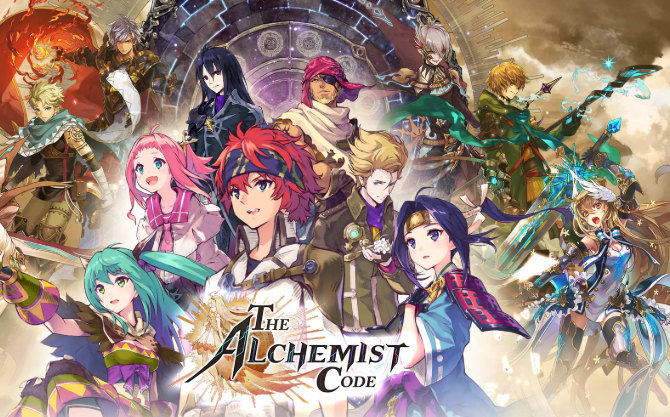
I spent enough time around The Alchemist Code to remember why its progression could be overwhelming. A unit was never just a rarity and an element. Jobs, Job+, Job Enchantments, Limit Breaks, Enlightenment Gates, Mementos, Vision Clear Rewards, Truth Seals, Enlightened Bonds, Spirit Gear, Leader Skills, equipment, CT manipulation, height, movement, and map design could completely change whether a unit felt mediocre or amazing.
That is also why old tier lists need context. A 2022 web article might rank Vettel at the very top and Zahar near the bottom, while a later fully developed Global roster told a much more complicated story. This guide keeps those historical rankings visible, but I will also explain where they stopped matching the final Global meta.
I. Introduction to The Alchemist Code
A. What Is The Alchemist Code and Its Legacy?
The Alchemist Code was the international version of 誰ガ為のアルケミスト, usually shortened to Tagatame by Japanese players.
It was a grid-based tactical RPG where elevation, facing, movement, Jump, skill range, cast time, Charge Time, elemental advantage, attack type, status effects, and turn order all mattered.
What separated TAC from many mobile RPGs was the number of ways one character could evolve. An old launch unit could receive a Job+, Job Enhancement, Master Ability, Enlightenment, Memento, Spirit Gear, or upgraded Leader Skill years later and suddenly become useful again.
B. Japanese SRPG Tactical Battles Worldwide
The game took a very Japanese SRPG structure and adapted it to mobile without removing most of the complexity.
You could build Slash, Strike, Pierce, Missile, or Magic teams, mono-element teams, raid setups, evasion compositions, CT-control teams, status teams, and many other specialized formations.
That depth is probably the main reason people still maintain databases and spreadsheets after shutdown.
C. Global Server Closure
The Global version closed on March 31, 2023 after operating internationally since November 2017.
Purchases ended before shutdown, and the service was ultimately taken offline completely.
D. Japan Server Closure
The Japanese service lasted much longer.
Its final shutdown occurred on November 28, 2024, ending a run that began in January 2016.
E. Who Should Use This Guide?
This article is for returning players, game historians, wiki researchers, former guild members, tier-list archivists, and anyone trying to understand how TAC's systems actually worked.
F. Wiki Preservation
The community wiki remains one of the most useful surviving references for units, jobs, skills, events, equipment, Mementos, Enlightenment, raids, collaborations, and story content.
G. Archived Assets
Community preservation has also extended to extracted Global and Japanese assets, including portraits, textures, story data, and some model-related files.
That work matters because there is no official playable offline TAC client preserving the complete game.
II. The Alchemist Code Tier List Overview – Historical
A. S Tier: Old Web Tier Lists
One widely circulated historical tier list placed Vettel, Morrigan, Escanor, Nesha, Adaleigh, Mira, Cadanova, Icona, Asuka, Nimul, Ragnarok, Chihaya, Kaya, Ugachi, Bell Cranel, and Hestia in S tier.
That list is useful as a snapshot, but it should not be mistaken for the final Global meta.
B. A Tier
Historical A-tier names included Eve, Sulva, Courage, Emma, Dark Masamune, Ines, Hazel, Daisy, Fuu, Rochelle, Fury, Dark Setsuna, Don Taras, and others.
Several remained useful after power creep because Job+ upgrades and Enlightenment kept changing their ceilings.
C. B Tier
Older B-tier lists included Melda, Lisanaut, Creto, Arthur, Benimaru, Zangetsu, Ban, Miuna, Gilfred, Noah, Carla, Dorothea, Liu Shen, Vivi, Kamui, Sakura, Lupinus, and Kagura.
Again, this is historical categorization rather than a final universal ranking.
D. C Tier
Characters such as IIa, Eren, Arkil, Gladiolus, Alyu, Veloz, Vargas, Yuto, Shekinah, and Ciel frequently appeared in lower historical tiers.
E. D Tier
Some old lists placed Laharl, Rin Tohsaka, Masamune, Jake, Richie, Roy Mustang, Red Magnus, Lambert, and Mianne near the bottom.
Many of these rankings depended heavily on whether a unit had received modern upgrades by the time the list was written.
F–N. Why Different Tier Lists Disagree
Gamezebo-style rankings were simple letter lists. Community spreadsheets were far more detailed.
The serious Global build guide assumed ideal investment, including relevant Job Enhancements by around Limit Break 15, Master Ability access around Limit Break 25 where applicable, and recommended Enlightenment Gate investment.
That difference matters enormously.
A unit at base five-star rarity and a fully Enlightened version with Job+, Memento, VCR, Truth Seals, and Spirit Gear are almost different characters.
III. Top Meta Characters Ranked
A. Vettel
Vettel is a perfect example of an old character surviving through repeated upgrades.
He was a durable Fire frontline unit with strong physical performance and became substantially better after receiving modern progression.
I would call him historically important rather than “the best overall unit” in the final meta.
B. Morrigan
Morrigan was a strong Global Original Fire unit with useful magic-oriented pressure.
She deserved high placement in several periods, though late Global had stronger specialists depending on content.
C. Escanor
Escanor from The Seven Deadly Sins collaboration was extremely memorable for burst damage and strong Fire offense.
Collaboration availability, however, always made long-term investment harder.
D. Nesha
Nesha appeared near the top of some external rankings, but she was never the single defining unit of final Global play.
E. Adaleigh
Adaleigh remained a strong Fire option and benefited from a flexible offensive kit.
F. Mira
Mira aged very well as a Fire magic character and was far more representative of final high-end Fire teams than many older tier lists suggested.
G. Cadanova
Cadanova's Dragon Cavalier identity, mobility, Jump attacks, and later upgrades helped him remain a legitimate Fire physical option.
H. Icona
Icona brought useful Fire utility and team support rather than being valuable only for her personal damage.
I. Asuka
Asuka could be powerful when her specific setup and investment were available, but she was more specialized than a universal S-tier pick.
J. Nimul
Nimul genuinely belongs among the strongest late Global characters.
His hybrid Fire/Light identity, strong stats, powerful unique job, and raid-oriented Leader Skill made him a major account piece.
K. Ragnarok
Ragnarok should not be reduced to “B tier.”
In later Global play she was one of the stronger Fire physical characters, especially once properly developed.
L. Chihaya
Chihaya is one of the most historically important support units in TAC.
Her Dancer debuffs, especially speed manipulation, kept her useful long after pure damage characters from her era disappeared.
M. Kaya
Kaya remained a useful Fire unit, especially after receiving her stronger job development.
N. Ugachi
Ugachi was a far more dangerous late-era Fire physical attacker than a simplistic B-tier label implies.
O–P. Bell Cranel and Hestia
Both came from the DanMachi collaboration.
Bell was a strong Fire offensive character, while Hestia filled a more specialized role. Their value depended heavily on collaboration availability and investment.
Q. Chloe
Chloe is one of TAC's classic accessible units.
New players could obtain her through permanent beginner progression, and repeated upgrades made her much better than most launch freebies.
R. Zahar
Zahar is another example where an old D-tier label became badly outdated.
With later upgrades, Zahar developed into a serious Dark physical attacker and could reach huge PATK values.
S–FF. Legacy Mainstays
Yomi, Elizabeth, Anastasia, Magnus, Fung Liu, Mielikki, Balt, Ryle, Shayna, Rosa, Reimei, Suzuka, Eve, Emma, Hazel, Daisy, Noah, Carla, Dorothea, Vivi, Lupinus, Kagura, and many others all had periods of relevance.
Some were early-game stars that faded. Others were revived by Job+ or Enlightenment. A few, such as Emma or Shayna, remained practical because their niche stayed useful.
The important takeaway is that TAC did not have one permanent tier list. Its upgrade systems constantly rewrote old rankings.
IV. Recommended Free Units – Permanently Available
A. Chloe
Chloe was one of the easiest permanent free five-star recommendations because beginner challenge progression gave her directly.
Her later upgrades made her a capable Light frontline rather than disposable tutorial material.
B. Story Characters
Logi, Dias, Edgar, Lisbeth, Tina, Kamui, and Amane formed the core protagonist roster across the main story.
Several became genuinely strong after Job+ and later progression.
Logi in particular transformed from a modest free protagonist into a legitimate high-level Light fighter.
C–H. Free Does Not Mean Weak
TAC rewarded long-term investment enough that permanently available units could outperform unbuilt limited characters.
For beginners, farmability often mattered more than theoretical maximum tier.
A fully built story character with accessible shards was usually more useful than a premium unit stuck at low investment.
V. Team Composition & Build Guides
A. Historical Team Building
TAC teams should not be reduced to one rigid formula.
Quest size, map geometry, enemy type, element, status resistance, and attack-type weakness all changed the ideal composition.
B. Tools and Maps
The Alchemist Code Database and community planners were invaluable for testing stats, gear, jobs, Mementos, and unit configurations before spending resources.
C. Beginner Team
Older beginner advice often recommended units such as Shayna, Suzuka, Reimei, Rahu, plus story characters.
That made sense because these units were accessible and covered different roles.
F. Shayna and Rahu
Shayna offered straightforward physical damage, while Rahu provided Chronomancer utility.
They also competed less directly for identical gear, which made them comfortable early investments.
G–T. Endgame Teams
Late-game teams increasingly became mono-element or content-specific.
Physical teams wanted PATK and attack-type amplification. Magic teams cared about MATK, Magic ATK Power, casting support, and resistance reduction.
Raid teams frequently used only one or two major damage dealers surrounded by buffers and debuffers.
That was often stronger than stacking five DPS units.
VI. Raid, Guild Raid & Endgame Content
A–B. Raids and Alchemia Port Raids
TAC had several raid formats, including Alchemia Port raids, World Raids, and older personal raid structures.
Successful raid teams stacked damage amplification rather than relying on one big stat.
Elemental resistance reduction, attack-type resistance reduction, Strong vs Gigantic, CT manipulation, debuffs, and support skills could multiply damage dramatically.
C–D. Fiend Hunt and Last Night
These modes do not belong to The Alchemist Code.
They are terminology from another game and should not be included in a TAC progression guide.
E–O. Towers, Events, Farming, and Bosses
Tower content rewarded roster depth.
Event maps often required unusual statuses, mobility, Jump, height access, or specific attack types.
For farming, wide instant AoE and high mobility usually mattered more than maximum theoretical boss DPS.
For bosses, single-target amplification and debuff stacking mattered far more.
VII. Gacha & Acquisition – Historical
TAC used standard banners, limited banners, collaboration summons, selectors, tickets, and shard-based transmutation.
Most ordinary five-star units eventually became farmable through Hard Quests, which changed how sensible it was to spend Gems on them.
Limited Genesis, Magni Historia, Sacred Stone, Memento-acquired, and collaboration characters often required much more planning.
New players historically received generous selectors and beginner summons, so rerolling for a normal-pool unit such as Vettel or Chloe was rarely the best use of time once stronger limited banners existed.
There was no permanent modern-style wishlist where you simply selected any top character and boosted the rate forever.
VIII. New Player Progression – Historical Context
A historical new player should have pushed story first, unlocked Hard Quests, developed a compact core roster, and avoided spreading resources across dozens of units.
The basic order was:
Level units, Limit Break them, master jobs, unlock Job Enhancements or Job+, obtain Master Abilities, progress Enlightenment, improve gear and Mementos, then move into Truth Seals, Enlightened Bonds, Spirit Gear, and other late systems.
AP management mattered because event Job+ materials could be time-limited.
For rerolling, limited units were generally more valuable than farmable normal-pool characters.
And despite old beginner guides recommending Shayna, Suzuka, Reimei, or Rahu, no single permanent starter list stayed optimal throughout Global's entire lifespan.
IX. Collaboration & Crossover Characters
TAC accumulated an impressive collaboration history.
A–B. DanMachi
Bell Cranel and Hestia came from Is It Wrong to Try to Pick Up Girls in a Dungeon?
C. Fate
Rin Tohsaka appeared alongside other Fate/stay night: Unlimited Blade Works crossover content.
D. Disgaea
Laharl and several Disgaea characters joined during that collaboration.
E. Fullmetal Alchemist
Roy Mustang was one of the recognizable Fullmetal Alchemist crossover units.
F. Shield Hero
Raphtalia and other Rising of the Shield Hero characters joined later.
G. Slime
Milim Nava and Rimuru Tempest represented That Time I Got Reincarnated as a Slime.
H–J. Collab Meta Value
Collaboration characters were exciting but risky investments.
If their event never reran, Soul Shards, Job materials, Mementos, or equipment could become difficult or impossible to finish.
That made native TAC characters safer long-term investments even when a collab unit briefly ranked higher.
X. Server Status & Shutdown Information
A–G. Global
The Global version launched in November 2017 and shut down on March 31, 2023.
That gave the international game roughly five years and four months of service.
H. Japan
The Japanese version continued after Global closure but ended November 28, 2024.
I–J. Preservation
The wiki, database, spreadsheets, Reddit discussions, Discord archives, videos, and extracted game assets now form the main preservation network.
K–M. Community Reaction
Many players reacted emotionally because TAC was a multi-year progression game.
Others criticized gumi's monetization and handling of the Global service.
Those are community opinions rather than a documented official explanation for shutdown.
N–P. Dupes and P2W Criticism
TAC relied heavily on Soul Shards, Limit Breaks, Enlightenment, and later high-investment systems.
Some players described this as aggressively pay-to-win, especially when premium units needed deep investment.
At the same time, farmable shards, free protagonists, selectors, event units, and long-term progression gave dedicated F2P players significant room to compete in PvE.
Q–T. Assets and Archives
Community members have preserved both Global and Japanese files in GitLab repositories and related archives.
That does not create a complete offline game, but it protects artwork, data, text, textures, and pieces of the game's technical history.
XI. Tier List & Rankings Resources
The most useful historical resources were never the simple S-to-D lists.
The real Global Tier List and Build Guide tracked recommended jobs, Enlightenment Gates, passive choices, availability, origin, unit group, important requirements, and ideal investment.
Community contributors such as Bamiji, Gilgamesh, Twooty, Gagging, SometimesLiterate, wytesong, and Lolaturface helped maintain much of that knowledge.
The Alchemist Code Database complemented those spreadsheets with a unit planner that let players test level, job, equipment, and stat configurations.
That combination—tier list plus build planner—was far more useful than looking at one JPEG ranking.
XII. Equipment & Truth Seals
A–D. Gear
TAC equipment was highly character-specific.
Some units needed signature VCR gear, while others cared more about AGI, Initial Jewels, PATK, MATK, HP, or resistance.
E. Truth Seals
The correct system name is Truth Seals, also commonly called Runes.
A unit could equip six seals associated with the Enlightenment Gate names.
Examples included:
Envy for PATK or DEX.
Gluttony for MATK or DEX.
Lust for HP.
Greed for AGI.
Seal sets added bonuses such as PATK, MATK, HP, PDEF, MDEF, Initial Jewels, single-target damage, or AoE damage.
F. Enlightened Bonds
Enlightened Bonds provided additional stat bonuses to specific linked groups of units, but they were shard-intensive.
G–M. Raid and Upgrade Priorities
Raid attackers wanted offensive Truth Seal stats and attack-type bonuses.
Supports often prioritized AGI, survivability, Jewels, or whatever let them apply buffs/debuffs before the damage dealer's turn.
There was no universal “best gear” list.
XIII. Team Synergy & Unit Comparisons
A. Vettel vs Later Fire Units
Vettel offered durability and consistency, while newer Fire characters such as Nimul, Mira, Ragnarok, and Ugachi brought more modern offensive ceilings.
B. Morrigan vs Escanor
Morrigan was a native Global character with broader long-term availability, while Escanor depended on a collaboration.
That acquisition difference mattered nearly as much as damage.
C–F. Nesha, Adaleigh, Mira, Cadanova, Icona, Asuka, Nimul, Ragnarok
These comparisons depended heavily on role.
A support cannot fairly be ranked against a boss nuker using only damage numbers.
G. Chloe vs Other Free Units
Chloe was excellent for accessibility.
Logi eventually had one of the strongest protagonist growth curves.
Other free characters could become better in their niche once Job+ content was available.
H. Shayna, Suzuka, Reimei, Rahu
Shayna offered straightforward Strike damage. Suzuka brought Slash and AoE. Reimei had more specific gear and development needs. Rahu provided timeless CT/Quicken utility.
I–M. Investment Matters
The real question was never “S tier or A tier?”
It was: how difficult is the character to obtain, how many shards are required, is the Job+ available, does the Memento matter, can I finish Enlightenment, and does the unit help the content I actually play?
XIV. Common Mistakes to Avoid
The biggest mistake was investing in too many units at once.
TAC punished shallow rosters because Enlightenment, equipment, Mementos, Soul Shards, and late progression consumed huge amounts of materials.
Another mistake was using old tier lists without checking whether the unit required a limited Job+ or Memento.
Ignoring accessible units such as Chloe or story protagonists could also slow progression.
Truth Seals needed to match the unit's scaling. MATK seals on a PATK attacker—or vice versa—were simply wasted optimization.
And the old LB15/LB25 benchmarks mattered because a unit often needed enough Limit Breaks to access important jobs, Master Abilities, and the build assumed by the tier list.
XV. Japan Server Guide – Before November 28, 2024
Historically, English-speaking players could access the Japanese client through compatible app-store methods.
The main challenge was language. Screen translation, spreadsheets, the JP wiki, and community Discords made it manageable.
Japan also had characters, systems, story chapters, and balance changes that never reached Global.
That difference became enormous after March 2023 because JP continued for another year and eight months.
Today there is no reason to “migrate” because the official Japanese service is also closed.
Its final data is useful only for historical research and preservation.
XVI. Legacy & Community Preservation
The Alchemist Code mattered because it proved a mobile SRPG could be genuinely complicated.
It used height, Charge Time, jobs, skill inheritance between jobs, multiple attack types, elemental teams, Mementos, raids, guild systems, tactical bosses, and long-running character development in a way very few mobile games attempted.
The cost of that ambition was complexity.
By late life, a returning player faced Jobs, Job+, JEs, seven Enlightenment Gates, Mementos, VCRs, Truth Seals, Spirit Gear, Bonds, gear abilities, Leader Skills, and huge shard requirements.
That complexity created some of the game's strongest strategic depth—and some of its harshest monetization criticism.
There is no complete official offline version.
Private-server discussions exist, but unofficial software carries legal and security risks.
The safest preservation remains archived data, screenshots, videos, spreadsheets, fan wikis, community repositories, and music uploads.
XVII. Related Games & Alternative Searches
Alchemy Stars is often mentioned as an alternative because it was another visually distinctive mobile strategy RPG, but its colored-tile combat was very different from TAC. It also ended service in 2025.
Fullmetal Alchemist mobile titles share the alchemy theme but again play differently.
Players looking for a true spiritual replacement should search for tactical RPGs with positioning, height, jobs, and turn manipulation rather than simply searching “alchemist mobile game.”
For TAC research specifically, useful search terms include:
The Alchemist Code Global Tier List
Tagatame JP tier list
Alchemist Code Database
TAC unit planner
The Alchemist Code wiki
TAC Truth Seals
TAC Enlightened Bonds
The Alchemist Code story summary
XVIII. Frequently Asked Questions
A. Is The Alchemist Code Still Playable?
Not on an official server.
B. When Did Global Close?
March 31, 2023.
C. When Did Japan Close?
November 28, 2024.
D. Can I Still Play?
There is no official live service.
E. What Happened?
Both regional services eventually ended operation.
F. Why Did It Shut Down?
Global's public closure announcement did not provide a detailed financial breakdown, so specific revenue explanations should be treated as speculation.
G. Is the Wiki Still Available?
Yes, community preservation remains accessible.
H. Are Assets Preserved?
Some Global and JP assets have been archived by community members.
I. Who Were the Best Units Historically?
There was no single permanent answer, but late high-value names included characters such as Nimul, Ragnarok, Mira, Chihaya, Dark Mira, Yauras, Acht, Tamis, Zahar, Nero, Sol, Mesarthim, Logi, Emmel, Nina, Spica, and Tiferet depending on element and content.
J. Who Is Vettel?
A classic Fire swordsman and Scarlet Flame Guard character who received numerous upgrades over the game's life.
K. Who Is Chloe?
A Light knight and Scarlet Flame Guard commander who became one of the most recognizable accessible five-star units.
L. What Was the Dupe System?
Extra unit copies converted into Soul Shards, which were used for Limit Breaks and later progression.
M. What Does P2W Mean Here?
Players used the term to criticize the large advantage gained from obtaining and fully developing premium units quickly.
N. How Long Did the Game Run?
Global ran a little over five years. Japan ran for almost nine years.
O. What Collaborations Existed?
Examples included Fate, Final Fantasy XV, Disgaea, Fullmetal Alchemist, Attack on Titan, Seven Deadly Sins, Shield Hero, Slime, DanMachi, and others.
P. Where Can I Find Tier Lists?
Archived community spreadsheets and the wiki are far more informative than simplified web lists.
Q. Is the Community Still Active?
Smaller than before, but preservation discussions continue.
R. What Are the Alternatives?
Look for tactical RPGs with genuine grid combat and character progression rather than ordinary auto-battle gachas.
S. Can I Access the Japan Server?
No. It has shut down.
T. Is There an Offline Version?
Not an official full game.
U. Are There Private Servers?
There have been community discussions and preservation projects, but nothing equivalent to an official supported service.
V. What Is the GitLab Archive?
Community repositories contain extracted files and assets from Global and Japanese versions.
W. How Do I Access the Wiki?
Search for The Alchemist Code Wiki; it remains one of the strongest surviving archives.
X. What Was ACDB?
The Alchemist Code Database stored unit information and included a useful build planner.
Y. What Are Enlightened Bonds?
A late progression feature linking specific groups of units and providing additional stats.
Z. What Are Sacred Stones?
Be careful with terminology. Sacred Stone Memories is a story/unit group. The late-game rune-style equipment system is called Truth Seals.
XIX. Community Resources & Archives
The strongest preserved TAC ecosystem includes the community wiki, r/AlchemistCodeGL, old Discord resources, YouTube videos, the Alchemist Code Database, the Global Tier List and Build Guide, archived Google Docs, Steam guides, TierMaker snapshots, and community asset repositories.
Each serves a different purpose.
The wiki is best for detailed mechanics and unit history.
ACDB is excellent for raw unit data and build planning.
The Global spreadsheet is the best record of how serious players evaluated ideal investment.
Reddit and Discord preserve the human side: banner reactions, raid strategies, arguments about Enlightenment priorities, shutdown reactions, and memories that no database can reproduce.
XX. Conclusion & Legacy Preservation
The Alchemist Code deserves to be remembered as more than another discontinued gacha.
Its tactical combat was unusually ambitious for mobile. Height mattered. Charge Time mattered. Move and Jump mattered. Attack types mattered. Casting speed mattered. A one-point difference in AGI could change turn order, while a support such as Chihaya or Rahu could completely reshape a battle without dealing meaningful damage herself.
The progression system became overwhelming, and the monetization drew legitimate criticism. Building limited characters to full Enlightenment could demand enormous resources. Mementos, VCR gear, Spirit Gear, Soul Shards, and late progression created a steep gap between casually owned units and fully developed ones.
But those same systems also allowed characters such as Vettel, Chloe, Zahar, Logi, Noah, and Chihaya to keep evolving years after release.
Historical tier lists should therefore be read as snapshots, not permanent truth. Vettel may have topped one web ranking, while a later optimized Global account could prioritize Nimul, Ragnarok, Mira, Dark Mira, Yauras, Tamis, Nero, Zahar, Mesarthim, Emmel, or other specialized units instead. Context was always the real tier list.
Global ended on March 31, 2023. Japan followed on November 28, 2024. There is no official server left to log into, no banner to save Gems for, and no raid reset coming next week.
What survives is the record players built around it: spreadsheets, wiki pages, databases, videos, extracted assets, artwork, music, event guides, archived builds, and years of community discussion.
For a game whose Japanese title roughly asks “For whom does the alchemist exist?”, that feels like a fitting ending. The servers are gone, but The Alchemist Code still exists for the players willing to preserve what made it special.