The Alchemist Code Characters Guide: Final Global Meta, Best Units, Teams, and Legacy Guide
Talking about The Alchemist Code characters in 2026 is a little bittersweet. The Global version is gone, the Japanese version has also ended service, and there is no new banner or balance patch coming to shake up the rankings. Still, the game's enormous roster remains worth documenting because character building was one of the things The Alchemist Code did best.
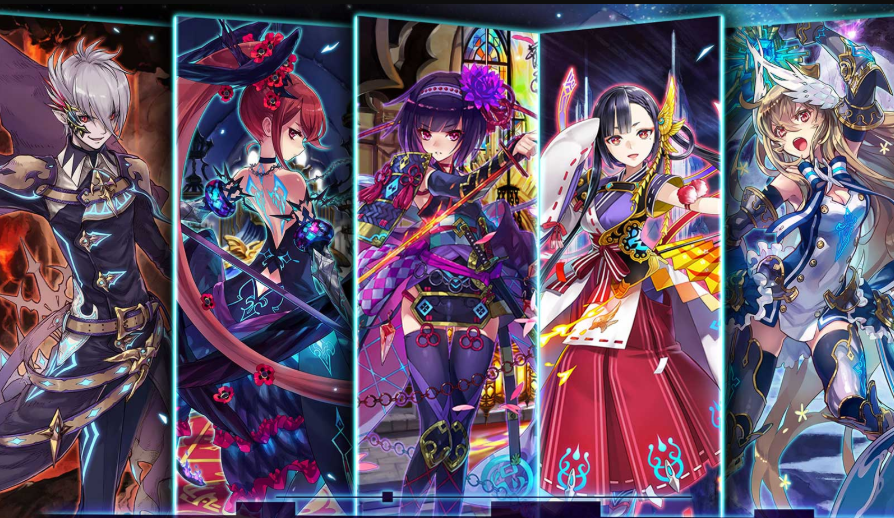
This was never a game where you could simply pull a five-star unit, level it up, and call the build finished. Jobs, Job+, Job Enchantments, Enlightenment gates, Mementos, Vision Clear Rewards, gear, Spirit Gear, elemental advantage, attack type, CT manipulation, and map design all affected how useful a character became.
For that reason, this guide looks back at The Alchemist Code characters from the final Global perspective. Where older lists contain incorrect names, elements, or roles, I will point that out rather than repeating information that never matched the actual game.
I. Introduction to The Alchemist Code Characters
A. What Is The Alchemist Code and Why Character Selection Matters?
The Alchemist Code was a tactical RPG played on three-dimensional grids. Elevation, movement, jump height, skill range, casting speed, facing, elemental advantage, and turn order all mattered.
Character selection therefore went much deeper than raw stats. A high-damage unit that could not reach the enemy might contribute less than a support who accelerated CT or reduced enemy AGI. Likewise, a supposedly weaker farmable character could outperform a limited unit simply because you could actually finish its Enlightenment.
B. Important Note: Global Server Closure
The Global version ended service on March 31, 2023.
Everything involving rerolling, banners, selectors, shops, and farming in this guide should therefore be read as historical information rather than something you can currently perform.
C. Japan Server Status and Accessibility for English Players
The Japanese version, known as 誰ガ為のアルケミスト or Tagatame, continued after Global disappeared, but it also ended service on November 28, 2024.
So there is no official JP server available to migrate to in 2026.
D. Who Should Use This Guide?
This guide is mainly useful for returning players remembering their old rosters, fans researching the game's final Global meta, wiki editors, former JP players, and tactical-RPG fans interested in how the game evolved over its long lifespan.
II. The Alchemist Code Characters Overview – Final Global Meta
A. S-Tier: Best-of-the-Best Units
The original outline lists Scheherazade, Mesarthim, and Priscilla together as the top three, but the final-era meta did not support that ranking.
Mesarthim genuinely belonged among the strongest Light units. Scheherazade was a useful Wind character but generally sat below the very best Wind options. Priscilla was a Dark physical spear user rather than an S-tier healer.
Representative final S-tier names included Nimul, Ragnarok, Chihaya, Mira, Li Wang, Emrys, Dark Mira, Voda, Yauras, Lisbeth, Acht, Dark Nyx, Leafah, Tamis, Grimm I, Failnaught, Nero, Sol, Zahar, Mesarthim, Logi, Emmel, Nina, Spica, and Tiferet.
B. A-Tier: Strong Picks With Niche Value
Scheherazade fits more naturally here.
Other strong A-tier units could still dominate content when properly developed, especially if a map favored their element, attack type, or utility.
“Logix” is also a naming error—the protagonist is Logi, and by the final Global era he had become a genuinely strong Light unit rather than an A-tier filler.
C. B-Tier: Situational or Lower-Priority Units
Priscilla is a better example of this category in final-era rankings.
Sophia also fell behind stronger Water characters despite remaining usable.
A B-tier unit in TAC was not automatically bad; it simply meant the resource cost was harder to justify when stronger options existed.
D. C/D-Tier: Characters to Avoid or Replace
Older units without strong Job+, Enlightenment, Memento, or Spirit Gear upgrades eventually became difficult to recommend.
This was especially noticeable with early launch characters that received few meaningful improvements while newer Genesis and limited units arrived with much more complete kits.
III. Top S-Tier Characters Ranked
A. Scheherazade – Strong Wind Utility, Not the Best Universal Buffer
Scheherazade was a Wind character with access to Sage, Dancer, and Magic Swordsman-style tools.
Her Dancer utility gave her useful debuff options, but the final Wind roster contained stronger specialist supports such as Tamis, Leafah, Macherie, and Rahu.
I would remember her as a solid utility character rather than the undisputed best buffer.
B. Mesarthim – Light Frontline Hybrid, Not a Pure Mage
Mesarthim was one of the stronger late Global Light characters, but calling her a magic AoE specialist misses what made her interesting.
Her First Shield Maiden identity leaned toward durable frontline offense, with attacks that could scale from physical and defensive stats. She was closer to an offensive tank/bruiser than a traditional robe-wearing mage.
C. Priscilla – Dark Pierce Attacker, Not a Healer
Priscilla was a Dark Sacred Spearman-style physical unit.
Her kit focused on Pierce damage, physical combat, and spear-based offense. She was never the essential healer described in the original outline.
D. Logi – Free Light Protagonist Turned Endgame Fighter
Logi is one of my favorite examples of TAC rewarding long-term character development.
He started as a low-rarity story protagonist, but Job upgrades, Enlightenment, unique skills, and later progression systems transformed him into a legitimate Light physical unit.
Few mobile RPGs successfully kept a free protagonist relevant for that long.
E. Nemesis – No Matching Final Global Staple
There was no prominent final Global unit named Nemesis fitting the Dark physical DPS description in this outline.
For high-end Dark physical damage, characters such as Zahar, Jin, Failnaught, Ignacio, and Kudanstein are much more representative.
F. Yauras – Water Physical Twin-Blade Fighter
Yauras was Water, not Wind, and she was primarily a fast physical swordswoman rather than a mage.
Her speed, mobility, evasion, and multi-hit style made her one of the most recognizable Sacred Stone Memories characters.
G. Celica – Not a Final Global Water Staple
The “Celica” described in the outline does not match a major final Global Water mage.
If you want representative Water magic characters, Dark Mira, Emrys, Othima, Lisbeth, and Merlinus are much more appropriate names.
H. Lisbeth – Water Story Mage and Support
Lisbeth was Water, not Fire.
As the Chapter 3 protagonist, she developed from an accessible story unit into a very useful Water magic/support character with healing, defensive support, and respectable magical options.
IV. Best Fire Element Characters
A. Lisbeth – Correction: Water, Not Fire
Lisbeth should not be placed in a Fire ranking.
For final-era Fire teams, characters such as Nimul, Ragnarok, Chihaya, Mira, Cadanova, Icona, Vettel, Ugachi, and Adaleigh were stronger representatives.
B. Victor – Not a Core Fire DPS
Victor does not belong among the major final Fire damage priorities.
If you wanted physical Fire offense, Ugachi, Cadanova, Vettel, Ragnarok, or other late-era specialists generally made more sense.
C. Rita – Not a Defining Final Fire Mage
Rather than building around Rita as a supposed top Fire AoE mage, I would prioritize proven late-era characters such as Mira or Nimul depending on the role needed.
D. Tina – Wind, Not Fire
Tina was the Chapter 4 protagonist and belonged to Wind.
Her ranged Wind identity makes her completely unsuitable for a Fire-element recommendation list.
E. Zach – Low Final-Meta Relevance
Zach was not one of the characters defining late Global Fire teams.
F. Amber – Not a Major Final Global Fire Staple
For reliable historical guidance, I would stick with established Fire names such as Nimul, Ragnarok, Chihaya, Mira, Cadanova, Icona, Vettel, Ugachi, or Kaya.
V. Best Water Element Characters
A. Celica – Replace With Dark Mira or Emrys
A stronger final-era Water shortlist starts with Li Wang, Emrys, Dark Mira, Voda, Yauras, Julia, Letitia, Kalmia, Eira, Ankh, and Lisbeth.
B. Wendy – Not a Major Final Water Support
Water had much more established support choices.
Letitia was especially important for magic-focused teams because MATK amplification could dramatically raise the ceiling of Water casters.
C. Alicia – Not a Core Water Healer
If I needed Water sustain or support, I would look toward characters actually established in the Global roster and final meta rather than relying on this label.
D. Rachel – Replace With Lisbeth or Kalmia
Lisbeth's combination of story accessibility and support utility made her a far more practical historical recommendation.
E. Crystal – Replace With Othima or Dark Mira
Othima remained a dependable Water mage for years, while Dark Mira represented a much stronger late-era magical damage ceiling.
VI. Best Wind Element Characters
A. Yauras – Correction: Water, Not Wind
Yauras should be moved to Water.
B. Elena – Not a Defining Wind Archer
Wind had stronger ranged or physical choices, including Setsuna, Eulalia, Nefertiti, Ramses, and other developed specialists.
C. Yolanda – Replace With Tamis
Tamis is a much better example of late-game Wind support.
She could significantly improve Wind-oriented damage setups and became a key enabler for serious elemental teams.
D. Nina – Correction: Light, Not Wind
Nina belonged to Light and ranked much better there.
E. Derek – Replace With Setsuna or Acht
Setsuna remained one of Wind's most recognizable physical attackers, while Acht developed into another strong final-era option.
For support, Leafah, Rahu, Macherie, and Tamis were excellent names to remember.
VII. Best Light Element Characters
A. Sophia – Correction: Water
Sophia was Water, not Light.
B. Michael – Correction: Water
Michael was also Water.
C. Xavier – Not a Defining Final Light Support
Late Global Light had much stronger representative choices such as Emmel, Mesarthim, Logi, Nina, Spica, Tiferet, Alma, Chloe, Minerva, and Zechs.
D. Arthur – Primarily Fire
Arthur belonged to Fire rather than Light.
E. Brandon – Replace With Mesarthim or Chloe
If you wanted a durable Light frontline, Mesarthim and Chloe are much stronger historical examples.
Logi also provided a surprisingly durable physical option after full progression.
VIII. Best Dark Element Characters
A. Dark Fina – Not a Core Final Global Dark Pick
Final Dark teams were defined much more clearly by characters such as Grimm I, Failnaught, Ignacio, Eliza, Jin, Nero, Sol, Zahar, and Ambrosia.
B. Nyx – Correction: Original Nyx Was Thunder
Original Nyx was Thunder.
Dark Nyx was a separate Wind character, so neither belongs in a standard Dark-element ranking.
C. Ursula – Replace With Nero or Ambrosia
Nero and Ambrosia better represent premium late-era Dark magic or utility.
D. Vincent – Not a Major Dark Physical Priority
For Dark physical offense, Zahar, Jin, Failnaught, and Ignacio are much stronger historical references.
E. Alaya – Replace With Naofumi or Dark Defensive Specialists
The tank identity described here does not match a major final Global Dark unit named Alaya.
Naofumi Iwatani was one of the more memorable dedicated defensive options available during Global's lifespan.
IX. Best Physical Damage Characters
A. Logi
Logi became a strong Light physical fighter with useful durability.
His free status made his late-game strength even more impressive.
B. Zahar
Zahar is a much better Dark physical example than the nonexistent Nemesis entry.
He could reach enormous PATK numbers and remained relevant through repeated upgrades.
C. Yauras
Yauras combined speed and physical pressure, letting her reach enemies that slower units struggled to touch.
D. Kanon
Kanon offered physical offense plus useful Sacred Stone Memories utility.
She was not always the hardest hitter, but she remained a recognizable Light physical option.
E. Ugachi
Ugachi represented the newer generation of aggressive Fire physical units.
F. Setsuna
Setsuna remained one of Wind's signature physical attackers.
G. Nina
Nina was a Light unit with strong final-era value rather than the Wind assassin described in the original outline.
X. Best Magic Damage Characters
A. Dark Mira
Dark Mira is a much more accurate premium Water magic recommendation than Mesarthim.
B. Mira
Mira gave Fire teams strong magical offense and belonged among the better final-era Fire casters.
C. Othima
Othima remained a dependable Water mage despite being much older than the newest releases.
D. Emmel
Emmel was one of Light's premier magic characters.
E. Nero
Nero provided high-end Dark magical pressure.
F. Lisbeth
Lisbeth contributed Water magic while also supporting and healing.
G. Nyx
Nyx was a Thunder magical/utility character whose CT manipulation was often just as important as his personal damage.
XI. Best Support and Buffer Characters
A. Chihaya
Chihaya is one of the characters I would put forward instead of Scheherazade as a truly legendary support.
Her Dancer-based debuffs, particularly speed manipulation, stayed useful for an incredibly long time.
B. Letitia
Letitia became a major magic-team enabler through MATK support.
C. Tamis
Tamis was one of Wind's best elemental support pieces.
D. Voda
Voda brought specialized utility to advanced Water compositions.
E. Rahu
Chronomancer tools such as Quicken and Overclock made Rahu valuable because turn economy was one of TAC's most important mechanics.
F. Natalie
Natalie provided the type of practical status protection and support that could save entire teams on difficult maps.
G. Leafah
Leafah was especially valuable in Missile-oriented setups, proving that TAC team building often revolved around attack type as much as element.
XII. Best Tank and Defensive Characters
A. Vettel
Vettel was one of the game's classic durable Fire frontliners.
Years of upgrades helped him survive much longer than most launch characters.
B. Mesarthim
Mesarthim offered genuine Light frontline durability while still contributing meaningful damage.
C. Zafeiris
Zafeiris had specialized defensive tools that could protect teams against magic-heavy encounters.
D. Chloe
Chloe remained a practical Light defensive option thanks to repeated upgrades and accessibility.
E. Naofumi Iwatani
The Shield Hero collaboration character was one of the clearest examples of an actual dedicated tank in TAC.
XIII. Team Composition Fundamentals
A. Element Synergy and Mono-Element Teams
Mono-element teams became increasingly important because Enlightened Leader Skills and Mementos heavily rewarded matching elements.
However, forcing five same-element characters was not always optimal if a non-element support solved an important mechanic.
B. Ideal Team Structure
The outline's “2 DPS + 2 Supports + 1 Tank” formula is too rigid.
Many TAC quests fielded four primary units plus subs. A practical starting formula was two damage dealers, one support, and one flexible slot for healing, CT manipulation, tanking, veil, or another attacker.
C. Sample Beginner Physical Team
Rather than Logix/Nemesis/Priscilla/Scheherazade/Alaya, a more realistic historical setup could build around Logi, Spica, Chihaya or Rahu, and a defensive/support flex depending on the stage.
D. Sample Beginner Magic Team
A Water magic team could revolve around Dark Mira or Othima, Letitia, Lisbeth, and another Water or utility unit.
E. Hybrid Teams
Hybrid teams were often the correct answer when a stage demanded status immunity, CT control, knockback, specific range, or another unusual mechanic.
XIV. Event Stage and Boss Fight Teams
A. Story Mode
For early story progression, use your strongest properly developed characters and keep the protagonists progressing.
Several story characters became much stronger later.
B. Event Farming
Fast AoE and mobility were usually more important than theoretical maximum damage.
A unit capable of reaching and killing an enemy immediately could outperform a stronger character that needed two turns to get there.
C. Boss Weaknesses
Elemental advantage mattered, but so did damage type and boss resistance.
Always inspect whether the target resisted Slash, Magic, Missile, Strike, or Pierce before building the team.
D. Single-Target vs AoE
Raid-style bosses favored single-target amplification and resistance reduction.
Wave stages rewarded mobility and wide AoE.
E. Tower and Raid Strategy
Tower content rewarded roster depth because different floors punished different elements and mechanics.
Raid teams often relied heavily on supports and debuffs rather than simply stacking four attackers.
XV. Arena and PvP Tier Considerations
A. PvP Rankings Differed From PvE
Arena favored fast opening damage, evasion, instant skills, and AI-friendly kits.
B. Speed and Turn Order
AGI could decide matches before raw damage mattered.
Acting first often meant removing the opposing carry before it received a turn.
C. Counter-Picking
Elemental advantage helped, but range and starting placement could completely change the result.
D. Arena Teams
The best Arena teams changed as maps and releases changed.
Fast carries backed by opening buffs or CT manipulation generally performed well.
E. Common Counters
Understanding enemy opening actions mattered more than copying a single “best team.”
XVI. The Alchemist Code Reroll Guide – Historical
A. Step-by-Step Reroll Tutorial
Historically, rerolling involved clearing the opening tutorial, collecting available Gems and tickets, performing the current summons, and resetting the account if the results were poor.
B. Best Starter Targets
Scheherazade, Mesarthim, and Priscilla were never a universal top-three starter list.
Mesarthim was genuinely strong late in Global's life, while many Genesis and limited characters could be much more valuable depending on the banner.
C. When to Restart
Restarting made sense when a strong limited banner was available and your opening account completely missed.
D. Common Mistakes
The worst mistake was chasing a powerful limited unit without considering Soul Shard accessibility.
A half-built limited character could easily lose to a fully Enlightened farmable one.
E. Free Character Acquisition
Story units, event units, Hard Quest Soul Shards, selector campaigns, and milestone rewards gave F2P players many useful options.
XVII. Gacha Banner Recommendations – Final Global Rotation
A. Historical Rate-Up Banners
Global banners ranged from ordinary summons to limited Genesis, collaboration, Memento, step-up, and selector-style events.
B. Scheherazade Banner
By the final meta, Scheherazade was not worth treating as a premium must-pull.
C. Mesarthim Banner
Mesarthim was much more attractive because she was a late limited unit with strong Light performance.
D. Selective Ticket Priority
There was no universal Scheherazade/Mesarthim/Logi selector rule.
Selector pools varied, and Logi was a free story character anyway.
E. Character Selector Recommendations
The best selector choice was usually the strongest difficult-to-obtain character actually available in that specific ticket pool.
XVIII. How to Use Selective Tickets Wisely
A. Check Eligibility First
TAC released many different selectors with different pools.
Always check whether limited, collaboration, Sacred Stone, or Genesis units were actually included.
B. First Selector Priority
Choose based on account need, farmability, and available Mementos rather than a generic tier badge.
C. SSR vs UR
TAC did not primarily use the standard SSR/UR terminology assumed in this outline.
Players generally discussed base star rarity, evolution, Limit Breaks, Enlightenment, jobs, and Mementos.
D. Limited vs Standard
Limited units often had higher ceilings but could be extremely expensive to finish.
For F2P accounts, farmability frequently mattered more than rarity.
XIX. Equipment and Awakening Guide for Tier List Characters
A. Offensive vs Defensive Equipment
Physical units wanted PATK and relevant attack-type bonuses. Casters wanted MATK and magic modifiers. Tanks prioritized HP, PDEF, MDEF, resistances, and survival.
AGI and Initial Jewels were also extremely important.
B. Physical DPS Equipment
Logi, Zahar, Yauras, Setsuna, and similar units benefited from character-specific gear and equipment supporting their main scaling stat.
C. Magic Equipment
Dark Mira, Emmel, Othima, and other mages relied heavily on MATK-focused gear and strong Mementos.
D. Enhancement Roadmap
Jobs and core equipment came first, followed by Limit Break progression, Job+/JE improvements, Mementos, Enlightenment, and late-game systems.
E. “Awakening” Materials
The correct TAC terminology is primarily Enlightenment, not generic awakening.
Enlightenment gates provided huge stat and skill improvements beyond the original level-85 progression.
XX. Limit Break and Skill Upgrade Systems
A. Max Limit Break Priority
Prioritize characters you knew would remain in your main teams.
B. Skill Levels
Damage dealers prioritized their main offensive kit. Supports prioritized their buffs, CT manipulation, healing, or debuffs.
Some skills were deliberately kept at lower levels when jewel cost or AI behavior made that preferable.
C. F2P Resource Allocation
Farmable Soul Shards were enormously valuable.
A character with reliable Hard Quest farming was usually much easier to finish than a premium limited unit.
D. Farming Efficiency
Never spend universal elemental shards carelessly on a unit whose personal shards were easily farmable.
Those universal resources were much more valuable on difficult limited characters.
XXI. New Player Progression Roadmap – Historical Context
A. Story Progression
Push story content to unlock Hard Quests and additional systems.
Developing protagonists alongside your gacha roster was worthwhile.
B. Daily and Weekly Farming
Soul Shards, equipment, event materials, Mementos, and Enlightenment resources formed the daily progression loop.
C. AP Optimization
Limited events generally deserved priority when they contained Job+ materials or exclusive equipment.
D. Shop Recommendations
Gems were primarily summon currency and should have been saved for strong banners rather than routine farmable items.
E. Event Shops
Job+ equipment, Mementos, character shards, and rare Enlightenment materials usually deserved priority.
XXII. Common Mistakes to Avoid in Team Building
A. Ignoring Elemental Matchups
Wrong-element teams could lose dramatically once enemy stats became serious.
B. Over-Investing in Weak DPS
Do not max a character simply because it carried early story stages.
C. Neglecting Supports
The original outline names Scheherazade and Priscilla, but supports such as Chihaya, Letitia, Rahu, Tamis, and Voda better illustrate how powerful support mechanics became.
D. Poor Resource Allocation
Trying to fully Enlighten every character at once was a fast way to finish none of them.
E. Skipping Events
Missing a Job+ event could leave a unit substantially weaker until the content returned.
XXIII. Japan Server Guide for English Players
A. How to Access the Japan Server
Historically, players could install the Japanese client using a Japanese app-store account or compatible Android distribution method.
That is no longer useful because the Japanese server has shut down.
B. Language Barriers
Before closure, screen translation and community guides made JP reasonably playable without fluent Japanese.
Those tools are now mostly useful for reading archived JP material.
C. Japan-Exclusive Characters and Banners
JP continued releasing characters, upgrades, and systems after Global closed, so its final roster extended far beyond the Global version.
D. Community Resources
Archived wikis, databases, videos, Reddit discussions, and Japanese community material are now the main way to explore that later content.
E. Should You Migrate?
No.
There is no official live Japanese game server left in 2026.
XXIV. Legacy and Community Preservation
A. Why Global Shut Down
The Global closure announcement confirmed the end of service but did not provide a detailed public financial breakdown.
It is better to say that gumi ended the service than to invent specific revenue or population claims.
B. Player Reactions
For longtime players, the closure meant losing rosters they had spent years developing through Soul Shards, Job+, Enlightenment, Mementos, and raids.
That explains why the community reaction was so emotional.
C. Fan Wikis and Databases
Community databases remain essential because they preserve unit data, skills, gear, Mementos, quest information, and historical progression systems.
D. The Alchemist Code vs Alchemy Stars
The two games shared an alchemy-flavored name but played very differently.
TAC used tactical grids, elevation, jobs, and CT. Alchemy Stars centered combat around connecting colored tiles.
E. Alternative Games
Players looking for a replacement should focus on tactical RPGs with meaningful positioning, class development, and terrain rather than simply searching for another game with “alchemy” in its title.
F. Offline Versions and Private Servers
TAC never received a full official offline version preserving the entire tactical game.
Unofficial private-server projects may carry security, copyright, and malware risks, so archived databases, videos, and legally preserved materials remain the safest way to revisit it.
XXV. Meta Shifts and Historical Tier List Evolution
A. How Banners Changed Rankings
Early TAC revolved around relatively straightforward five-star characters.
Sacred Stone, Genesis, collaboration, and later limited releases gradually raised both power and complexity.
B. Power Creep and Balance Changes
TAC did more than simply replace old characters.
Job+, Job Enchantments, Enlightenment, Mementos, Babel War Arts, and Spirit Gear repeatedly revived older units.
C. Final Global Meta
By 2023, asking for the single best five characters was almost meaningless.
Element, attack type, map mechanics, leader skill, Memento access, and investment level all mattered.
D. Discord, Reddit, and Facebook Communities
Community theorycrafting became essential because players compared builds, raid rotations, Enlightenment gates, and PvP setups in far greater detail than a simple in-game rating could provide.
E. Fan Art, Lore, and Soundtrack
The biggest reason people still search for The Alchemist Code characters is not really tier lists.
The cast had years of story development across the main chapters, Sacred Stone Memories, Babel Chronicles, Genesis, seasonal events, and collaborations. Combined with the game's distinctive character artwork and Yoko Shimomura's music, that gave TAC an identity that survived even after the servers disappeared.
Looking back at The Alchemist Code characters shows just how much the game evolved during its lifetime. Early units were defined mainly by jobs and basic stats, while final-era characters were judged through Enlightenment gates, Mementos, unique jobs, Spirit Gear, elemental synergy, attack types, and increasingly specialized team roles.
It is also important not to rely blindly on old character lists. Scheherazade was not the best universal support, Priscilla was not a healer, Yauras was not a Wind mage, Lisbeth was not Fire, Sophia was not Light, and the game's protagonist was Logi rather than “Logix.” Mesarthim really was one of the stronger final Global Light characters, but even she was a frontline hybrid rather than the pure magic AoE unit some recycled guides describe.
If I had to summarize the final Global era, I would remember characters such as Nimul and Chihaya for Fire, Dark Mira and Yauras for Water, Tamis and Acht for Wind, Zahar and Nero for Dark, and Mesarthim, Logi, Emmel, Nina, and Spica for Light. More importantly, I would remember how supports such as Chihaya, Letitia, Rahu, and Tamis proved that raw damage was only one part of winning.
Neither Global nor Japan can be officially played today, so this is now a historical guide rather than a live progression roadmap. But for anyone who spent years farming Soul Shards, waiting for Job+ reruns, planning Enlightenment gates, or trying to squeeze one more turn out of a raid rotation, the characters are still the part of The Alchemist Code that is easiest to remember.