Royal Kingdom Game — My Player’s Full Breakdown & Guide
If you’re into match-3 puzzle games with a splash of story and kingdom-building, then Royal Kingdom deserves a serious look. I’ve been playing it recently, and from a fellow gamer’s perspective — it’s more than just matching tiles: there’s charm, pacing, and a cozy sense of progression. In this long-form article, I walk you through everything about Royal Kingdom: what it is, how it plays, what makes it special — and some tips I’ve picked up along the way.
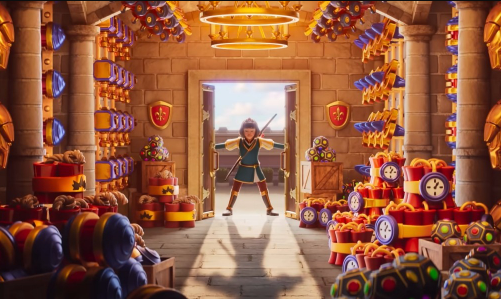
I. Introduction to Royal Kingdom
A. Game Overview: Match-3 Puzzle Adventure
Royal Kingdom is a match-3 puzzle adventure, built around the classic concept: you match tiles (gems, castle icons, etc.), clear boards, hit objectives, and progress. But it doesn’t stop there. The game layers on a solid kingdom-building and story component — transforming simple puzzle runs into an ongoing royal journey.
B. Developer: Dream Games, Ltd
The game is developed by Dream Games — the same studio behind Royal Match. That connection matters: if you liked Royal Match, Royal Kingdom feels like a natural spiritual successor with upgrades in style, story, and scope.
C. Spiritual Successor to Royal Match
Royal Kingdom doesn’t pretend to reinvent the wheel. Instead, it takes what worked in Royal Match — the intuitive match-3 gameplay, the bright cheerful visuals, the relaxed puzzle flow — and builds on it, adding narrative, character interactions, kingdom expansion, and more ambitious level design.
D. Story-Driven Puzzle Experience
Unlike many match-3 games that treat puzzles as standalone challenges, Royal Kingdom weaves a story: you follow a royal family, unlock districts, confront an evil Dark King (and allies like a Dark Witch), and build your realm. That story — with characters, motivations, stakes — makes solving levels feel more meaningful.
E. Platform Availability (iOS, Android, PC?)
Royal Kingdom is primarily a mobile game — available on Android and iOS.
Given its roots as a successor to a top mobile game, it aims at broad accessibility: casual players, puzzle fans, and anyone who loves a colorful, easy-to-start game.
II. Main Story and Characters
What sets Royal Kingdom apart for me is how it tries to wrap its fun match-3 puzzles in a story — complete with characters, kingdom ambitions, and evil threats. That gives the game a cozy RPG-lite vibe.
A. King Richard — The Protagonist
King Richard is the launch-pad of your story: he’s the younger brother of Royal Match’s hero King Robert. In Royal Kingdom, you step into his shoes.
As ruler, he carries responsibility — but also hope. His arc is about growing into leadership, defending the kingdom, and proving himself worthy of the crown.
Importantly, he’s also a father figure (yes, family matters here), with motivation rooted in protecting loved ones and his realm.
B. Princess Bella — The Adventurer
Princess Bella is King Richard’s daughter — and she’s not your typical “royal damsel.” She’s independent, skilled (archery among her talents), and curious.
Her spirit brings freshness: she’s not just along for plot convenience — her presence and personality add heart, especially for players who enjoy character-driven stories.
Her involvement makes the stakes feel real: it’s not just about castles and coins — it’s about family, heritage, and protecting what matters.
C. Supporting Characters
The cast expands beyond just the King and Princess — giving more depth to the narrative and adding flavor to your kingdom-building journey:
The Wizard: the magical mentor — wise, mysterious, and loyal to the royal family. He adds that fantasy-magical element that contrasts with the castle-and-gem aesthetic.
The Grand Duke: handling treasury and administrative matters — through him, you get hints of the kingdom’s inner workings (economy, politics, support).
Herman (the Craftsman/Builder): humble origin, devoted to rebuilding and crafting — crucial for kingdom expansion and player progression.
Antagonists — Dark King & Dark Witch: the villains driving conflict. Their presence ensures the narrative has stakes: it’s not just about building a pretty castle, but defending the realm from darker forces.
D. Story Narrative Arc
The storyline feels simple but comforting — classic in a good way:
Childhood vendetta — old conflicts resurface.
Kingdom defense — the Dark King threatens peace, so you must act.
Relationships develop — loyalty, trust, growth between characters as the story unfolds.
Identity & legacy — for King Richard and Princess Bella, it’s about protecting heritage and forging a kingdom worthy of its name.
All of that wrapped in match-3 puzzles and castle upgrades gives the game more personality than your average “swipe-and-clear” puzzler.
III. Core Gameplay Mechanics
Under all the story and kingdom aesthetics, Royal Kingdom stays true to match-3 roots — and uses that foundation effectively.
A. Match-3 Puzzle Foundation
At its core: swap adjacent tiles to make matches of three or more — same color or same type (castles, gems, knights, etc.). That clears tiles and helps you progress.
As you go up levels, puzzles get more complex: obstacles, locked tiles, tile types, different objectives. The game keeps you on your toes instead of repeating the same pattern ad nauseam.
Objective-based levels: some require clearing specific tile types, others a target score, or clearing obstacles — it’s not just “keep matching.”
Move-based system: you have limited moves per level (or sometimes other constraints), making planning and strategy matter.
B. Objective Types and Level Goals
Depending on the level, you may be asked to:
Defeat a boss / enemy (like a Golem) by dealing enough “damage” through tile matches or power-ups.
Clear special tile types (locked tiles, frozen tiles, boxes, etc.).
Collect required items (gems, coins, kingdom resources).
Reach a target score within move limits — straightforward but sometimes tricky.
These variations — treasure hunt, boss fights, resource collection — keep gameplay fresh and prevent it from growing stale too fast.
C. Board Elements and Obstacles
As you progress:
You’ll see locked tiles, crates/boxes, frozen tiles, blockers — making some levels tricky and requiring power-ups or careful strategy.
Special pieces: beyond gems and basic tiles, there are “castle symbols,” “knight icons,” “gem pieces,” and other kingdom-themed tile types — adding to the aesthetic and implicit lore of the game.
D. Puzzle Piece Themes and Aesthetics
The art direction goes for a cheerful, royal-fantasy vibe: bright colors, gems, knight motifs, castle symbols — it fits the setting and makes each match feel thematic.
It’s that mix of casual puzzle + royal charm + simple fantasy that gives the game some personality beyond “match and move on.”
IV. Power-Ups System
What really spices up the match-3 gameplay in Royal Kingdom are the power-ups and boosters. They add strategy and fun — because sometimes a well-timed power-up feels like saving the day.
A. Power-Up Creation Mechanics
Depending on how you match tiles (4 in a row, L-shapes/T-shapes, 5 in a row…), you can create special power-ups:
Rocket — match 4 straight: clears a whole row or column. Great for clearing obstacles or opening paths.
Spinner / Top — match 4 in a square: clears nearby tiles or random spread — handy when the board is messy.
Dynamite / Bomb — match in L or T shapes: clears an area, good for tight spots or clusters of blockers.
Rainbow/Electro Ball (match 5): clears all tiles of a certain color — powerful for big board shifts or target-heavy levels.
B. Power-Up Effectiveness
Power-ups dramatically change the dynamic:
Chains matter: combining power-ups (e.g., rocket + bomb, bomb + rainbow) can clear huge swaths — especially useful for obstacle-heavy or boss levels.
Strategic placement: instead of just matching randomly, you learn to build toward power-ups, clear blockers strategically, and use boosters wisely.
Efficiency increase: saves you moves, helps pass harder levels, and keeps gameplay from feeling grindy.
For me, using power-ups cleverly (rather than spamming them) makes the difference between fail and success — and it's satisfying when it works out.
V. Boosters and Premium Power-Ups
Beyond in-board power-ups, Royal Kingdom offers a variety of boosters — items that you can use outside of match patterns to give yourself an edge. These are helpful (sometimes necessary) for tough levels or just for convenience.
A. Booster Types Overview
Some of the main boosters you’ll see:
Hammer: Instantly removes a single tile. Great for precision — when one tile blocks progress.
Battle Ram: Clears an entire row (useful when there are many obstacles or lower-value tiles).
Drill (Column Clearer): Clears an entire column — vertical obstacles or long blocker columns hate this.
Wizard Hat: Changes tile colors to help create power-ups — useful when the board is unfriendly or you need a specific color combo.
Bomber Plane: Deploys multiple bombs — ideal when you’re stuck or facing a boss.
B. Booster Acquisition
You don’t get boosters only through purchase (though some are premium). There are multiple in-game pathways:
Completing levels and achieving objectives.
Kingdom/district chests or completion rewards.
Event rewards and special time-limited challenges.
Occasional free or bonus distributions (though you’ll often have to manage them carefully).
From my experience — early levels give enough freebies to let you enjoy the game without spending; but higher levels? You’ll begin to appreciate boosters more.
VI. Magic Pots, Consecutive Wins & Reward System
One neat system in Royal Kingdom that adds a bit of long-term motivation is the “Magic Pot & Consecutive Win” system. As you progress, this adds another layer of reward and risk — making success more satisfying.
A. Magic Pot Mechanics
Unlocks after a certain level threshold (once you’ve played quite a bit).
Rewards build up with consecutive wins: the more you win in a row, the better the rewards. This encourages players to polish their strategy rather than brute-forcing levels with boosters.
B. Reward Progression & Multiplier System
As you stack wins:
You get basic power-ups.
Then multiple boosters or better rewards.
After hitting higher streaks: multiplier bonuses (double rewards, extra coins/diamonds, rare items).
Missing a level or losing resets the streak — so there’s tension, thrill, and satisfaction when you succeed.
This system adds a nice long-game hook beyond “just pass levels.” It encourages mastery, careful play, and giving value to skill rather than pure luck.
VII. Resources Management
As with many match-3 / mobile games, managing in-game resources is key — coins, premium currency, boosts, lives/stamina, etc. Royal Kingdom does it in a way that balances accessibility and engagement.
A. Currency Types
Coins: primary in-game currency — earned by playing, used to buy boosters, extra moves, or kingdom upgrades.
Premium Currency (Diamonds, etc.): rarer, used for special boosters, extra lives or expedited progress — you’ll get some from events or chests, though naturally limited.
Star Fragments / Special Items / Pots / Cups: for overall progression, tournaments/events, or unlocking districts.
B. Life System / Attempts
Like classic match-3 games, Royal Kingdom likely has a “life” or “attempt” system, where failing too much or finishing levels consumes a resource — meaning pacing matters, especially if you don’t spend. (This is common for the genre, though exact life-regen details may vary.)
C. In-Game Economy & Progression Incentives
Because the game combines puzzles + kingdom building + narrative + periodic events — there’s a sense of progressive unlock: early fun and easy wins, mid-game complexity, and long-term kingdom expansion.
From what I’ve seen: the economy isn’t blatantly pay-to-win — you can play for free, get coins and boosters, and enjoy decent progression. But like any free-to-play game: prudent use of premium currency and strategic booster usage go a long way.
VIII. Kingdom Building & Districts — More Than Just Puzzles
One of my favorite features is how Royal Kingdom uses puzzle progress to build kingdom districts — it gives a sense of ownership, progression, and beauty.
A. District Creation and Development
As you solve puzzles and complete level objectives, you gather resources (coins, potions, items) that let you build or unlock new districts: palaces, gardens, towers, squares, and more.
Each district adds to the “kingdom aesthetic,” giving you a visible sense of growth — not just in numbers or level counts but visually.
B. Cosmetic & Functional Upgrades
It isn’t just decoration: unlocking districts, buildings, or kingdom upgrades may unlock better boosters, more resource payouts, or story progression. That combo of functional and visual reward is part of what keeps me hooked.
C. Identity & Immersion — Not Just Another Puzzle Game
Because of these kingdom-building mechanics and story elements, Royal Kingdom doesn’t feel like a repetitive swipe-and-move title. Instead, it feels like you are leading a realm — matching tiles to build your legacy. That added layer of immersion helps the game stand out from plain match-3 clones.
IX. Difficulty Curve, Levels & Challenge Types
Royal Kingdom doesn’t stay easy forever. As you progress, levels get trickier, requiring more strategy, planning, and thoughtful use of power-ups.
A. Level Progression & Difficulty Scaling
The game starts off friendly, introducing mechanics gradually, but as you reach later stages:
More obstacles appear (locked tiles, blockers, fewer moves).
Level goals become more varied and complex (boss fights, multiple objectives).
Planning and use of boosters become less “optional” — sometimes they feel necessary to pass a level (especially later).
This scaling ensures that long-time players still feel challenged, while newcomers have gentle entry.
B. Boss / Enemy Mechanic — Golem & Dark Kingdom Levels
One neat addition: certain levels are “boss/defense”-style — for example, tackling a Golem boss or Dark King’s minions, where you essentially “attack” through puzzles. These raise the stakes: timing, best moves, and power-up combos matter more than ever.
This gives a bit of “puzzle combat” — adds tension, variety, and breaks monotony, which I appreciate as someone who’d get bored by plain levels after a while.
X. Events, Tournaments & Live-Service Features
Because Royal Kingdom is built by Dream Games — a studio experienced in live mobile games — it has recurring updates, events, and live-service features that help keep it fresh.
A. Events & Special Modes
There are many events: special themed challenges, limited-time puzzle modifiers, extra rewards, holiday events, and more.
These events often offer bigger rewards (boosters, premium currency, cosmetics) — giving free-to-play players a chance to catch up with paying players (or at least stay competitive).
B. Frequent Updates & New Content
Since launch: levels and content have been updated regularly. This includes new levels, new districts, new story chapters, new event game modes.
That steady content flow matters for retention: as a player, it keeps me checking back — there’s always something new to try.
C. Live-Service Design, Monetization & Balance
The game follows a standard free-to-play with optional in-app purchases model. But in contrast to some cash-grab heavy games, Royal Kingdom seems to balance between casual/f2p players and spenders, at least in early and mid-game. Coins, boosters, free progress — you can manage without spending, but spending can speed things up.
From my vantage point: the balance isn’t perfect — harder levels will push some players toward purchases — but if you play smart, you can stay competitive without breaking the bank.