Goddess of Victory NIKKE Characters – Player’s Tier List & How to Build a Strong Squad
Alright — if you’ve spent any time in NIKKE, you know it’s not just a “shoot‑and‑win” gacha shooter. It’s a whole ecosystem: you collect Nikkes, build teams, manage burst timing, pick weapons, optimize synergies. I’ve been playing for a while now, and I’ve made plenty of mistakes… and epiphanies.
This article is my take — from one player to another — on which characters are worth investing in right now (December 2025), and how you should think about them depending on your play style (casual, F2P, competitive, boss‑hunting, you name it). I’ll walk you through core systems (burst, weapons, roles), then break down characters into tiers (S+, S, A, etc.), and finally give advice on how to build a strong squad and grow your account efficiently.
If you wanna skip the fluff — go to the tier list. If you want to get clever about team‑building and avoid rookie mistakes — stick with me.
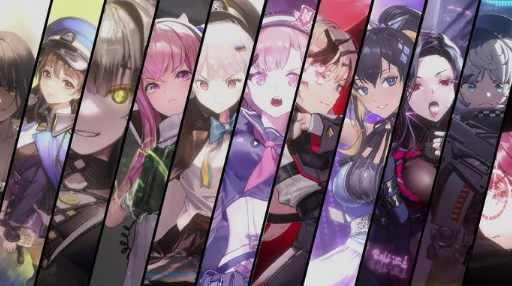
I. What Makes NIKKE Tick: Gameplay, Burst, Weapons, and Roles
Before listing who’s “top-tier,” we gotta agree on what “top-tier” even means in NIKKE’s context.
A. NIKKE at a Glance
NIKKE is a third-person-shooter + RPG + waifu‑collection game. You command a squad of up to 5 Nikkes, each with their own firearm, stats, and skills. You take cover, aim, shoot — but success is more than just headshots.
Every Nikke also belongs to one of five elemental “Codes,” which influence strengths and weaknesses vs. certain enemies.
Combat isn’t just “spam shoot.” There’s a robust system of weapon types, burst skills, team synergy, and timing that makes even “regular stages” feel like mini-strategies.
B. Burst System: Core of Every Battle
The Burst System is arguably what defines NIKKE more than anything else. Here’s how it works:
Each Nikke has a Burst type — Burst I (B1), Burst II (B2), or Burst III (B3).
As your squad lands hits on enemies, they generate “Burst Gauge.” Once the gauge fills, you trigger the burst chain: B1 → B2 → B3 (must in order).
If you successfully go through the chain, your whole team enters Full Burst mode — all Nikkes fire automatically at your target (or where you aim), and deal significantly boosted damage. Full Burst lasts about 10 seconds.
Therefore, a reliable team needs at least one of each burst type to guarantee Full Burst chain. Most high-performance squads use 1 B1 + 1 B2 + 2~3 B3, leaving one slot as “flex.”
Cooldowns matter. Many B1/B2 bursts have shorter cooldowns (≈ 20s), but almost all B3 bursts have ~ 40s cooldown. That’s why many meta teams pack two B3s — to alternate bursts and keep uptime high.
In short: Burst skill sequencing + gauge generation + cooldown management = backbone of strong teams.
C. Weapon Types & Their Importance
Your Nikke’s gun matters — and not just for flavor. NIKKE has six main weapon types.
| Weapon Type | Range & Role | When It Shines / Tradeoffs |
|---|---|---|
| Assault Rifle (AR) | Mid‑range, balanced | A solid all‑rounder for most stages. Great for general use. |
| Submachine Gun (SMG) | Close to short range, fast RoF | Good for close-range mobs, quick bursts, but weaker at distance. |
| Shotgun (SG) | Very close range, high spread damage | Great for clustered enemies or close‑quarters, but poor at range and slow reload. |
| Machine Gun (MG) | Mid-range, high ammo / sustained fire | Great for waves of enemies or suppressive shooting, especially swarm / horde-style fights. |
| Sniper Rifle (SR) | Long range, high accuracy / single-target / pierce | Best for ranged enemies, bosses, precision kills; requires aim and is slower fire. |
| Rocket Launcher (RL) | AoE / explosive, varying range | Excellent for mobs / groups / crowd control; also good for burst‑gauge build if hitting multiple targets. |
Takeaway: A balanced squad — mixing weapon types — is much more versatile than a “all‑guns‑same‑class” lineup. It helps you adapt to both close‑range swarms and long‑range bosses.
D. Role Classification: DPS, Support, Tank, Hybrid
Given Burst types, weapons, and individual kits, Nikkes naturally fall into several roles:
Main DPS – Usually B3, high-damage output, carries burst output.
Support / Buff / Healing / Cooldown reduction / Shield / Sustain – Often B1 or B2, critical for team stability and enabling frequent bursts.
Tank / Sustain / Frontline – Some Nikkes designed to absorb damage or provide defensive buffs/shields.
Flex / Utility / Hybrid – Mix of roles: maybe damage + buff, or shield + utility, or special mechanics (penetration, crowd control, healing).
Good teams often combine these roles: DPS + support + sustain + utility to handle varied content (swarm waves, bosses, waves + elite + boss, etc.).
II. S+ Tier – The Core, Must‑Have Nikkes for Any Serious Player
These are the Nikkes I’d call “meta kings/queens.” If you pull these — or plan to — they give the best bang for your investment.
1. Top‑Tier Support & Burst‑Cycle Facilitators
Liter – Legendary status for a reason. As a Burst I support, Liter reduces cooldowns, buffs squad ATK / output, and dramatically improves burst uptime. Having Liter often feels like having “always‑ready burst.” She’s arguably the backbone of many stable meta squads.
Centi / Crown – If your team leans toward survival, tankiness, or long sustained fights (bosses / high dps incoming), these Burst II/defensive types supply shields or invincibility windows that make the difference between win and wipe.
2. Burst III Heavy Hitters: DPS / AoE / Boss Killers
Scarlet – AoE Burst III specialist. If you’re clearing large mobs or need wave‑wipe power (e.g. high‑density enemy waves, hordes, or elite + minions), Scarlet excels. Her burst often smashes groups.
Modernia – High rate-of-fire, machine‑gun style DPS. She shines in sustained fights / long waves / boss fights thanks to sustained DPS, especially when burst sequences land.
Red Hood – Why she’s S+? Because she’s beginner‑friendly, easy to use, flexible, and catches up quickly. For newer players or those with limited resources, she’s a top option to carry you early game and beyond.
Nayuta (recent add) – Balanced stats: decent output + good support/utility/buffs/healing or sustain depending on kit. A strong pick if you want “safe but solid.”
Why these make S+: They either (a) maximize full burst uptime / burst‑chain stability (Liter, Centi), or (b) deliver top-tier DPS / AoE / boss‑clearing power under burst / good weapon usage (Scarlet, Modernia, Red Hood, Nayuta).
If I only had resources to max out 2–3 Nikkes — I’d pick at least one from support/cooling (Liter / Centi) and one heavy DPS (Scarlet / Modernia / Red Hood).
III. S Tier – Reliable, Strong, and Worth It (Especially Mid‑Game / Long‑Term)
These are solid picks. They may not always be “top of meta,” but they bring a lot to the table, especially if you're resource-conscious or building your second/flex team.
Support & Utility / Secondary DPS
Noise / Pepper / Rapunzel – Support‑type or healing / sustain / buff roles. Useful especially in content where sustain, healing, or party stability matter (long fights, boss fights, tower/raid‑type stages).
Dolla / Rupee / Mast Maid – Offer good buffing, cooldown reduction or attack support — helpful especially if you don’t have the “perfect” S+ support.
Alice / Harran / Privaty / Drake – DPS / niche DPS / utility hybrids. Maybe they don’t top DPS charts compared to S+, but often it's sufficient for mid‑ to late‑game content, or as backup/second-string DPS for resource‑efficient squads.
The appeal: Lower resource demand compared to S+, more forgiving on investment, and enough versatility to carry you through many stages, especially in flex or secondary teams.
IV. A Tier – Budget / Role‑Specialized / F2P‑Friendly Picks
If you’re newer to NIKKE, are F2P, or just don’t have a lot of spare resources, A‑tier Nikkes are your best bet for “getting by” without burning everything. They don't always shine in the highest‑end content — but they’re often “good enough.”
Some typical uses:
Early / mid-game progression (main story, early hard content)
Backup squads for side content, farming, leveling, exploration
Secondary or alternate teams for different game modes (e.g. event clearing vs. boss raids vs. farming)
Players who prefer low-maintenance squads (less resource investment, simpler builds)
In short: A‑tier = practical budget / casual / resource‑friendly choices. Not flashy, but reliable.
V. Building a Good Team: Squad Composition, Synergy & Strategy
Having strong Nikkes is just part of the equation — if you don’t build your team right, the “best of the best” can still underperform. Here’s how I usually build/manage my squads for maximum efficiency.
A. Classic Balanced Team Composition
A generally stable and versatile setup looks like this:
1× Burst I (Support / CDR / Buff / Sustain) — e.g. Liter, Pepper
1× Burst II (Tank / Defense / Buffer / Utility / Heal) — e.g. Centi, Noise, Rapunzel
2× Burst III (Main DPS / AoE / Boss‑Killing) — e.g. Scarlet + Modernia, Red Hood + Drake, etc.
1× Flex / Utility / Secondary DPS / Off‑role — depending on stage: could be heal‑support, second DPS, utility (shield/penetration/etc.)
This structure allows: stable burst chaining, good DPS output, sustain / defense in harder fights, and flexibility for challenging or mixed content.
B. Weapon & Role Balance Matters
Don’t just build “all DPS guns” or “all same weapon type.” I find better success mixing:
One Sniper (long‑range, single target / boss)
One Rocket or MG (AoE / crowd control / wave clear)
One AR (balanced, flexible)
One close-range / SMG/Shotgun if you expect close‑quarters / tight maps
Flex slot depending on content needs (support/tank/utility)
This ensures you’re not blindsided when enemies’ range or density changes drastically — you always have a tool for distance, crowd, and single high‑value targets.
C. Burst Timing, Cooldown Management & Sustained Output
Only using Burst III DPS won’t carry if your support / buffer isn’t resetting cooldowns or enabling frequent bursts.
I highly recommend getting at least one cooldown‑reduction / buff / support Nikke — without them, full burst uptime becomes unreliable.
For some harder fights (bosses, long waves, elite mobs), careful burst timing + survival / shield / healing is just as important as raw damage.
VI. New Players & F2P Strategy: How to Start Smart
If you just started NIKKE, or you’re on a budget (F2P / light spender), here’s what I’d do if I were you — based on what I learned the hard way:
Prioritize pulling / saving for at least one S+ support (e.g. Liter) + one reliable DPS (e.g. Red Hood, Scarlet). That gives you a stable “core squad.”
Build around burst balance (1 B1 + 1 B2 + 2 B3 + flex slot). Don’t chase DPS-only — sustain & cooldown reduction are key.
Balance weapon types in squad. Weapon variety > stacking same gun type.
Use budget / A‑tier Nikkes smartly. They’re not trash; used right, they carry you through early/mid game, farming, and resource-constrained content.
Don’t overcommit resources too early. Wait until a Nikke proves useful across several modes (story + boss + events). Spare mats for core squad first.
VII. Tier Lists ≠ Gospel: Use Them as Reference, Not Law
One last thing: tier lists are guidelines, not commandments.
Your ideal squad depends on your:
Pull luck (who you’ve got)
Available resources (time, in‑game mats, currencies)
Play‑style (casual, competitive, boss‑hunter, farming, PvP, co‑op, etc.)
Content you want to tackle (story, raids, events, PvP, daily / weekly grinding)
Willingness to adapt, experiment, and learn
I know players who use “B or A tier” Nikkes and still clear most content just fine — because they built around synergy, not just “who’s meta.” Conversely, even top-tier teams can flounder if misbuilt.
Conclusion
Playing NIKKE is more than just drawing, leveling, and shooting. It’s about strategy, planning, team‑building, and knowing what your squad can — and cannot — do.
If you’re just starting or still building your roster: focus on balance — burst types, weapon variety, support + DPS + utility, resource management. Invest in a few, build smart, and enjoy the ride.
If you’re mid‑game / long‑term: aim for the S+ core (support + DPS), but don’t neglect flexibility — events change, meta shifts, and sometimes a “weird build” works just as well (or better) than the “textbook meta.”
At the end of the day: have fun, experiment, find what feels good to you. NIKKE is as much about your personal vibe as it is about “optimal meta.