Delta Force Gameplay — My Player’s Guide & Take on the Shooter
Hey, squad — if you’ve been sniper-peeking at new shooters lately and saw Delta Force pop up, you’re not alone. I dove into this game just weeks ago, and man… for a free-to-play shooter, it packs a lot. There’s big battles, team tactics, extraction missions, and even a throwback campaign mode.
In this write-up I’ll walk you through how Delta Force works, what modes and systems stand out, how to pick classes and gear, and how I think you — yes you — can get the most fun (and wins). Think of it as a chat over voice-chat: I’m just another player sharing what works for me.
Let’s get into it.
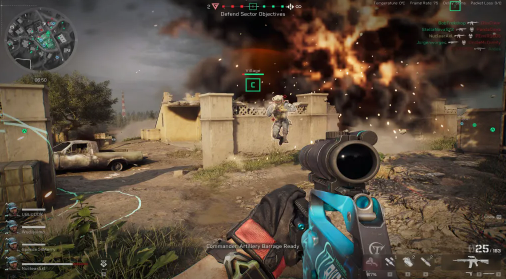
I. What Is Delta Force (and Why It’s Worth Trying)
A. Game Overview: Tactical FPS with Variety
Delta Force is a modern first-person tactical shooter. It’s not just “run-and-gun”; the game emphasizes teamplay, strategy, and large maps — with vehicles, terrain variety, and multiple objective types.
What drew me in: unlike some shooters that feel fast-paced and chaotic, this game gives space for real tactical thinking — pushing objectives, using cover, coordinating with squadmates, and thinking about vehicle use or map control before unloading bullets.
B. Developer & Release Info
Delta Force is developed by Team Jade (under TiMi Studio Group).
It’s available (or being rolled out) on multiple platforms: Windows PC, iOS/Android (mobile), and consoles (PS5 / Xbox Series X|S). Cross-platform play and cross-progression are officially supported.
That means you could squad up with friends on PC, console, or mobile — though matchmaking pools may differ depending on your settings or device.
C. What the Game Tries to Be: Tactical, Large-Scale, Diverse
Delta Force doesn’t lock you into one “kind” of shooter. Its ambition is big: from open warfare with vehicles, to extraction-style PvPvE missions, to a more traditional campaign — it offers multiple flavors.
As a player, that variety is a big win. Some days you want chaos; others you want strategy or stealth. Delta Force covers both.
D. Fair-Play, No Obvious Pay-to-Win Promises
One thing I appreciate: according to dev info, Delta Force is free-to-play and the developers publicly commit to a “no pay-to-win” design.
What that means for you (and me): you don’t have to throw cash to stay competitive. Skill, teamplay, and smart gear/weapon usage matter more.
E. Meta Update & Community Momentum (as of 2025)
As of 2025, the game has grown fast. For example, there’s an official console launch (August 19, 2025), completing the rollout across platforms.
Server population and active community seem healthy — which is vital for a multiplayer shooter. More players = faster matchmaking, better squads, better chaos.
II. Game Modes & Core Gameplay Fundamentals
Delta Force isn’t “just deathmatch.” There are several very different modes — that’s part of the fun. Here’s what you should know, and what I learned after playing.
A. Warfare Mode — Massive 32 v 32 PvP Wars
What it is: Large-scale PvP across land, sea, and air. Expect vehicles, tanks, helicopters, boats — the whole military sandbox.
Why it’s great: It’s chaotic in a good way. One minute you’re storming a building, the next you’re piloting a chopper or driving an armored carrier. Teams and coordination matter more than run-and-gun spray & pray.
What to watch out for: Big maps, many people — you need to stay aware. Random solo players tend to die fast if they don’t stick with squad, coordinate, or watch flanks.
B. Operations (Extraction Shooter) Mode — Risk, Loot & High Stakes
What this mode does: Think: drop behind enemy lines, loot valuables, and extract before being wiped. It’s PvPvE — you fight both other players and the environment/enemies/AI sometimes.
Why I dig it: The tension is real. Every noise, every step could mean danger. Loot matters. Extracting alive with good loot? Feels like you’re playing Tarkov (or similar extraction shooters) with a bigger player count.
Squadwork is mandatory: Solo here is rough. You’ll want at least one support/medic-type or cover/support operator in your 3-man team.
C. Campaign / Story Mode (Remake of Classic) — PvE / Co-op Play
For players bored (or overwhelmed) by PvP, there’s a campaign mode inspired by the original’s legacy. It’s a chance to learn mechanics, weapons, and teamwork in a less chaotic setting.
Good for practicing — before you jump into full PvP or extraction.
D. Cross-Platform + Cross-Progression Support
As of 2025, Delta Force supports crossplay across PC, console, and mobile. That means you don’t lose progress if you switch devices.
On console you can opt to go “console-only” matchmaking if you want to avoid PC players or mouse/keyboard opponents.
In short: whether you got a PC rig, a phone, or a PS5, there’s a spot for you — and you won’t be stuck on just one platform.
III. Operators & Roles — Picking Your Playstyle
You’re not just a nameless soldier here. Delta Force gives you operator classes — each with their own strengths and ideal roles in a squad.
A. Classes at Launch (Assault, Recon, Support, Engineer)
Right off the bat, there are four main Operator classes (at least at launch): Assault, Recon, Support, Engineer.
Assault: The bread-and-butter aggressor. Great for firefight, pushing points, leading charge, breaching. If you like run-and-gun or leading a push — this is it.
Recon: Scouting, stealth, intel gathering, positioning & snipe/long-range engagements. Good for players who like subtlety, strategy, and knowing what the enemy is up to.
Support: Healing, revives, squad sustain, utility tools — the backbone of survival. For players who want to help their squad stay alive and win longer fights.
Engineer: Utility, gadgets, maybe deployables or equipment for breaching/defense/objective-based roles. Useful when playing objective-heavy maps or supporting a push.
B. Why Squad Composition Matters
During big Warfare rounds or extraction missions, if you just run solo with Assault — you'll do damage, but your team may crumble without support or coordination. I’ve been in matches where a good Recon + Support + Assault mix turned the tide simply because we held points or coordinated pushes.
It’s less about “who has the best gun” and more about “who’s doing their job.”
C. Unlock & Progression System
Operators unlock over time — via leveling, rewards, or playing. The game offers both free and premium (pay/premium-rewarded) operators. But since devs emphasize no pay-to-win, a skilled free operator can absolutely hold their own.
My tip: start with a class that fits your style (Assault or Recon if you like action; Support/Engineer if you like teamplay) and stick with it until you master its mechanics.
IV. Weapons, Loadouts & Customization — Your Tools, Your Way
One of the best parts of Delta Force is the variety and depth of weapon & loadout customization. It's not just “gun + shoot” — attachments, weapon types, and mod choices influence how you fight.
A. Weapon Types Are Diverse
You’ve got access to many weapons across categories: assault rifles, SMGs, LMGs, sniper rifles, shotguns, etc. So whether you like close-quarters chaos or long-range precision, there’s a gun for you.
This gives flexibility to adapt to different maps and playstyles.
B. Attachments & Customization Matters
Equipping the right attachments — red-dot or scope, muzzle, grip, magazine, stabilizers — changes how a gun handles: recoil, accuracy, stability, handling speed, etc.
For example: if you’re pushing buildings or rooms, a compact SMG + red-dot + fast-reload mag might work best. If you’re sniping or at long range, a precision rifle + scope + recoil/stability mods is the way to go.
This kind of depth makes the gunplay more satisfying — you feel a difference when you hit the right setup.
C. Loadout / Meta Recommendations (What I Use)
Here are some of my “go-to” loadout styles that seem to perform solid for me:
Mid-range all-arounder: Assault rifle + mid-range scope + balanced attachments → good for general maps, mixture of CQB and open fights.
Close-quarters / urban + push style: SMG or compact rifle + red-dot / reflex + fast mag + mobility attachments → quick draws, faster reflexes, good for house/room fights.
Sniper / long-range recon setup: Sniper or marksman rifle + long-range scope + recoil stabilization + suppressor (if available) → for overwatch, long sightlines, pick-offs.
Support / suppression loadout: LMG / AR with large mag + burst control attachments → for suppressive fire, area denial, cover fire for squad pushes.
Because the game gives freedom, you can experiment — but smart attachment choices and matching weapon to map/role will make a noticeable difference.
V. Maps & Strategic Positioning — Knowing the Ground Matters
I’ve learned early on: good awareness of map layout + using cover/terrain wisely = lives saved. In a game like this, gun-skill helps, but map sense wins wars.
A. Variety of Maps & Terrain Types
Delta Force offers multiple environments: urban zones, open fields, mixed terrain, possibly sea/air maps (since vehicles are involved), which means not all fights are standard.
That variety demands flexibility — sometimes you’re storming a building, sometimes you're sniping across open lands, sometimes using vehicles.
B. Tactical Positioning > Run-and-Gun
From my experience:
Don’t sprint blindly. Use cover. Peek. Use corners. Use height when possible.
Coordinate with squad — suppression, flank, bait-and-switch, overlapping coverage.
Adjust loadout to map type. Urban = close range; open = long range; mixed = balance or mix with teammate roles.
When you treat map as part of the battle — not just a background — fights feel more realistic, more strategic, and more rewarding.
VI. My First Impressions: What Works Great & What Feels Rough
Having played a decent amount of Warfare & Operations mode, here’s what I think works — and what feels rough or needs work.
Pros — What I’m Loving
Scale & variety: Big maps, vehicles, large battles, different modes. It’s nothing like small 6v6 shooters.
Solid gunplay & shooting feel: It feels weighty, satisfying — not spray-and-pray. Hits land, recoil matters. Makes you respect every gunfight.
Cross-platform flexibility: I swapped between PC and console with buddies; cross-progression works smoothly.
Free-to-play with decent fairness: No obvious pay-to-win mechanics (at least from what I see). Skill and teamwork matter more than microtransactions.
Tactical depth, not just run-and-gun: Using cover, communication, loadout adjustments — the game rewards thinking, not just twitch reflexes.
Cons / Rough Edges — What to Know
Learning curve & team dependency: Solo-queueing often means chaos or quick deaths if teammates don’t cooperate. It’s better with a coordinated squad.
Occasional performance issues / optimization quirks (on some devices or maps) — especially when vehicles / many players / heavy action stack up.
Matchmaking & balance on crossplay — sometimes consoles vs PC players creates fairness issues (mouse/keyboard advantage vs controller), though console-only matches help. People on Reddit have complained about crossplay imbalance.
New player hurdle: If you jump in blind, it might feel overwhelming — many guns, attachments, modes, tactical depth.
VII. Tips for New Players (So You Don’t Get Rekt First Day)
If I were you and just starting out, here’s how I’d play:
Start with simple, forgiving loadouts — pick an assault rifle or SMG, use basic attachments, get comfortable with movement and recoil.
Stick with a squad, use voice or at least chat — callouts, cover, support, flank together. Those solo-random-player days? Pain.
Learn the maps slowly — don’t rush capture / objectives. Peek, use cover, wait for backup.
Adapt loadout to map & role — don’t just “bring your favorite gun always.” Change depending on map (urban vs open vs vehicle zones).
Try different roles eventually — Assault is fun, but Recon, Support or Engineer unlock tactical depth & make you useful even when aim fails.
Mind the economy & free-to-play features — game supports free players. Don’t feel pressure to buy to stay competitive. Focus on mastery and teamwork.
VIII. Is Delta Force Worth Your Time? — My Verdict
For me, yes — Delta Force deserves a solid shot, especially if you like tactical shooters with variety, real teamwork, and not just mindless spam fights.
It’s not perfect. It asks for commitment, coordination, and sometimes patience. But when a match clicks — with a squad that moves together, uses cover, coordinates push/retreats — the feeling you get? That’s what tactical shooters should be about.
If you're tired of quick-match arena shooters or pay-to-win battle royales, or just want a shooter that rewards strategy and skill, Delta Force is a breath of fresh air.
IX. What’s Next — My Goals (and Maybe Yours)
For the next few weeks, I’m focusing on:
mastering recoil control + attachment tuning for my go-to guns,
playing more with a stable squad (so we know each other’s roles),
learning maps deeply (every nook, every street, every high ground),
experimenting with operator roles beyond Assault (Recon & Support look promising),
seeing how console / mobile cross-platform feels long-term, and
chasing fun over kills — because that’s when real teamwork shines.
If you want — I can build a “Starter Guide + Best Loadout for 2025” for Delta Force (PC / Console / Mobile) — with my recommended guns, gear, operator picks, and tactics.
Want me to put that together now