Pokémon TCG Pocket Tier Lists — What’s Meta (As of the Mega Rising Update)
Yo — glad you dropped by. If you’re playing Pokémon TCG Pocket and asking what decks are “broken,” which ones are just “meh,” and what’s solid value for your time and packs, this is the deep-dive article you want. I’ve been grinding Pocket since launch, watching the meta shift as new sets dropped — and now with the latest expansion, it feels like the game shook up hard. I’m gonna walk you through the tier-list mindset, which archetypes are cooking right now, and how you can ride the wave even if you’re on a budget or casual play.
I. Introduction to Pokémon TCG Pocket Meta and Tier Lists
A. Card Game Overview: Strategic Trading Card Gameplay
Pokémon TCG Pocket is the mobile adaptation of the Pokémon Trading Card Game: you open booster packs, build decks, and battle other players. Decks are smaller (20 cards), energy and resource mechanics are streamlined, and matches tend to be faster than traditional TCG — which makes it perfect for mobile sessions.
Because of that simplicity + speed, the game attracts a mix: casual players, long-time Pokémon TCG folks testing the digital waters, and people chasing meta-winning decks.
B. Ranking System and Tier Classification
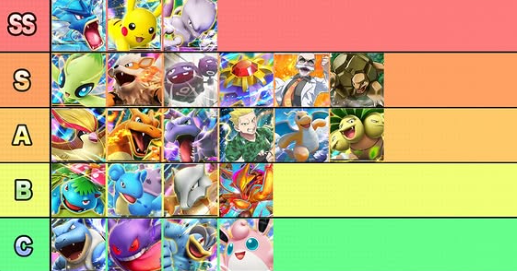
Because decks vary a lot — by type, energy cost, consistency, and power — the community and analysts often sort them into tiers. The idea: some decks are “top-dog” consistently, some are “good but situational,” others are “fun or gimmicky.” A tier list helps you decide: do I spend resources chasing this deck, or build something stable?
Tier lists evolve as the meta changes: new cards, balance updates, and shifting popular decks all influence what decks rise or fall.
C. Current Meta Analysis (Mega Rising Update)
As of late 2025, the meta landscape shifted dramatically thanks to the release of the Mega Rising expansion (October 30, 2025), which adds Mega-Evolved Pokémon ex — high-power cards that bring new strategies and shake up older decks.
Because of those changes, many decks that were solid before are now threatened — while some new decks (and some old but neglected ones) are resurfacing.
D. Importance of Deck Rankings for Players
If you want to climb ranks, win in ranked ladder or tournaments, or just not waste packs pulling into dead-deck archetypes, paying attention to tier lists is key. It helps you:
Choose which booster packs to open first.
Decide which cards are “worth it” to build around.
Understand what decks to watch out for (or counter).
Optimize resources (especially if you’re F2P or on budget).
E. Tier List Update Frequency and Evolution
With every major expansion (like Mega Rising) or update to game mechanics, meta shifts happen. Top players and analysts track win-rates, deck usage stats, and tournament results — then tier lists get updated accordingly. As a player, you’ve got to stay alert: a top-tier deck today might be mid-tier next month if new meta counters arise.
II. Tier Classification System Explained
Here’s the breakdown of how I and many players think about tiers in Pokémon TCG Pocket — roughly ranked by performance, consistency, meta-presence.
A. SS Tier: Absolute Top Dogs (BDIF — Best Decks in Format)
These are decks that dominate. They have top win-rates, strong meta presence, and rarely lose if piloted decently well. They often define the meta.
Consistently top 5-10% win-rates in ladder/tournaments.
Strong matchup spread (win vs many different deck types).
Good consistency: draws, energy curves, speed, viability vs counters.
Easy to pilot relative to payoff (less punishing misplays).
Very meta-defining: other decks must consider them in deck-building or side strategy.
(If you’re serious about climbing, SS deck is often “go big or go home.”)
B. S Tier: Upper-Meta Decks
These are very good decks, but slightly below SS. They might have a couple bad matchups or require slightly more skill/variance — but still viable for competitive play.
High win-rates but maybe less consistent than SS.
Good popularity and meta representation.
Great for ranked or weekend tournaments.
More skill- or draw-dependent than SS, sometimes high risk/high reward.
C. A Tier: Mid-Meta Decks
These decks are solid, but more conditional. They can perform decently given favorable matchups or pilot skill, but aren’t consistently dominating. Good choices for casual-competitive mix or budget players.
Viable but sometimes struggles vs meta-heavy decks.
Easier to build (less rare cards), but payoff is lower.
Good for fun, experimentation, or side-decking.
Often serve niche or tech roles (anti-meta, counter decks, etc.).
D. B/C Tier: Rogue, Niche & Fun Decks
For players who want variety, challenge, or are improvising — these decks can work, but expect more volatility. Great for casual laddering or friendly matches.
Lower win-rate overall; inconsistent.
Dependent on draws, timing, or opponent mistakes.
Sometimes fun or creative builds — but not tournament reliable.
Risk of being power-crept or outclassed by meta decks.
III. Top-Tier Deck Archetypes: Mega Rising Format
With Mega Rising in full swing, some archetypes have emerged as go-to now. These feel powerful, often faster or more efficient than legacy decks — but they also demand respect and often good deck-building or piloting.
A. Mega Altaria ex Deck — the Breakout Star
This deck is arguably the shining new star of the meta. Here’s why:
Mega Altaria ex brings in strong Stage-based evolution mechanics combined with reliability. According to the new set info, Mega Pokémon ex give big reward when used right.
Its damage output and bench synergy (if built right) makes it flexible — good vs many archetypes.
Compared to some “glass-cannon” builds, Altaria tends to have a bit more consistency and flexibility.
Many deck-list trackers already put Mega Altaria ex decks high in rankings after the update.