Chaos Zero Nightmare Tier List: The Best Characters, Teams, Reroll Picks, and Meta Rankings Right Now
If you have been searching for a real chaos zero nightmare tier list, you have probably already noticed the same problem I ran into: a lot of tier list pages throw names around, slap S-tier on a few units, toss everyone else into A or B, and then call it a day. That kind of list is fine if all you want is a five-second answer. But if you are actually playing Chaos Zero Nightmare, especially in the current Season 2 environment, that lazy format does not help much. This game is not built around one-button thinking. Team structure matters. Card flow matters. Cost matters. Draw support matters. Burst timing matters. Save Data quality matters. Even a character that looks merely “good” on paper can feel amazing when the rest of the team actually feeds their win condition, while a flashy top-tier unit can feel awkward if you build around them badly. Current April 2026 English-language meta coverage reflects that too: GameWith’s updated tier framework emphasizes versatility, early Chaos strength, ease of building, and support performance instead of judging characters by raw damage alone.
That is why this guide is going to treat the Chaos Zero Nightmare tier list like an actual player tool instead of a decorative ranking page. The live April 2026 ranking environment currently places Sereniel, Nine, Mei Lin, and Veronica in the top SS bracket on GameWith’s updated list, with the same site also marking Mei Lin, Veronica, Sereniel, and Nine as the standout reroll targets in its latest reroll guide.
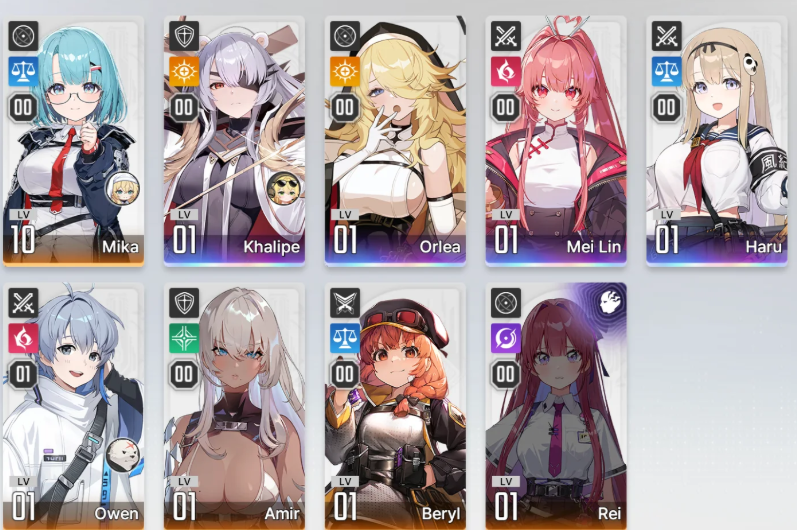
I. Chaos Zero Nightmare Tier List Overview
A real chaos zero nightmare tier list is supposed to answer one basic question: who helps you win the most content with the least friction? That sounds obvious, but it matters because this game is not a simple “highest attack stat wins” RPG. A good ranking has to consider burst damage, consistency, setup requirements, survivability, draw quality, AP or cost pressure, card generation, support value, and how smoothly a unit fits into multiple team styles. The latest April 2026 GameWith ranking makes that philosophy explicit. Its published evaluation criteria emphasize versatility, strength in the early stages of Chaos, and ease of creating builds, while also calling out support performance and the fact that some lower-tier units can still become strong with the right party compositions and Card Epiphanies.
That matters a lot because top articles are not just trying to crown the highest damage dealer. They are trying to capture the current meta in a practical way. For example, GameWith’s quick April assessment says Sereniel and Mei Lin are the best attackers because they can use many attack cards at low cost and are easy to use with strong elimination power, while Nine is praised for huge single-card burst and Veronica for versatile support plus sub-attacker value through extra attacks and draw effects. That mix already tells you what the live meta rewards: strong offensive pressure, but not at the cost of functionality.
This is also why search terms like best characters and strongest units dominate. Most players do not care about a purely academic ranking. They are trying to decide where to spend pulls, where to spend enhancement resources, whether to reroll, and how to build a team that can clear story, Chaos content, and harder seasonal modes without feeling scuffed. Once a game has even a moderately large roster, that kind of guidance becomes one of the first things both new and returning players look up. And because Chaos Zero Nightmare is already operating inside the Galactic Disaster seasonal framework, with Season 2: Seed of Karmic Fire adding new mechanics, Arena systems, seasonal items, Distortion Adaptation, and Save Data adjustments, the “best character” conversation is naturally tied to patch relevance rather than frozen at launch.
From a player point of view, that is exactly how a useful tier list should work. It should not just say “this character does big damage.” It should tell you whether that damage is easy to reach, whether the character works in sloppy early-game builds, whether they need very specific support, whether they solve actual problems in hard content, and whether they stay strong when the seasonal environment changes. If a ranking cannot answer those things, it is not really a tier list. It is just a popularity chart.
II. Tier List Methodology
The way I judge the current Chaos Zero Nightmare tier list is pretty close to the way the best live guides are doing it, but with a little more practical player bias. There are four big pillars: damage, utility, survivability, and synergy. Damage is obvious. If a unit cannot contribute meaningful pressure, they usually struggle to justify a high placement. But raw output alone is not enough, because the game also rewards units that help the deck flow, reduce cost pressure, apply buffs or debuffs at the right moment, support card draw, or smooth out awkward turns. That is why a unit like Veronica stays so valuable. She is not being praised only because she does extra attacks. She is being praised because she mixes extra damage with card draw and role flexibility.
Patch and seasonal changes also matter more here than in some simpler gacha games. The current tier list is explicitly tied to Season 2: Seed of Karmic Fire, and Season 2 brought more than just a new label. It introduced Arena equipment with conditional triggers, refinement systems, God’s Hammer upgrades, a season-exclusive achievement structure with Galactic Medals, the Distortion Adaptation function, new Memory Fragments such as Beast’s Yearning and Glory’s Reign, and even Save Data calculation adjustments. When a season starts altering how power is created and expressed, it also changes how certain characters scale. Units that thrive with exhaust interactions, equipment triggers, or defense-based setups can rise sharply in value.
Another thing a good methodology has to account for is the gap between beginner value and endgame value. Some characters are easy to understand, easy to play, and useful from the moment you pull them. Others may have absurd ceilings but feel awkward until your account has the right supports, enough draw tools, the correct epiphany setup, or stronger Save Data. GameWith’s own criteria lean toward characters who work from the early stages and are easier to build, which is one reason Mei Lin rates so highly for both overall ranking and rerolling. She is described as easy to use, strong in single-turn damage, and ideal for players learning the game because of her buff and card-draw pattern.
For my purposes, I also weigh three practical questions very heavily. First, does the character function cleanly in a normal account, not just in a showcase clip? Second, do they help you across multiple content types, or are they mostly a specialist? Third, how punishing are they if your build is imperfect? This is where players sometimes disagree with pure tier list pages. A hyper-burst unit can be amazing in theory and still feel worse than a more forgiving attacker when you are actually progressing. That does not make the burst unit weak. It just means the ranking needs context.
So when I use tiers in this article, they mean this:
S or T0 / SS means a character is strong right now, broadly relevant, and either easy enough to build or powerful enough to justify building around.
A-tier means a unit is reliable, often very good, but either less flexible, less explosive, more team-dependent, or more replaceable.
B-tier means niche, matchup-specific, or simply outclassed in the current season unless you have a reason to use them.
Lower tiers are not unusable; they are just harder to recommend over better options for most players.
That is the framework I think actually helps people.
III. Current Meta Characters
Right now, the live English-language April 2026 ranking picture is pretty clear at the top. Sereniel, Nine, Mei Lin, and Veronica are the core SS names in the updated GameWith list. That is the cluster every serious meta discussion starts from.
Let’s start with Sereniel, because she represents one of the cleanest forms of modern meta value. GameWith describes her as an attacker who fights through Ravage, retrieving a 0-cost Homing Laser from the graveyard when Ravage is used, which lets her chain burst damage through multiple attacks. That kit profile explains exactly why she feels so good in difficult content. Low-cost offensive tempo is always powerful, and when that tempo also turns into burst windows, the unit stops being merely efficient and starts becoming oppressive. She is the kind of character who feels strong both in spreadsheet logic and in actual hands-on play.
Then there is Mei Lin, who is basically the poster child for a unit that is both top-tier and easy to recommend. Her identity centers around applying weaknesses and leveraging Unity of Attack and Defense, a tool that draws basic cards and reduces their cost, enabling extremely high damage in a single turn. GameWith also calls her one of the best attackers because she can use many attack cards at low cost and is easy to use. That matters a ton. In a lot of games, “best DPS” and “best beginner-friendly DPS” are different characters. In CZN right now, Mei Lin sits in that sweet spot where she is strong enough for top-tier discussion and smooth enough to hand to a new player without apology.
Nine is the big spike-damage specialist of the top tier. The latest ranking describes Nine as an attacker built around upgrading a card called Hew, and when Hew is fully upgraded, it can deal massive damage with a single card. GameWith’s team guide reinforces that identity by showing boss-focused Nine setups, including Tiphera + Nine + Orlea for buffing Hew into a one-strike kill pattern and Nine + Narja + Khalipe for defense-scaling damage with shield support. That tells you two things immediately. First, Nine’s ceiling is real. Second, Nine is stronger when the team is built with intention.
Veronica is maybe the most “meta healthy” top unit of the bunch because she does not rely on a single flashy gimmick. She is a ranger who performs an extra attack at the end of the turn, but what keeps her on top is the combination of extra damage and draw support. GameWith explicitly highlights her versatility and notes that she can handle multiple roles. In practice, that means she is one of the safest premium units in the game because she improves team flow while still contributing to offense. Whenever a unit can be used as a sub-attacker without feeling like dead weight, that unit stays relevant for a long time.
Outside the top four, the S-rank band is still loaded with useful characters. Luke is praised for easy damage with bullet cards, versatility, and low AP consumption. Orlea gets credit for excellent creation cards, 0-cost and low-AP value, though with a jack-of-all-trades caution. Renoa is noted for a high number of attacks and strong Ego Skill burst. Hugo brings powerful Hunt mechanics and AoE Ego Skill pressure. Haru is appealing for high damage from Anchor Shot, though with caution around high cost. On the four-star side, Nia, Mika, and Beryl are especially important because the live guides treat them as genuinely valuable rather than just “starter filler.”
The big takeaway from the current meta is this: the best characters are not just the ones with the biggest numbers. They are the ones who turn their numbers into consistent winning turns. That is why low-cost offense, card access, burst setup, and reliable support all keep showing up at the top.
IV. Best Character Rankings by Role
A good chaos zero nightmare tier list gets much more useful when you stop looking only at raw overall rank and start looking by role. Not every player needs the same thing. Some people need a primary carry. Some need a glue support. Some need healing or shielding because their current lineup is too greedy. If you judge the game only through “who is highest on the list,” you miss the fact that a strong support or sustain unit can improve your account more than a second attacker.
DPS characters and burst damage specialists
For pure attackers, the live top names are clearly Sereniel, Mei Lin, and Nine, with strong backup from Luke, Renoa, Haru, and others depending on the team. Sereniel is excellent for players who want a unit that can ramp into burst while still feeling smooth and low-friction. The 0-cost Homing Laser recursion tied to Ravage is one of those mechanics that sounds strong on paper and feels even stronger in practice because it creates turns where she simply gets to do more than the enemy can comfortably answer.
Mei Lin is probably the easiest DPS recommendation for most players because she combines damage, consistency, and accessibility. She benefits from low-cost attack patterns, weakness application, and a card cycle tool that lets her generate powerful turns without requiring a painfully narrow build. When a unit is both one of the best overall attackers and one of the easiest to reroll for, that is a huge sign that the community should take them seriously.
Nine is the more specialized burst monster. If you like the fantasy of setting up one huge finishing strike, Nine is your character. The tradeoff is that Nine often asks for more deliberate support and cost management. The live team recommendations around Nine repeatedly focus on boosting Hew, enabling defense-scaling or card buff synergy, and stabilizing the lineup with shielding or retained-card support. That makes Nine amazing in boss contexts and very rewarding in optimized teams, but slightly less brain-off than Mei Lin.
Support characters and team buffers
The standout support in overall meta language is Veronica. She is not “support” in the passive healer-only sense. She is support in the modern strong-unit sense: she feeds the team with draw, contributes extra attacks, and helps keep overall damage flowing while remaining individually useful. A unit like that ages very well because she is not only useful when she is the star. She is useful when somebody else is the star too.
Narja is another very important support-leaning piece in the current ecosystem, especially in defense-scaling or buff-oriented lineups. GameWith’s Nine team specifically uses Narja to take advantage of Nine’s defense-scaling potential, and the Mei Lin team uses Narja’s buffs to support a balanced basic-attack composition. The fact that Narja shows up as a support bridge in multiple recommended comps tells you she is one of those units whose value increases when you understand the roster better.
Rei also deserves mention because she appears in several strong team suggestions as a supporting third slot that can add buffs and draw support. In the Mei Lin and Veronica examples, Rei helps amplify damage efficiently because both attackers have low multipliers that benefit from additive buffs, while also contributing hand quality. For players with smaller accounts, this kind of support character is gold because they let your main carry feel stronger without needing a second premium centerpiece.
Defenders, healers, and sustain-focused picks
This is the role bucket players often undervalue until harder content forces them to respect it. Khalipe appears in Nine’s defense-scaling team specifically because she reinforces the team with Celestial effects and shield-granting abilities. That is a big deal because burst setups often collapse if they die before the payoff turn. Shielding and defensive reinforcement can be the difference between a clean boss clear and a wipe on turn setup.
On the lower-rarity side, Nia and Mika are especially interesting. GameWith’s reroll and ranking pages both call out Nia for upgrading ally extra attacks, offering stable healing with Elasticity, and enabling drawing plus deck manipulation. Mika, meanwhile, is valued for excellent 0-cost AP recovery, additional AP support through Wave, and abundant heal cards. These are not top-of-the-banner flashy names, but they are exactly the kind of sustain and resource units that make an early account much less miserable.
So if I had to summarize role rankings in the current season, I would say:
Best all-around DPS picks: Mei Lin, Sereniel, Nine
Best support/flex picks: Veronica, Narja, Rei
Best sustain/value picks: Khalipe for shield synergy, Nia and Mika for budget support value
That is the kind of role-based lens that actually helps when building a real account.
V. Best Team Compositions
One of the most helpful things in the live English CZN guide ecosystem is that the best team advice is surprisingly straightforward. The current GameWith team guide says the most stable basic composition is two attackers plus one support, especially for beginners or anybody unsure how to structure a team. It also adds an important warning: party combinations matter, but the quality of the cards retained in your Save Data can affect your overall power even more. That is a very player-friendly way to think about team building. Get the structure right, but do not ignore your card foundation.
Balanced starter team structures
If you want a stable starter framework, the easiest one to understand right now is Mei Lin + Narja + Rei. GameWith labels this a Balanced Mei Lin Basic-Attack Team and describes it as a stable composition centered on Mei Lin, where she chips away at enemies by upgrading basic attacks while Narja and Rei apply buffs that keep her damage high. This kind of team is why Mei Lin feels so beginner-friendly. She does not just rank high in isolation. She has a clear, understandable shell around her.
Another balanced-but-flexible direction is Veronica + Mei Lin + Rei. This setup uses Veronica’s draw support and extra damage while letting Mei Lin continue to pressure through low-cost attack patterns. The guide notes that Spirit of the Aromata into Veronica’s Repose can increase damage while drawing, and that Rei’s additive buffs efficiently improve the low-multiplier attack cards both units like to use. That is the kind of lineup that teaches good habits because it rewards sequencing and synergy, not just stat checking.
High-difficulty and boss-focused comps
When you want to lean harder into boss killing, Nine becomes one of the main centers of gravity. The guide’s Tiphera + Nine + Orlea lineup is explicitly described as a team that uses buffs from Tiphera and Orlea to upgrade Nine’s Hew and defeat enemies in a single strike, mainly for boss battles. This is the kind of comp that shows why Nine ranks so highly at the ceiling. It is not just that Nine hits hard. It is that the game provides actual support frameworks for turning that hard hit into a win condition.
There is also Nine + Narja + Khalipe, which uses Narja’s defense-scaling buff to exploit Nine’s attacker potential while Khalipe shores up the team with shielding. That comp reflects a different but equally important truth about hard content: sometimes the best boss team is not just the one with the biggest nuke. It is the one that can safely arrive at the nuke turn.
Synergy-based builds for stronger clears
Synergy teams are where lower-rarity or less universally praised characters often find their real home. A good example is Orlea + Nine + Beryl, where the composition uses retain effects and the Contaminated Spore debuff to power up Beryl and finish with Hew. GameWith calls it a limited but powerful composition. That “limited but powerful” phrase is exactly why context matters in tier discussions. Not every strong team has to be universal. Sometimes a niche synergy is still worth respecting because it demolishes the content it is built for.
If I had to boil team building down into one player-friendly rule, it would be this: start with one main attacker, add the support who best amplifies or stabilizes them, then use the third slot to patch weaknesses. That is basically what the live guide recommends too, and honestly it is the cleanest rule for most accounts.
VI. Beginner-Friendly Characters
Now let’s talk about beginner value, because this is where people make some of their biggest mistakes. A lot of players hear “top tier” and assume the highest-ranked character is always the best choice for a fresh account. That is not always true. The best beginner unit is usually the one who gives strong output without making you work too hard for it.
That is why Mei Lin is such an easy recommendation. The live reroll guide specifically says she is easy to use, has buffs usable at initiation, includes card draw, and is ideal for players learning the game or looking for a dependable damage dealer. That is almost the perfect beginner endorsement. She is not being sold as “eventually broken.” She is being sold as useful right away.
Veronica is another beginner-friendly win, though in a slightly different way. She is excellent if you value flexibility more than straight-up carry energy. She can deal damage, support draws, and function as a sub-attacker, which makes her very forgiving in mixed-quality early accounts. If your roster is incomplete, characters who can cover multiple jobs tend to feel incredible because they help you keep moving while you are still piecing the team together.
Among lower-rarity or easier-access options, Mika, Nia, and Beryl deserve more respect than many players give them. The current reroll page specifically notes that several four-star characters are obtainable through normal gameplay, including tutorial units and reward-based characters, but singles out Mika and Tressa as performing well even if they are lower reroll priorities. Meanwhile, the ranking text gives Mika strong credit for AP recovery and healing, and Nia for extra-attack upgrades, stable healing, drawing, and deck manipulation. Those are all traits that help new accounts stabilize.
For a true beginner, my shortlist would look like this:
Best first carry: Mei Lin
Best flexible premium helper: Veronica
Best burst project if you want ceiling: Nine
Best accessible utility value: Mika and Nia
Best “works now and later” attacker: Sereniel, if you can get her and support her
That mix gives you both comfort and room to grow.
VII. Reroll and Selector Guide
Rerolling in Chaos Zero Nightmare is one of those things players love to talk about more than they love to actually do. The live April 2026 reroll guide says rerolling is possible but not recommended, estimating around 20 minutes per attempt, with about 6 pulls plus 23 pulls on the standard gacha per reroll. That is not impossible, but it is definitely not one of those lightning-fast reroll games where you can crank ten accounts in an evening.
So should you reroll? My honest player answer is this: only if you enjoy rerolling, or if you are the kind of person who will be happier starting with a unit you love. If you hate rerolling, this is not the game where I would force myself through hours of it. The game only needs a team of three characters, and the same guide says you can stop rerolling once you pull one SS-ranked character, because that is enough to make early progression much smoother.
As for the best reroll targets, the live guide’s top bracket is very clear: Mei Lin, Veronica, Sereniel, and Nine. Those are the names worth chasing if you decide to reroll at all. Mei Lin is the safest recommendation. Veronica is the best flexible value pull. Sereniel is amazing if you want a premium attacker with strong burst tempo. Nine is the high-ceiling option for players who specifically enjoy burst setups.
The same reroll guide also recommends targeting the Combatant Rescue Rate Up banner because increased rates on specific characters make it easier to get the unit you actually want. It also notes that non-collaboration and non-seasonal characters get added to the standard banner later, so featured timing is less mandatory than in some other gachas. That is useful context because it means you do not have to panic-pull every standard unit the moment they appear.
If you are dealing with any kind of early selector or guaranteed opening reward, my recommendation is simple: prioritize a unit that solves your biggest account problem. No damage dealer? Take a real carry. Already got a carry? Consider a support like Veronica-style flexibility if available. Do not waste selectors on “I heard this unit might be good later” unless your current roster is already functional.
What should you avoid when starting out? Three things:
Chasing complexity instead of power.
Overvaluing niche synergies before you own the core pieces.
Treating reroll as mandatory when the game itself does not really encourage that level of obsession.
That last part matters. Rerolling is a tool, not a religion.
VIII. Character Tier Breakdown
Now let’s get into a practical tier breakdown instead of just talking in theory.
S-tier / SS / T0 units
Sereniel, Nine, Mei Lin, and Veronica are the current top bracket according to the latest April 2026 GameWith list. If you want the shortest version possible, those are the names to remember.
Sereniel: elite Ravage attacker, great low-cost burst pattern, high damage tempo.
Nine: top-tier single-card nuke potential, especially good in boss-focused or optimized comps.
Mei Lin: best balance of strength, accessibility, and consistent offense.
Veronica: elite draw support plus extra attack value, one of the safest all-purpose top units.
If I had to recommend one “best overall” player-friendly top unit, it would still be Mei Lin. If I had to recommend one “best account value” support/flex unit, it would be Veronica. If I had to recommend one “best pure burst project,” it would be Nine. And if I had to recommend one “best aggressive modern meta attacker,” it would be Sereniel.
A-tier reliable picks
The S-rank group under the top bracket includes Luke, Orlea, Renoa, Hugo, Haru, Nia, Mika, and Beryl in the latest broad summaries. These units are not scraps. They are the backbone of many good accounts.
Luke is easy to use, low-AP, and versatile. Great for players who want a smooth damage dealer.
Orlea has strong creation cards and low-cost tools, though she is more generalist than superstar.
Renoa and Hugo both offer meaningful damage value, with Hugo bringing useful pace and AoE angles.
Haru hits hard but comes with cost concerns.
Nia, Mika, and Beryl are especially important because they prove that four-stars are not irrelevant here.
This is the part of the tier list where a lot of smart long-term players actually live. Not every account is built around owning the four absolute best units. A well-constructed roster with a top carry and strong A-tier glue can outperform a sloppy premium-heavy account.
B-tier situational or niche units
B-tier in a game like this usually means one of three things: the unit is too specialized, the unit is outclassed, or the unit needs more support than most players can justify. This is not the same as bad. It just means I would not tell a typical player to chase them first. Many synergy-based teams live here. They can still be very real when the right pieces come together, but they are not universal recommendations.
Lower-tier units and why they fall behind
The lower end of a tier list usually gets misunderstood. Characters fall behind because they do not scale efficiently, they cannot compete with better support options, their damage pattern is too awkward, or their value is tied to edge-case scenarios. That does not mean you must bench them forever. It means you should not overinvest early unless you have a specific reason.
My rule here is simple: if a low-tier unit needs more help than your main carry just to look decent, they are not your priority.
IX. Game Modes and Tier Relevance
A big mistake in tier list reading is assuming one ranking applies equally to every mode. It does not.
Story progression and normal content
For story and standard progression, I value units who are easy to use, forgiving, and not overly dependent on rare synergy. That is why Mei Lin and Veronica feel so safe here. They provide either consistent offense or broad utility without asking you to micromanage an entire specialized setup.
High-difficulty challenge modes
As difficulty rises, burst windows and efficient setup become more important. This is where Nine and Sereniel really start flexing. Nine’s single-card blowout potential is ideal for boss mechanics that reward decisive damage, while Sereniel’s Ravage-based burst pattern is exactly the kind of thing that feels oppressive in harder fights when timed correctly.
Farming, roguelike, and seasonal content
Seasonal content in CZN is especially important because the game is actively shaped by the Galactic Disaster system. Season 2: Seed of Karmic Fire added Arena equipment, Distortion Adaptation, Memory Fragment changes, refined gear, and other systems that affect how characters function and scale. In modes where run quality and gear interactions matter, team context and card quality often matter just as much as raw character rank. That is why even the best team guide warns that cards in Save Data can heavily influence your overall power.
So when you read a tier list, always ask: best for what? Story? Bossing? Seasonal Chaos? Farming? The answer can shift even when the overall top names stay familiar.
X. Update and Patch Impact
The reason “updated tier list” pages rank so well is because CZN is not static. The current list is already explicitly framed for April 2026 and Season 2: Seed of Karmic Fire, which is a huge signal that tier discussions are expected to evolve.
Season 2 itself reshaped the context around the meta. The season adds Arena equipment with conditional triggers, refinement, God’s Hammer enhancements, Galactic Medals, the Distortion Adaptation system, revised Save Data scoring, and new Memory Fragments that boost exhaust-style offense. That kind of ecosystem change is exactly how certain characters gain or lose value without direct balance changes. A character whose kit lines up with new seasonal mechanics can effectively get stronger just because the environment likes them more.
The 3/17 livestream summary is also useful here because it frames Nine as central to Season 2 story and highlights new support context like Alcea, a partner who strengthens defense-based attackers, grants shields on high-cost card use, and applies a debuff that increases enemy damage taken. Even if you are not directly building around every new addition, the pattern is obvious: the game is still layering more systems on top of its original combat loop.
From a player perspective, that means you should never read a tier list as eternal truth. Read it as a snapshot of what the game rewards right now.
XI. Best Characters for Endgame
Endgame is where the fake-good characters get exposed and the real-good characters start to separate. The best endgame units are the ones that keep scaling when content becomes tighter, enemies get nastier, and your own setup becomes more refined.
Nine is one of the clearest endgame winners because optimized teams can turn Hew into a genuine boss deletion tool. The fact that dedicated Nine teams exist both for one-strike buffing and defense-scaling burst is proof that the ceiling is not theoretical.
Sereniel also feels extremely future-proof because low-cost burst packages tend to stay relevant. A unit who can generate strong offensive tempo without excessive friction will almost always matter in harder content.
Veronica is the classic endgame glue piece. As team optimization increases, multi-role supports often become even better because they save roster space while boosting consistency. Draw support never really stops being useful in card-driven systems.
And Mei Lin remains excellent because “strong, easy, low-cost, high-damage” is not a profile that suddenly becomes bad when content gets harder. If anything, units that let you hit hard without overcomplicating your deck become even more appreciated over time.
XII. Weak or Underpowered Units
I want to be careful here because low-ranked does not automatically mean worthless. The real issue with weaker or underpowered units is usually not that they are unusable. It is that they ask for too much while giving too little.
Some units are ranked lower because they are too situational. Others need specialized epiphanies or allies before they feel respectable. Others simply do not bring enough damage, draw, sustain, or utility compared to better options. The current top-tier framework also warns that some lower-tier characters can become sufficiently effective depending on party composition and Card Epiphanies, which is basically another way of saying, “this unit can work, but the burden is on the build.”
The most common mistake players make is overvaluing a niche unit because they saw one showcase clip. Showcases are dangerous. A unit that looks cracked in one perfect setup may feel mediocre in your actual account. That is why I always favor broad-account value over highlight-reel value when giving advice to most players.
XIII. Team Synergy and Deck Optimization
If there is one thing players need to internalize about CZN, it is this: your characters do not operate in a vacuum. The current team guide says it plainly: party combinations matter, but the quality of the cards retained in Save Data greatly affects your power too. That means the real meta is not just unit ranking. It is unit plus support plus cards plus season systems.
The basic formula still works, though:
start with one main attacker
add a compatible support who amplifies or stabilizes them
use the third slot to patch weaknesses
make sure your card flow actually supports the plan
This is why Veronica + Mei Lin + Rei works. The support layers actually match the attacker’s needs. It is why Nine + Narja + Khalipe works. The defense-scaling and shielding are not random. They are solving specific problems in Nine’s setup. It is also why some compositions feel weird even when all three characters are individually good. Good units do not always equal a good team.
If you are trying to optimize for survivability and output at the same time, focus on consistency first. A team that clears safely is better than a team that occasionally explodes but bricks every third run. Once your foundation is stable, then chase the crazier burst setups.
XIV. Search-Intent FAQ Section
Which character is best overall?
For most players, I would say Mei Lin is the best overall combination of power, usability, and progression value right now. She is elite in the overall list, elite for rerolling, and supported by a stable recommended team shell.
What is the best team in Chaos Zero Nightmare?
There is no single universal best team, but some of the strongest currently documented frameworks include Mei Lin + Narja + Rei for balanced progression, Veronica + Mei Lin + Rei for draw-assisted offense, and Nine + Narja + Khalipe or Tiphera + Nine + Orlea for higher-difficulty burst setups.
Should you reroll for specific characters?
Only if you do not mind spending time. Rerolling is possible but not especially recommended because each attempt takes about 20 minutes. If you do reroll, the best targets are Mei Lin, Veronica, Sereniel, and Nine.
Which units are best for beginners?
Mei Lin is the easiest premium answer. Veronica is fantastic if you want flexibility. Mika and Nia are strong value picks from the more accessible side of the roster.
XV. Best Characters by Progression Stage
Early-game priorities
In the early game, you want units who work with low fuss. That means Mei Lin, Veronica, Luke, and supportive lower-rarity pieces like Mika and Nia all rise in value. Early on, ease of use matters almost as much as theoretical ceiling.
Mid-game power spikes
Mid-game is where synergy starts to matter more. This is where units like Narja, Rei, and Orlea begin to feel more impactful because your team can actually use what they provide. It is also where you start seeing whether your main attacker has real scaling or was just cruising on early simplicity.
Late-game and high-difficulty priorities
Late game favors units with real scaling, strong setup payoff, and durable team frameworks. Nine, Sereniel, Veronica, and Mei Lin all remain excellent here, just for slightly different reasons. Nine offers peak burst, Sereniel offers low-cost offensive tempo, Veronica offers universal flex value, and Mei Lin offers a clean package of strength and consistency.
XVI. Meta Predictions and Future Updates
I do not like pretending to know the future with absolute certainty, but we can make some grounded calls based on how the game is being updated.
First, future patches are likely to keep rewarding characters who interact well with seasonal mechanics and card systems. Season 2 already added more complexity through Arena gear, refinement, Distortion Adaptation, and new Memory Fragments, so I expect the meta to keep favoring units whose damage patterns can exploit these additional layers rather than units who are strong only in a vacuum.
Second, I think Veronica-type utility will stay valuable for a long time. Draw support and flexible sub-attacker value are hard to power-creep cleanly because they help many different archetypes.
Third, Nine is the kind of unit who could get even better if the game keeps supporting defense-scaling burst or exhaust-heavy offensive frameworks, especially with newer seasonal Memory Fragments already boosting exhaust interactions.
Fourth, Mei Lin is unlikely to suddenly become bad unless the entire game sharply shifts away from her low-cost offensive pattern, which seems unlikely in the near term.
If I had to predict one broad trend, it would be this: future meta shifts will probably be less about one unit getting deleted and more about more team shells becoming viable around evolving season systems.
XVII. Character-Specific Spotlights
Mei Lin
Mei Lin is the character I would recommend to the largest number of players. She is easy to use, easy to build relative to her power, strong at baseline, and backed by both the overall tier list and the reroll list. Her identity is simple to understand: apply weakness, cycle effectively, lower cost, and create huge turns without absurd setup requirements. That is exactly the kind of carry players love because she feels strong immediately and keeps feeling strong later.
Veronica
Veronica is one of those units who becomes more impressive the more you play. Beginners like her because she is helpful. Experienced players like her because they realize how much she smooths out teams. Extra attacks plus draw support plus sub-attacker flexibility is an excellent package. She is the sort of unit who makes the whole account feel better.
Nine
Nine is the “I want to kill the boss in style” option. The ceiling is enormous, especially in dedicated teams that feed Hew and support defense-scaling or cost-heavy burst turns. Nine is not the no-brain pick, but for players who enjoy more deliberate setup and payoff gameplay, Nine is one of the coolest and strongest characters in the game. Season 2 also puts Nine in the story spotlight, which usually helps keep community attention and build experimentation high.
Sereniel
Sereniel is the attacker I would call “quietly terrifying.” She may not always dominate beginner conversation the way Mei Lin does, but her Ravage-driven burst pattern and 0-cost Homing Laser recursion are exactly the kind of mechanics that keep a unit top-tier in serious play. If you like aggressive attackers with efficient burst loops, Sereniel is elite.
XVIII. Final Recommendation Section
For most players, my best overall picks right now are:
Mei Lin – best balance of power, usability, and progression value.
Veronica – best flexible support/sub-attacker.
Sereniel – best aggressive burst attacker with excellent tempo.
Nine – best ceiling for boss-killing burst teams.
For best beginner picks, I would go with:
Mei Lin for your main carry.
Veronica if you want flexibility and account-wide usefulness.
Mika and Nia as underrated value pieces for early stability and support.
For best value picks for future-proofing, I would prioritize:
Veronica, because draw support ages well.
Mei Lin, because low-cost offensive strength is always useful.
Nine, if you enjoy scaling into optimized burst teams.
Sereniel, because efficient burst mechanics rarely stop being good.
If I had to sum up the current chaos zero nightmare tier list in one sentence, it would be this: the best characters right now are the ones who turn strong cards and strong turns into reliable wins without demanding a ridiculous amount of babysitting. That is why Mei Lin, Sereniel, Nine, and Veronica are sitting at the top of the current April 2026 meta conversation. They each solve the game in a slightly different way, but all of them give you something that matters in real play: pressure, consistency, flexibility, or ceiling.