Infinity Bullets — My Player’s Guide to the Pixel-Powered, Multi-Directional STG Chaos (Acceptors, Builds, Bosses, and Surviving the Futurians)
Introduction
A. What Infinity Bullets is
Infinity Bullets is a multi-directional arcade shooter (STG) from HEXADRIVE, and it’s basically what happens when someone looks at classic 80s/90s shooter DNA and says, “Cool—now let’s mash it together with modern survival-action pacing and make it bite-size for phones.” The result is fast runs, constant bullet chaos, and that delicious loop of “one more try” because your last run was this close to beating your best time/score.
The vibe is old-school arcade, but the structure feels modern: you’re farming EXP mid-run, upgrading your kit, stacking weird synergies, and trying to survive long enough to face big bosses (or at least not get embarrassed by a swarm of alien trash mobs).
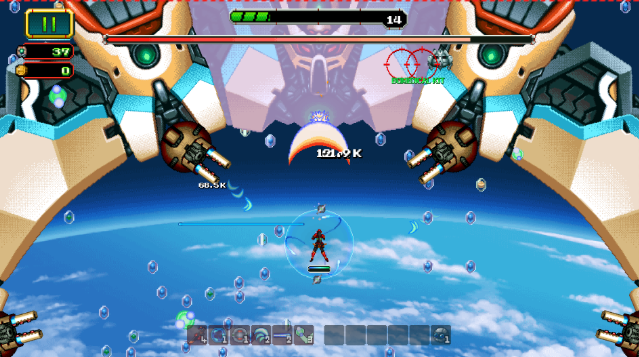
B. Core premise: Max vs endless Futurian waves
You play as Max Cunningham (yes, the game leans into that “hero name you’d see on a retro cabinet” energy), defending the solar system from Futurians—aliens pouring in from deep space. The hook is simple: endless waves, escalating threats, and you and your toolkit trying to hold the line.
C. Release details: 2025 mobile launch + pixel chaos
The important dates, player-style:
There was a soft launch in North America on July 1, 2025.
The game then became available worldwide on iOS and Android around September 1, 2025, free-to-play with in-app purchases.
So yeah, it’s a 2025 mobile release, and it was clearly rolled out in phases rather than dropping everywhere instantly.
Content
II. Story and Setting
A. Year 2XXX: invasion-level bad news
The story isn’t trying to be a thousand-page space opera—it’s that clean arcade setup: in the year 2XXX, the solar system is on the edge of annihilation because Futurians basically decided “Earth looks snackable.”
And honestly? That’s perfect for this genre. STGs don’t need complicated politics. They need an excuse for:
endless enemies,
ridiculous bosses,
escalating stakes,
and cool weapons.
B. Max “Cannonball” Cunningham and the suit
Max is the pilot/warrior/whatever-you-want-to-call-it wearing a powered suit (you’ll see it described with slightly different spelling across materials, but the core idea is: powered tech suit that lets him fight on absurd scales).
Player translation: Max is your “ship” and your “character.” Your real identity is your build.
C. Acceptors, solar system battles, and the fight for Earth
A big keyword you’ll keep seeing is Acceptors—they’re part of your combat system and customization identity, and they’re basically the game saying: “Here’s the layer that makes runs feel different.”
And since the setting is solar-system scale, the game can justify different “battlefields” and enemy patterns without needing to pretend it’s the same corridor forever.
III. Platforms and Download Guide
A. Where to get it (official)
Infinity Bullets is officially available on:
Google Play (Android)
App Store (iOS)
It’s free-to-play with in-app purchases (more on monetization later).
B. APK downloads + emulator/PC compatibility
If you’re in a region where store availability is annoying, you’ll see APK listings on third-party sites. But as a player, I’ll say it like this: only do APKs if you absolutely have to, because you’re trading convenience for friction (manual updates, possible version mismatch, extra troubleshooting).
If you want PC play, there’s also Google Play Games on PC support shown through the Google Play PC listing.
Player translation: you can get the comfy “bigger screen, stable session” feel without living on your phone.
C. Official website + X/Twitter for updates
The game’s official channels matter because arcade-style live-service games love to do “we tweaked balance / we pushed an update / we changed online requirements” without warning.
Official X account: @mugendan_en
Official website is referenced through official platform listings.
Also: the official X account posted offline-mode related messaging, including a “server data available until” notice (which is the kind of thing you only find if you follow the official feed).
IV. Gameplay Mechanics: Core Loop
A. Multi-directional shooting + waves + stage clearing
This is the core: you’re moving in 360 degrees, firing, dodging, and clearing wave after wave. It’s got that “survivor-like” pacing where your power spikes mid-run, but the bones still feel like an STG.
The fun part is the rhythm:
Early waves: you feel weak but nimble
Mid run: you get enough upgrades to start cooking
Late run: everything on screen is trying to delete you
Boss phase: your build either proves itself or falls apart
B. Gain EXP to upgrade gear, skills, and firing power
The game explicitly frames the loop as: crush waves → gain EXP → upgrade gear & skills → face giant bosses.
And this is where Infinity Bullets separates itself from pure classic STGs: you’re not locked into one fixed weapon path. You’re making build choices constantly.
C. Short sessions with unpredictable strategies
This is the underrated strength: runs are designed to be short enough for mobile, but varied enough that you don’t feel like you’re grinding the same 3 minutes forever. That variability mostly comes from:
what upgrades you’re offered,
which Acceptors you’re using,
how enemies spawn and pressure you.
In other words: the game is built to generate “my run was different from your run” stories.
V. Weapons and Acceptors System
A. Max’s arsenal: meteor weapons, ultra-long lasers, skill upgrades
Infinity Bullets loves ridiculous “arcade weapon fantasy.” The store descriptions highlight things like meteor weapons and ultra-long lasers, and if you’re an STG fan, you already know why that hits: you want your screen to turn into a light show and still feel readable.
Player mindset:
Early game weapons are about survival.
Late game weapons are about deleting threats before they become a problem.
B. Acceptor abilities: your run’s identity
Acceptors are basically your modular system for dynamic combat customization. The simple way to think about it:
Weapons = how you kill
Acceptors = how you kill and how you survive
If your Acceptors synergize with your weapon path, you get those god runs where the screen melts and you feel unstoppable. If they don’t, you get the “I’m powerful but I still die randomly” runs.
C. Power-ups, firing intervals, equipment enhancements
Infinity Bullets also leans into classic STG tuning knobs:
firing rate / firing interval changes
equipment enhancements
power-up stacking
The real skill expression isn’t “can you aim” (auto fire usually handles that). It’s:
pathing,
threat reading,
knowing which upgrades to take,
and knowing when to pivot your build because the game isn’t offering your ideal combo.
VI. Boss Battles and Enemy Waves
A. Giant bosses and endless swarms
Yes, there are giant bosses. And yes, the game is proud of it.
Bosses are where Infinity Bullets asks: “Did you build real power, or did you build fake power?”
Fake power = you clear trash waves but can’t handle boss patterns.
Real power = you can keep damage up while dodging pressure.
B. Bullet hell elements in different battlefields
The game is framed as both “survival action” and “90s arcade shooter spirit,” which is basically a polite way of saying: bullet hell is part of the deal.
Not every moment is Touhou-level insanity, but the late phases absolutely become:
screen clutter,
projectile lanes,
and “don’t panic-roll into the bad spot.”
C. Survival tactics against alien hordes
Player survival rules that actually work:
Never stop moving, but don’t move randomly. Move with purpose (lane control).
Kill the fast threats first. The small enemies that rush you are often deadlier than the “big guy” who’s slow.
Don’t over-invest in one trick unless your Acceptors support it. A pure laser build without survivability can implode fast.
Save burst windows for elite waves and bosses. Don’t waste your “delete button” on trash that would die anyway.
VII. Graphics and Art Style
A. Retro 80s/90s pixel art (top artists involved)
Infinity Bullets leans hard into pixel art with modern punch. The App Store listing specifically calls out:
Art Director: Hiroyuki Yamamoto
Pixel Art: Masakazu Fukuda
Player translation: this isn’t generic pixel noise. It’s curated, arcade-inspired pixel work with real art direction.
B. Modern effects blended with classic visuals
The “retro meets modern visuals” line is accurate: you get pixel sprites, but also modern effects and impact styling so explosions and weapon fire feel huge.
This matters because classic pixel shooters can sometimes feel “flat” on modern screens. Infinity Bullets tries to avoid that by giving you big “impact reads.”
C. Pixel-powered chaos and readable impacts
The hard part in this genre is keeping chaos readable. Infinity Bullets mostly solves that by:
strong contrast effects,
consistent enemy silhouettes,
and weapon effects that look flashy but still show lanes.
When you die, you usually know why. And that’s important.
VIII. Soundtrack and Audio
A. Sound team: TAMAYO + Takayuki Iwai + Yuki Iwai
The game flexes its sound team on purpose:
TAMAYO
Takayuki Iwai
Yuki Iwai
If you’re an arcade/music nerd, that’s basically the game saying, “Yes, we understand what you want.”
B. Music-driven arcade atmosphere
In shooters, music isn’t background—music is tempo control. When the soundtrack pushes, your hands push. When it relaxes, you breathe. The game’s messaging emphasizes retro arcade sound energy.
C. How sound enhances the STG feel
Audio is part of gameplay clarity:
enemy spawn cues
boss pattern intensity
weapon feedback (you feel stronger when your weapon sounds stronger)
Good STGs make you play better because the feedback loop is clean. Infinity Bullets aims for that.
IX. Beginner’s Tips and Strategies
A. Early-game upgrades and Acceptor priorities
If you’re new, the biggest trap is chasing “cool weapons” before you have a survival base.
My early priorities (the stuff that makes your runs stop ending at minute 2):
Firing rate / consistency upgrades (reliable damage > burst fantasy early)
One defensive tool (anything that reduces “random death”)
An AoE or lane-clear option (because swarms will overwhelm single-target builds)
Acceptors: pick the ones that stabilize your run first. You can get fancy later.
B. Handling waves and boss patterns
Waves:
Learn which enemies are “priority kills.” Usually fast movers, ranged spammers, and anything that boxes you in.
Bosses:
Don’t tunnel vision damage. Most boss deaths happen because you stare at the HP bar and forget you’re standing in a bullet lane.
C. Maximizing short play sessions
If you only have 5–10 minutes:
do one run with a clear goal (farm EXP, test Acceptors, practice boss patterns)
don’t waste time fiddling menus endlessly
treat each run like an experiment
This game rewards “small improvements over time.”
X. Advanced Tactics and Builds
A. Optimal gear skills for high scores
High score play usually means:
maximize kill speed to keep pace high
minimize downtime between waves
build a kit that stays strong even when the screen becomes chaos
The “best build” is often the one that keeps pressure off you. Because if you’re constantly dodging, you’re not dealing damage.
B. Countering Futurians with suit enhancements
Suit enhancements (your long-term progression layer) matter because:
they make your baseline stronger,
they smooth out bad RNG runs,
they let you take riskier offensive upgrades because you’re not paper-thin.
The best players aren’t just good at dodging. They’re good at building baseline stability so dodging is less necessary.
C. Unpredictable strategies for leaderboards
Leaderboards (when applicable) tend to reward:
builds that spike fast,
strong boss DPS,
and high-risk high-reward paths.
But the real secret is consistency: one miracle run is nice. Ten strong runs is how you climb.
XI. Reviews and Metacritic Scores
A. Critical reception and why it’s hard to measure
Infinity Bullets is a mobile arcade shooter—so “big mainstream critic score” coverage can be scattered. You’ll see it cataloged on game databases, store reviews, and niche coverage rather than massive review outlets.
B. Player feedback on mobile STG innovation
The consistent “player hook” from coverage is:
survivor-like bullet hell pacing
retro pixel style done with modern polish
big boss fights and upgrade loop
C. Comparisons to bullet hell classics
Players naturally compare it to:
classic arcade STGs (because of the vibe)
survivor-style mobile shooters (because of the upgrade pacing)
The game lives in that hybrid lane.
XII. Trailers and Media Highlights
A. Teaser PV and Trailer #2 energy
Infinity Bullets has official trailers (including character-focused ones), and they’re the kind of trailers that emphasize:
“look at the chaos”
“look at the bosses”
“look at the retro vibe but modern polish”
B. Gameplay footage on YouTube (Android/iOS)
If you want a real “how it plays” look, there’s plenty of gameplay capture out there showing early world progression and combat feel.
C. Official announcements via Gematsu
Gematsu covered the announcement, the “launches this summer” window, and the worldwide availability announcement.
XIII. Community and Resources
A. Official X: @mugendan_en
If you want news, events, and operational updates (like offline mode messaging), the official X account is where it shows up.
B. Reddit and fan discussions
It’s not the largest community compared to mega gachas, but shooter fans tend to share:
build ideas
“this boss pattern is rude” complaints
upgrade priority tips
C. Leaderboards and multiplayer elements
Infinity Bullets leans more “arcade survival” than “live PvP,” but leaderboard-chasing is the natural endgame for a lot of STG fans. If you’re that type of player, you’ll end up optimizing for score and efficiency rather than just clearing.
XIV. Monetization and Progression
A. Free-to-play model with in-app purchases
The game is free-to-play and includes in-app purchases.
In practice, these games usually monetize around:
progression boosts
convenience (faster growth)
maybe some unlocks or bundles
B. Fair progression without “hard paywalls”
The best version of mobile arcade monetization is: you can play free, but paying speeds things up. Infinity Bullets is positioned as free-to-play, and a lot of the satisfaction still comes from skill and build choices.
C. Value for retro arcade lovers
If you like:
pixel art shooters
arcade pacing
“one more run” loops
…this is good value even without spending, because the core fun is mechanical.
XV. Who Should Play Infinity Bullets
A. Fans of survivor shooters, bullet hell, and 90s STGs
If you enjoy:
Vampire Survivors-style upgrade pacing
classic STG feel
bullet pattern reading
Infinity Bullets is basically designed for you.
B. Mobile gamers who want intense short sessions
This is a great “I have 10 minutes” game because runs are structured to be meaningful without needing an hour.
C. Pixel art + synth/arcade soundtrack enjoyers
With the art team and sound team they assembled, the presentation is one of the biggest reasons to try it even if you’re not normally an STG person.
Infinity Bullets is the kind of game that feels like a love letter to classic arcade shooters—except it’s built for modern mobile habits: short runs, constant upgrades, build variety, and big “screen goes boom” satisfaction. It soft-launched in North America on July 1, 2025, and then went worldwide on iOS and Android around September 1, 2025 as a free-to-play title with in-app purchases.
If you’re brand new and you want the fastest “I don’t suck anymore” roadmap:
prioritize survival stability first (defensive Acceptors / consistent damage),
learn which enemies are priority kills,
and only chase high-score glass-cannon builds once your baseline progression is solid.
And if you’re already hooked and you’re chasing leaderboard-style runs, the real endgame is mastering the build pivots: knowing when to commit to a laser path, when to pivot to AoE, and when to grab defensive tech so your god run doesn’t get ended by one tiny Futurian you didn’t respect.
If you tell me what kind of shooter player you are—“I want safe clears” vs “I want high-score greed”—I can give you a clean upgrade priority plan that matches your playstyle (and doesn’t waste your early resources).