ROM: Golden Age Guide 2026 – Best Classes, Builds, Farming, Gear, PvP, CROM, CRYSTAL, Codes, and Beginner Tips
If you enjoy old-school MMORPGs where progress comes from grinding monsters, upgrading equipment, joining a serious guild, hunting bosses, and eventually fighting hundreds of players over territory, ROM: Golden Age is built around exactly that kind of loop. This is not an MMO where you finish a short story campaign, collect a few characters, and call it a day. The real game is long-term account growth.
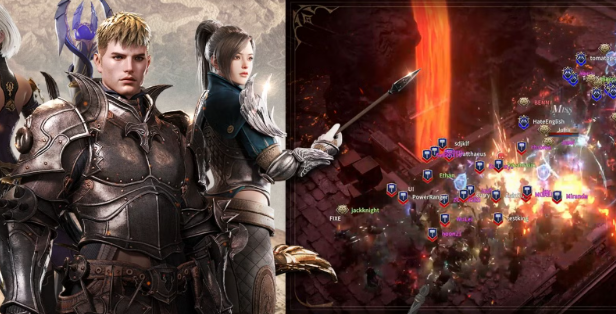
I learned pretty quickly that ROM: Golden Age rewards players who think in weeks and months rather than hours.
Your level matters, but level alone is not enough. Equipment enhancement matters. Item Collection matters. Engraving matters. Guardians matter. Costumes matter. Skill Books matter. Guild development matters. The market matters. Even seemingly useless equipment drops can eventually become important because of collection bonuses, crafting, sealing, or trading.
That is why a new account can feel overwhelming.
You finish a quest and suddenly six red notification dots appear. Then the game gives you a Guardian. Then you unlock another dungeon. Then Item Collection opens. Then somebody tells you that you should save Dia. Then your guild wants you online for a boss. Meanwhile, Auto-Hunt is happily burning through potions while you are trying to figure out what half the currencies are for.
The situation became even more confusing after the franchise expanded across different blockchain ecosystems. The original global ROM: Golden Age launched on August 12, 2025 as the Web3-enhanced version of RedLab Games' ROM: Remember of Majesty. A later version, ROM: Golden Age on CROSS, entered service in late December 2025 with a different blockchain infrastructure and token model. The two are closely related in gameplay, but players should not mix WEMIX's CROM/CRYSTAL economy with the later CROSS-side CROMx/T-Red Diamond systems.
As of August 2026, ROM: Golden Age is still receiving active updates. The Google Play build was updated on August 3, 2026 with new costumes, Atras Zone 2 Monster Book entries, Guild-system improvements, new Guardian/Costume draws, and other changes. The official WEMIX community is also running ongoing World Ranking seasons.
So this ROM: Golden Age guide is written for the game as a long-term MMORPG rather than as a one-week launch tutorial. I will cover class selection, leveling, Auto-Hunt, equipment, Codex progression, Guardians, guilds, Territory War, Siege War, the Trading Post, CROM and CRYSTAL, and the mistakes that usually slow new accounts down.
The most important lesson is simple: do not try to improve everything at once.
ROM gives you dozens of ways to increase power. The players who progress efficiently are usually not the ones who spend resources everywhere. They are the ones who understand which upgrade gives the best return right now.
I. ROM: Golden Age Complete Beginner Guide
A. What Is ROM: Golden Age?
ROM: Golden Age is a hardcore cross-platform MMORPG developed by RedLab Games. It takes place on the continent of Calderas and focuses heavily on character progression, grinding, player trading, guild competition, boss hunting, and large-scale PvP.
The official store description summarizes the core experience around global warfare, Territory Wars, Siege Wars, War of Monarchs, personal trading, server/world auction systems, costumes, Guardians, Item Collections, and Engraving. It also supports PC and mobile play.
If you have played older Korean MMORPGs such as Lineage, Lineage 2M, Night Crows, or other grind-heavy mobile MMOs, the overall philosophy will feel familiar.
You create one persistent character.
You farm.
You slowly strengthen that character through many interconnected systems.
Eventually, the difference between accounts is not just equipment rarity. It is the sum of hundreds of small bonuses.
That is the core appeal.
B. Core MMORPG Gameplay and Features
The everyday gameplay loop looks something like this:
Complete quests.
Unlock new zones.
Farm monsters.
Collect equipment.
Upgrade your main gear.
Register spare items in Item Collection.
Improve skills.
Summon and develop Guardians.
Complete daily dungeons.
Fight bosses.
Join guild activities.
Participate in PvP.
Repeat at stronger hunting zones.
Auto-Hunt handles a large portion of normal grinding, but that does not mean the entire game plays itself.
Your decisions determine where you farm, whether the spot is efficient, which drops you keep, which items you sell, whether your potion consumption is sustainable, and whether your build is actually strong enough for the area.
Large-scale guild content is where manual attention becomes much more important.
C. ROM: Golden Age vs. ROM: Remember of Majesty
This distinction confuses a lot of people.
ROM: Remember of Majesty is RedLab Games' original Web2 MMORPG, released in 2024.
ROM: Golden Age took that established foundation and adapted it into a broader global Web3 ecosystem. Reporting surrounding its WEMIX onboarding explicitly described Golden Age as the Web3 version of ROM: Remember of Majesty.
That is why the two games look and play very similarly.
Calderas is familiar.
The classes are familiar.
The progression structure is familiar.
The wars, grinding, and economic systems have the same DNA.
Golden Age's major difference is the blockchain layer, expanded global service structure, and tokenized economy.
Then ROM: Golden Age on CROSS added another blockchain implementation later.
If you are here purely for the MMORPG gameplay, you do not need to obsess over blockchain immediately.
Learn the MMO first.
D. What New Players Should Know Before Starting
Four things would have saved me a lot of wasted resources.
First, Ranger is generally the easiest starting experience.
Second, Combat Power is spread across many permanent growth systems, so upgrading one expensive weapon forever is not enough.
Third, join an active guild early.
Fourth, do not spend every currency just because the game lets you.
You will eventually unlock systems where the same resources become much more valuable.
ROM is extremely good at making new players feel rich during the first few days.
Then the upgrade costs increase.
That is when yesterday's careless spending becomes today's problem.
II. ROM: Golden Age Download, Platforms, and Cross-Platform Play
A. ROM: Golden Age PC Download
ROM: Golden Age officially supports PC.
The current support documentation lists the minimum native PC requirements as an Intel Core i5-2300 or better, 4 GB RAM, NVIDIA GTX 660-series graphics or better, Windows 10 64-bit, DirectX 11, and at least 30 GB of NTFS-formatted storage.
The recommended target increases to an Intel Core i5-6400T or better, 8 GB RAM, and GTX 950-class graphics.
For a grinding MMO, I strongly prefer PC when I have the option.
Auto-Hunt sessions can be long.
Inventory management is easier.
Large-scale PvP is easier to read.
Switching between menus is more comfortable.
And you are not turning your phone into a hand warmer for six hours.
Download the client from the official site rather than random third-party launchers.
B. ROM: Golden Age Android and iOS
The standard Android version currently requires at least Android 10 and 4 GB RAM.
The CROSS App Store version lists iOS 13.0 or later for iPhone and iPad and is roughly 1.6 GB before additional game resources.
Actual storage consumption will naturally increase after downloading resource packages and future patches.
On mobile, I recommend reducing visual effects during crowded guild wars.
A beautiful 20 FPS Siege War is worse than a less glamorous 50-60 FPS Siege War.
C. ROM: Golden Age on CROSS
This is where naming becomes messy.
ROM: Golden Age on CROSS is the later CROSS-integrated service using NEXUS' CROSS blockchain infrastructure. It preserves the same fundamental MMORPG identity—progression, guild war, trading, bosses, and cross-platform play—but uses a different Web3 economy from the WEMIX version.
The CROSS version officially began service in late December 2025 and has since added ranking seasons, CROSS Ramp functionality, token minting, and its own competitive reward structure.
If you are choosing between services, check:
your region,
where your friends play,
server age,
guild population,
and which economy you actually want.
Do not select a server based solely on token prices.
You are going to spend far more time killing monsters than looking at a wallet.
D. PC and Mobile System Requirements
For native PC:
Minimum:
Intel Core i5-2300+
4 GB RAM
GTX 660+
Windows 10 64-bit
DirectX 11
30 GB storage
Recommended:
Intel Core i5-6400T+
8 GB RAM
GTX 950+
Windows 10 64-bit
30 GB storage.
For standard Android:
Android 10+
4 GB RAM minimum.
For the current CROSS iOS listing:
iOS/iPadOS 13+.
If your device sits exactly at minimum specification, lower effects during World Bosses and wars.
Mass PvP is much harder on hardware than normal Auto-Hunt.
III. ROM: Golden Age Classes and Class Advancement
A. Knight Class Overview
Knight is the frontline class.
You trade some farming comfort for durability, control, and much stronger usefulness when battles become organized.
In solo leveling, Knight can initially feel slower than Ranger because you spend more time physically moving between enemies.
Once you reach PvP and guild content, that weakness stops mattering as much.
Someone has to enter first.
Someone has to absorb damage.
Someone has to survive while the backline casts.
That is usually the Knight.
I recommend Knight to players who enjoy PvP, guild warfare, boss tanking, or simply hate being fragile.
The downside is investment.
A weak Knight can feel miserable because you lack both the damage to farm quickly and the defenses to fulfill your real role.
Knight becomes more rewarding as your account matures.
B. Ranger Class Overview
If a friend asked me which ROM: Golden Age class they should choose without giving me any other information, I would say Ranger.
Rangers farm safely from range.
They move efficiently between targets.
They perform well in Auto-Hunt.
They do not need to stand directly inside every monster pack.
And they generally require less babysitting during routine grinding.
Existing class guides also consistently rate Ranger as the most forgiving beginner and farming choice.
That does not mean Ranger is weak in PvP.
Far from it.
Good positioning lets Rangers deal sustained pressure while melee characters struggle through frontline congestion.
The real weakness appears when somebody successfully reaches you.
Range is your defense.
Use it.
C. Mage Class Overview
Mage is the class I recommend to players willing to tolerate a rougher beginning for stronger specialized value later.
You get magic damage, AoE potential, crowd control, and eventually support-oriented options.
Mage is excellent when enemies are grouped.
That makes it particularly appealing for party farming, dungeons, bosses, and mass PvP.
The problem is survivability.
If your positioning is bad, Mage reminds you immediately.
MP management also matters much more than with straightforward physical builds.
A Mage that burns expensive skills unnecessarily during Auto-Hunt can consume resources faster than the drops justify.
D. Advanced Classes and Specializations
ROM's original class structure branches into more specialized identities as your character reaches higher progression.
Commonly documented branches include Hunter and Scout from the Ranger line and Wizard and Priest from the Magician line, with offensive and defensive/specialized alternatives also existing for melee progression.
There is also an important 2026 change.
The August 6 update added a Secondary Class system that becomes available after reaching level 70, meaning older launch-era class guides do not describe the complete current progression structure anymore.
That makes level 70 more than another stat checkpoint.
Your class identity becomes more flexible and specialized from there.
E. How Class Advancement Works
Think about advancement before reaching the requirement.
Do you want to specialize harder into your existing role?
Or do you want to cover a weakness?
A Magician choosing Wizard is saying, “I want magic pressure and AoE.”
Choosing Priest shifts much more heavily toward team support.
A Ranger leaning toward long-range damage plays differently from a more tactical mobility/debuff route.
Do not choose an advanced class because the icon looks cool.
Skill Books become expensive.
Gear priorities change.
PvP responsibilities change.
Watch your eventual specialization before committing major resources to stats that may not fit it.
IV. ROM: Golden Age Best Class and Class Tier List
A. Best Class for Beginners
S Tier: Ranger
A Tier: Knight
B Tier: Mage
That ranking is specifically for beginners—not total endgame power.
Ranger wins because farming is safer and simpler.
Knight comes second because survivability gives you room to make mistakes.
Mage falls behind only because MP management, low durability, and positioning create more friction during early progression.
A well-developed Mage can absolutely become more impactful later.
Beginner tier lists should measure how easily you reach that point.
B. Best Class for Solo Farming
Ranger gets my vote again.
Ranged targeting reduces travel time between mobs.
You can kill before enemies fully engage.
Auto-Hunt tends to behave more efficiently.
Your potion consumption can also be lower when monsters die before spending much time hitting you.
Mage can compete when AoE farming dense packs, especially with enough gear to kill quickly.
Knight is the least convenient if your only goal is farming speed.
C. Best Class for PvE and Dungeons
I would not choose one winner.
For group PvE:
Knight = frontline
Ranger = consistent damage
Mage/Wizard = AoE and burst
Priest = sustain/support
A good dungeon group needs roles.
Trying to determine which one is “best” misses the point.
If everybody chooses Ranger because a tier list says Ranger farms well, the first genuinely difficult group encounter becomes awkward.
D. Best Class for PvP
For small-scale PvP, Knight and mobile Ranger specializations are both strong.
For mass PvP, Knight and Mage become especially important.
Knights create the line.
Mages punish grouped enemies.
Rangers pressure priority targets from behind that line.
Priests keep everybody functioning.
Large-scale PvP is where role synergy matters more than individual tier ranking.
E. Best Classes for Guild and Large-Scale Wars
If your goal is Siege War or War of Monarchs:
S: Knight, Mage/Wizard, Priest
A: Ranger and other ranged/tactical specializations
That is not a damage ranking.
It is a battlefield-impact ranking.
Thirty players attacking one objective do not need thirty selfish DPS builds.
They need frontline durability, AoE, healing, control, ranged pressure, and coordinated targeting.
V. ROM: Golden Age Class Builds and Skills
A. Best Knight Build
For PvE farming, Knight should still maintain enough attack to kill efficiently.
A character that survives forever but takes twenty seconds per normal monster is wasting time.
For serious PvP, priorities shift more toward:
HP,
Defense,
Damage Reduction,
Block-related survivability,
Accuracy,
Status resistance,
and enough offensive stats to remain threatening.
Your weapon remains important, but Knights gain more from balanced progression than glass-cannon investment.
If you are the first player entering a guild fight, survivability is damage indirectly.
Every second opponents spend attacking you is a second they are not attacking your Mage.
B. Best Ranger Build
Ranger should prioritize reliable physical damage.
Attack.
Accuracy.
Critical-related stats where appropriate.
Attack speed or efficiency stats supported by your build.
Then enough survivability to avoid being deleted immediately in PvP.
For farming, weapon progression gives excellent returns because faster kills increase everything:
EXP per hour,
Gold per hour,
equipment drops,
materials,
and resource efficiency.
Do not completely ignore defense, though.
If stronger hunting zones force you to consume expensive potions nonstop, your “high DPS build” may actually be poorer farming.
C. Best Mage Build
Mage usually wants:
Magic Attack,
INT-related scaling,
Magic Accuracy,
MP sustainability,
cooldown/skill efficiency where available,
and enough defensive stats to survive mistakes.
AoE damage is your farming advantage.
Use it where monster density justifies it.
If Auto-Hunt casts expensive AoE abilities against single weak monsters, adjust the skill rotation.
For support-oriented Priest progression, healing and survivability become more valuable than simply maximizing personal spell damage.
D. Skill Books and Skill Upgrade Priorities
Skill Books can become progression bottlenecks.
Do not upgrade every skill equally.
My priority order is:
primary farming skill,
main single-target or boss skill,
core PvP/control skill,
essential passive,
situational abilities.
A skill you activate every six seconds matters more than something used once during a twenty-minute dungeon.
Passives are also easy to underestimate because they do not produce flashy animations.
Permanent efficiency compounds.
E. Building for PvE vs. PvP
PvE values efficiency.
Damage.
Sustain.
AoE.
Potion economy.
Long uninterrupted farming.
PvP values things monsters do not care about:
accuracy against evasive targets,
crowd control,
resistance,
burst survival,
movement,
target selection,
and anti-player utility.
One build cannot always maximize both.
Once PvP becomes serious, maintain separate thinking even if you cannot afford completely separate equipment sets.
VI. ROM: Golden Age Leveling and Fast Progression Guide
A. How to Level Up Fast
During early progression, Main Quest comes first.
Quest EXP is predictable.
Quest progression unlocks systems.
Quest rewards help your equipment catch up.
And the game naturally moves you into stronger zones.
Do not stop at level 20 and Auto-Hunt the same monsters for eight hours because someone told you grinding is important.
Grinding becomes important when quest progression slows.
Early on, quests are your progression engine.
B. Main Quest and Side Quest Progression
Main quests are your backbone.
Side quests are useful when they overlap with your current route or provide valuable rewards.
I usually avoid clearing every side quest immediately.
If a side quest sends me across the map for tiny EXP while the Main Quest is still moving quickly, I leave it.
Later, when progression walls appear, side quests become excellent supplemental EXP.
Efficiency means understanding opportunity cost.
C. Best EXP Farming Methods
The best EXP location is not automatically the strongest monster you can kill.
You want EXP per hour, not EXP per kill.
Suppose Monster A gives twice as much EXP as Monster B but takes four times longer to kill.
Monster B is better.
Also account for:
spawn density,
walking distance,
competition,
potion usage,
death risk,
and valuable drops.
A slightly weaker zone with tightly packed mobs can outperform a flashy high-level area.
D. Efficient Early-Game Progression
Early game:
Push quests.
Upgrade one reliable weapon.
Use free Guardian/Costume resources intelligently.
Join a guild.
Unlock dungeons.
Register cheap Item Collection entries.
Keep enough Gold.
Do not over-enhance temporary equipment.
That last one matters.
You will replace early gear quickly.
Dumping all enhancement materials into something you abandon tomorrow is one of the easiest ways to slow your account.
E. Mid-Game and Endgame Priorities
Mid-game progression becomes wider.
Level matters less by itself.
You start balancing:
gear,
Collection,
Engraving,
skills,
Guardians,
costumes,
dungeons,
bosses,
guild activity,
and economy.
Endgame becomes even more guild-oriented.
World Boss timing matters.
Territory control matters.
Sieges matter.
Your individual character is now one piece of a larger machine.
VII. ROM: Golden Age Farming and Auto-Hunt Guide
A. How Auto-Hunt Works
Auto-Hunt automatically targets and fights nearby enemies using the skills you allow.
That sounds simple, but Auto-Hunt optimization is one of the game's real progression skills.
Check:
target range,
skill usage,
potion thresholds,
loot settings,
monster level,
inventory capacity,
and whether enemy players can easily kill you.
Auto-Hunt does what you tell it.
It does not know whether your setup is financially stupid.
B. Best Farming Spots
Rather than giving one map coordinate that becomes obsolete after every content update, use three rules.
Farm monsters you can kill quickly.
Farm dense spawn areas.
Farm enemies with drops you actually need.
A good spot gives you several kinds of progression simultaneously.
EXP plus equipment plus Collection items is better than pure EXP if the hourly difference is small.
C. EXP, Gold, and Equipment Farming
EXP farming wants kills per minute.
Gold farming wants positive income after potion and consumable costs.
Equipment farming wants monsters with useful drop tables.
These goals sometimes overlap.
Sometimes they do not.
If you need a specific Item Collection entry, sacrificing some EXP efficiency can be worthwhile.
That permanent stat stays forever.
D. Crystal and Resource Farming
Resource farming should be planned around what currently blocks progression.
If gear enhancement is stuck because you lack materials, farm materials.
If Gold is the problem, stop farming an expensive area where potion costs consume everything.
If your Web3 progression uses CRYSTAL-related systems, understand the conversion path before grinding specifically for tokenized value.
Do not farm because a guide says “this item is valuable.”
Check whether it is valuable on your server today.
E. AFK Farming Tips and Settings
Before leaving Auto-Hunt:
Repair or check equipment.
Buy enough potions.
Empty your inventory.
Set potion thresholds conservatively.
Disable inefficient skills.
Confirm PK danger.
Check monster damage for several minutes.
Make sure you are actually earning more than you consume.
The worst AFK session is coming back six hours later to discover your character died after fifteen minutes.
VIII. ROM: Golden Age Daily Routine and Resource Management
A. Essential Daily Activities
My basic daily checklist is:
Daily quests.
Limited-entry dungeons.
Guild contribution.
Guild activities.
Boss opportunities.
Event missions.
Free summons/shop claims.
Auto-Hunt in the best remaining time.
Do time-limited content before unlimited grinding.
You can farm normal monsters later.
A dungeon entry that expires at reset is gone forever.
B. Weekly Activities and Rewards
Weekly content usually has better-value rewards but requires planning.
Guild dungeons.
Weekly bosses.
Ranking activities.
PvP events.
Seasonal missions.
These are often where active guild membership separates casual accounts from serious ones.
Missing one weekly reward does more damage than missing one hour of basic Auto-Hunt.
C. Which Resources to Prioritize
Prioritize bottlenecks.
Gold early.
Enhancement materials when equipment becomes stable.
Skill Books when your core rotation needs improvement.
Collection pieces when cheap permanent bonuses are available.
Premium currencies should generally be saved for efficient, planned uses.
Do not judge a resource by rarity alone.
Judge what it unlocks.
D. Efficient Use of Gold, Dia, and Materials
Gold looks unlimited until enhancement, crafting, skills, and consumables all start demanding it.
Maintain a reserve.
Dia is even more valuable because it interacts with market and premium systems.
If you spend Dia impulsively on low-impact conveniences, you lose the ability to buy important equipment or opportunities later.
Materials should be concentrated around your main character rather than scattered across experiments.
E. Common Resource-Wasting Mistakes
The classics are:
Enhancing temporary gear too far.
Buying overpriced market items.
Summoning without a plan.
Upgrading unused skills.
Completing expensive Collections with terrible stat value.
Ignoring Gold reserves.
Converting valuable resources before understanding token economics.
Every one of these feels small once.
Repeat them for thirty days and the account difference becomes huge.
IX. ROM: Golden Age Equipment and Enhancement Guide
A. Equipment Rarities and Gear Progression
ROM follows the familiar MMORPG idea that higher rarity generally means stronger potential.
But rarity alone is not everything.
Upgrade level.
Additional stats.
Set compatibility.
Collection value.
Market price.
Class relevance.
All matter.
Do not automatically equip something because its background color looks expensive.
Compare the actual benefit.
B. How Equipment Enhancement Works
Enhancement improves equipment through consumable upgrade materials.
As enhancement climbs, the cost and risk become more significant.
That means the correct question is not:
“How high can I enhance this?”
It is:
“How high should I enhance this item before saving resources for the replacement?”
There is a big difference.
C. Safe Enhancement Strategies
Early gear:
Enhance moderately.
Do not chase heroic enhancement numbers.
Mid-game gear:
Invest more when you expect to use it for a long time.
Endgame gear:
Plan around protection mechanics, replacement cost, and risk.
Never let frustration control enhancement.
If you fail several attempts, taking another desperate click does not improve the probability.
It only makes you angry and poorer.
D. Crafting and Upgrade Materials
Crafting gives otherwise ordinary resources long-term purpose.
Keep an eye on which materials are used by:
equipment crafting,
enhancement,
Engraving,
skills,
sealing,
and other progression.
Do not automatically sell something just because you have 500 copies.
The moment a new progression system arrives, yesterday's junk can become tomorrow's bottleneck.
E. Best Gear Priorities for Each Class
Knight:
Armor and survivability matter heavily, but maintain a respectable weapon.
Ranger:
Weapon first during farming progression, followed by enough defense to survive stronger zones.
Mage:
Weapon/magic output plus MP and defensive stability.
Priest/support:
Survival and support effectiveness can become more important than personal DPS.
The correct upgrade is the piece improving your actual job.
X. ROM: Golden Age Codex, Item Collection, and Engraving
A. How the Item Collection System Works
Item Collection is one of the systems beginners ignore and veterans quietly accumulate huge power from.
You register required items into collection entries.
Completing the entry grants permanent account/character bonuses depending on the system.
The important word is permanent.
A weapon can be replaced.
Collection stats stay.
That is why cheap collection entries can sometimes give better long-term value than one expensive gear upgrade.
B. Best Collection Bonuses to Prioritize
Prioritize stats directly supporting your class.
Attack-type stats.
Accuracy.
Defense.
HP.
Damage-related bonuses.
Then broader utility.
Also calculate cost.
A tiny attack bonus requiring several rare tradable items may be worse value than completing ten cheap collections.
Collection progression is an efficiency puzzle.
C. Codex Progression Strategies
Do not open the Codex and immediately decide to complete it from top to bottom.
Sort by affordability.
Check what you already own.
Look for entries missing only one cheap item.
Farm monster drops that complete several related collections.
This turns Collection from a currency sink into a progression strategy.
D. Engraving and Additional Character Stats
Engraving provides another permanent or semi-permanent way to raise character stats.
The important lesson is diminishing returns.
Early inexpensive upgrades usually provide fantastic Combat Power per resource.
Later rerolls or deeper stages may become expensive.
Build a solid baseline before obsessing over perfect rolls.
E. Increasing Combat Power Efficiently
Whenever I hit a power wall, I check:
Gear.
Enhancement.
Skills.
Collection.
Engraving.
Guardian.
Costume.
Guild bonuses.
Then I compare cost.
The cheapest next improvement wins.
This is much more efficient than automatically upgrading the most visible system.
XI. ROM: Golden Age Guardians and Costumes Guide
A. How Guardians Work
Guardians are part companion system, part stat progression, and part collection chase.
The official game description specifically promotes Guardian summoning using soft currency, meaning the system is intended to remain relevant even without constant premium spending.
Higher-rarity Guardians provide stronger benefits, but do not ignore lower-rarity progression.
Collection and synthesis systems often give them long-term value.
B. Best Guardians for Leveling and Farming
For farming, prioritize Guardians improving:
damage,
attack speed/efficiency,
accuracy,
sustain,
or other stats that increase kills per hour.
A pure defensive Guardian may be better if you are barely surviving the hunting zone.
Remember that faster killing and lower potion consumption both improve farming efficiency.
C. Guardian Summoning and Synthesis
Summoning creates duplicates.
Duplicates are not automatically useless.
Synthesis systems turn lower-value pulls into another route toward stronger progression.
That means patience matters.
Do not evaluate the entire system from one bad ten-pull.
These systems are designed around long-term accumulation.
D. Guardian Exploration
Guardian Exploration turns your collection into passive value.
Send appropriate Guardians into available activities whenever possible.
An idle Guardian produces nothing.
Exploration rewards may look small per run, but recurring passive income compounds over months.
MMORPG efficiency is often built from exactly these little recurring systems.
E. Costumes, Seals, and Stat Bonuses
Costumes are not purely cosmetic.
ROM's growth design includes costumes as part of character power. The official game description specifically lists Costumes alongside Guardians, Item Collection, and Engraving as progression features.
That means costume rarity can matter statistically as well as visually.
Sealing and trade systems can also affect the economic value of equipment and items.
Do not assume “skin” means “no stats” in ROM.
XII. ROM: Golden Age Dungeon and Boss Guide
A. Daily and Weekly Dungeons
Dungeon entries are valuable because they provide concentrated rewards.
Do these before spending your entire play session on open-world farming.
Prioritize dungeons providing whichever resource is currently limiting you.
EXP dungeon when leveling is the wall.
Gold/resource dungeon when upgrades are the wall.
Equipment content when your gear is outdated.
B. Abyssal Sanctuary and Special Dungeons
Special dungeons usually offer better rewards but come with stronger enemies, limited time, or limited entries.
Do not simply enter the highest available difficulty because the game unlocked it.
Test efficiency.
If you spend the entire timer slowly killing three enemies, a lower zone may produce more total rewards.
C. Guild Dungeon Strategies
Guild dungeons are another reason I recommend joining an active guild early.
A coordinated guild clears content more reliably and gains progression that solo players cannot reproduce as efficiently.
Show up.
Know the boss mechanics.
Use the appropriate build.
Do not Auto-Hunt blindly during difficult encounters and expect everyone else to compensate.
D. World Bosses and Boss Rewards
World Bosses bring together competition and progression.
Damage matters.
Survival matters.
Guild control often matters even more.
Depending on the PvP rules surrounding the boss, the real challenge may be other players rather than the boss itself.
Arrive before spawn.
Coordinate with the guild.
Do not run in alone.
E. Dungeon Farming Priorities
My priority:
Limited entry first.
High-value account progression second.
Farmable content third.
Anything permanently available can wait.
The entire daily routine becomes easier when you organize content around reset timers.
XIII. ROM: Golden Age Guild Guide
A. Why Joining a Guild Matters
ROM is not designed as a purely solo MMORPG.
Guilds unlock access to organized PvE, PvP, rewards, progression, territory competition, and eventually the content the game advertises most heavily.
Territory War.
Siege War.
War of Monarchs.
These are fundamental parts of ROM's identity.
A solo player can level.
A guild player experiences the actual political game.
B. Guild Activities and Rewards
Active guilds provide recurring value through:
bosses,
dungeons,
contribution systems,
guild progression,
events,
PvP,
and shared information.
That last one matters more than it sounds.
Knowing where a boss spawned or which enemy guild is moving can be worth more than one tiny stat bonus.
C. Guild Contribution and Progression
Contribute regularly.
Do not be the member who appears only when rewards are distributed.
Guild progression improves because many players complete small tasks consistently.
If fifty players each skip one “small” contribution, the guild feels it.
D. Guild Dungeons and Cooperative Content
Before a guild dungeon:
Check potions.
Repair.
Prepare PvE skills.
Follow rally instructions.
Do not attack before the group is ready.
One player's impatience can ruin an entire attempt if the encounter involves positioning or aggro.
E. Preparing Your Guild for Large-Scale PvP
Wars are decided before they begin.
Organize roles.
Set communication channels.
Assign party leaders.
Identify frontline Knights.
Group ranged DPS.
Protect support.
Know rally points.
Prepare consumables.
Decide who calls targets.
A guild with lower average Combat Power can absolutely beat a stronger but disorganized group.
XIV. ROM: Golden Age PvP and Territory War Guide
A. PvP Combat Basics
The first PvP lesson is do not tunnel vision.
Killing one player means nothing if chasing them drags you into twenty enemies.
Know your role.
Know your escape path.
Know where your party is.
And understand that target selection matters as much as damage.
B. Best Classes and Builds for PvP
Knight:
Frontline, control, disruption.
Ranger:
Backline pressure and target finishing.
Wizard:
AoE destruction.
Priest:
Sustain.
Tactical specializations:
Debuffs, mobility, disruption.
PvP builds should prioritize survivability and accuracy more than normal farming builds.
A huge damage number that constantly misses geared opponents is useless.
C. Territory War Strategies
Territory War is not Team Deathmatch.
The objective matters.
Control routes.
Protect key positions.
Move as groups.
Stop chasing low-value enemies away from the objective.
The enemy wants you distracted.
Do not cooperate with them.
D. Team Composition and Battlefield Roles
A balanced war party needs:
frontline,
damage,
support,
control,
and mobility.
Organize parties by function rather than friendship.
Your closest guild friend can still be in another squad for fifteen minutes.
The war is temporary.
The territory reward lasts longer.
E. PvP Gear and Skill Priorities
Build enough defense to survive enemy opening damage.
Then raise accuracy and relevant offensive stats.
Upgrade control abilities.
Upgrade mobility.
Carry the right consumables.
If you die before casting your best skill, your theoretical DPS does not matter.
XV. ROM: Golden Age Siege War and War of Monarchs Guide
A. How Siege War Works
Siege War is the large-scale guild conflict players eventually build toward.
Attackers try to break organized defenses and secure strategic objectives.
Defenders exploit terrain, choke points, and preparation.
The exact event rules can evolve through updates, but the underlying principle remains:
this is guild content, not an oversized random PvP match.
ROM officially promotes Siege War as one of its major competitive campaigns alongside Territory War and War of Monarchs.
B. Preparing for Large-Scale Guild Battles
The day before war:
Repair gear.
Buy consumables.
Finish important upgrades.
Set skill presets.
Confirm attendance.
Organize parties.
Review enemy guild composition.
Do not begin upgrading equipment five minutes before Siege.
Preparation removes avoidable mistakes.
C. Offensive and Defensive Siege Strategies
Attackers need concentrated pressure.
Defenders want to split that pressure.
If attackers enter one at a time, defenders win easily.
If attackers focus one position together, they can break stronger groups.
Defenders should force attackers through bad terrain, then collapse with AoE and control.
Communication decides everything.
D. War of Monarchs Mechanics
War of Monarchs sits near the top of ROM's competitive hierarchy.
This is endgame-oriented content built around the strongest developed players and guild structures.
By the time you care about War of Monarchs, basic character tutorials are no longer the problem.
Politics, guild alliances, timing, resource preparation, and battlefield organization become the actual game.
E. How to Improve Your Guild's Chances of Winning
Recruit active players rather than only high Combat Power.
A player with 200,000 power who actually attends every war may be more valuable than a 300,000-power account that is never online.
Build leadership.
Communicate clearly.
Do not change strategy every thirty seconds.
And review defeats without immediately blaming individual players.
Guilds improve when they treat wars as information.
XVI. ROM: Golden Age Trading Post and Economy Guide
A. How the Trading Post Works
Trading is one of ROM's major features.
The official game description includes personal trading, item sealing, and both server and world auction systems.
That means loot has economic value beyond your own character.
A drop that is useless to you may be exactly what another player needs.
Always check market value before destroying or registering expensive items.
B. Buying and Selling Equipment
Buy for efficiency.
Do not buy because an item is rare.
Compare:
stat gain,
upgrade level,
Collection alternative,
market price,
and expected replacement time.
When selling, check recent prices rather than automatically choosing the lowest listing.
Undercutting by 1% is one thing.
Destroying the market by 30% because you are impatient is another.
C. Which Items Are Worth Trading
Typically valuable categories include:
rare equipment,
high-demand crafting materials,
skill-related items,
Collection bottlenecks,
upgrade resources,
and difficult boss drops.
Market value changes by server.
A guide written six months ago cannot tell you today's exact price.
Check the actual exchange.
D. Farming Valuable Tradeable Resources
The best trade farming combines demand and accessibility.
If everyone knows one monster drops a valuable item, that farming spot may become overcrowded.
Sometimes the second-best item produces better income because competition is lower.
Economy farming is about profit per hour.
Not screenshot price.
E. Managing Dia and In-Game Currency
Dia is flexibility.
Gold is operating capital.
Materials are future upgrades.
Treat them differently.
Maintain reserves.
The ability to buy a suddenly cheap high-value item is worth something.
If your Dia balance is always zero, you cannot exploit market opportunities.
XVII. ROM: Golden Age CROM, CRYSTAL, and Tokenomics Guide
A. What Is the CROM Token?
This section specifically refers to the WEMIX version of ROM: Golden Age, not the later CROSS economy.
CROM is one of the core Web3 assets in ROM's WEMIX tokenomics.
WEMIX documentation states that CROM can interact with the ROM economy and has been used as the staking asset in seasonal CROM Staking programs.
Players should think of CROM as a blockchain asset connected to the game ecosystem, not as guaranteed income.
Its market value can fluctuate.
Do not build your entire gameplay plan around yesterday's token price.
B. What Is the CRYSTAL Token?
CRYSTAL is the complementary token/resource within the WEMIX-side ecosystem.
WEMIX specifically describes CRYSTAL as a key growth resource used in ROM: Golden Age and as a reward generated through CROM staking.
CRYSTAL has also been associated with in-game activities and exchange infrastructure.
The important distinction is:
CROM and CRYSTAL have different roles.
Do not treat them as interchangeable currencies.
C. CROM Staking and CRYSTAL Rewards
CROM Staking has operated in seasons.
Season 4 ran from February 12, 2026 at 06:00 UTC through August 11, 2026 at 06:00 UTC. Rewards were distributed in CRYSTAL according to each participant's share of the total CROM staking pool, with no lock-up period during that season. WEMIX also discontinued gas-fee support for Season 4.
Importantly, as of this article's August 11 publication date, Season 4 has already ended.
I could not verify a new officially announced Season 5 at the time of writing.
Do not follow an old guide telling you Season 4 is still open.
D. In-Game Resources and Token Conversion
The Web3 side creates bridges between game-earned resources and blockchain assets.
Those systems can change.
Conversion rules.
Minimum requirements.
Fees.
Season schedules.
Exchange availability.
All need to be checked before making a transaction.
Also remember that the CROSS version is different.
ROM: Golden Age on CROSS uses systems involving CROMx and T-Red Diamonds rather than simply copying WEMIX's CROM/CRYSTAL structure. Early CROSS documentation described T-Red Diamonds as convertible at a 1:1 rate into CROMx under its minting framework.
If you remember only one thing from this section:
CROM is not CROMx.
E. ROM: Golden Age Play-to-Earn and Web3 Systems
ROM does support Web3 mechanics, but I would not describe it as “play this game and automatically make money.”
You are playing an MMORPG with a tokenized economy.
Asset value can rise.
It can fall.
Fees exist.
Competition exists.
Farming profitability changes.
Market demand changes.
WEMIX itself warns that digital assets are volatile and may not be suitable as investments.
Treat token rewards as an optional layer around the game.
If the only reason you are playing is because a spreadsheet predicted daily profit, the grind will become miserable very quickly.
XVIII. ROM: Golden Age Codes, Advanced Tips, and Endgame Progression
A. Latest ROM: Golden Age Redeem and Coupon Codes
Coupon status is much messier than launch-era guides make it look.
The most important officially distributed legacy code is:
GOLDENAGE0812
It was originally released to celebrate the game's five-million pre-registration milestone.
Another widely distributed launch-era code is:
ROMXWEMIXPLAY
It has continued to appear on updated code trackers into 2026.
For the separate CROSS environment, event-era codes have included:
CROMXTOKEN
LUNARNEWYEAR
but those came from earlier 2026 promotions and should not be assumed active in August simply because an old video still lists them.
As of August 11, 2026, I could not verify a newly issued universal August code from the official channel.
So my advice is:
Try GOLDENAGE0812 and ROMXWEMIXPLAY if your service still accepts them, but do not treat their continued validity as guaranteed.
B. How to Redeem ROM: Golden Age Codes
In the standard client:
Open the main Menu.
Go to Settings.
Open Information.
Choose Redeem Coupon.
Enter the code.
Confirm.
Rewards are then delivered according to the coupon's rules, commonly through the game's reward/mail system.
Enter codes exactly.
Capitalization and region/service restrictions can matter.
And remember again that a WEMIX code may not necessarily be valid for a CROSS event environment.
C. Endgame Farming and Character Growth
Endgame growth is less about discovering another secret EXP spot and more about stacking every permanent system efficiently.
Your checklist becomes:
stable high-level farming,
boss drops,
advanced equipment,
Collection completion,
Engraving,
skill progression,
Guardian development,
costumes,
secondary class progression,
guild bonuses,
and PvP rewards.
Do not neglect small permanent upgrades.
Ten separate 1% improvements can matter more than waiting three months for one mythical equipment drop.
D. Advanced PvE and PvP Tips
For PvE:
Measure kills per hour.
Optimize skill rotation.
Reduce potion waste.
Farm overlapping objectives.
Track boss schedules.
For PvP:
Fight with your party.
Use terrain.
Target supports and exposed damage dealers.
Do not chase.
Carry consumables.
And stop using Auto mode as a substitute for battlefield awareness.
Large-scale PvP punishes lazy targeting.
E. Common Beginner Mistakes to Avoid
The biggest mistakes are surprisingly predictable.
Choosing a class only because it looks strongest in one tier list.
Over-enhancing temporary equipment.
Ignoring Item Collection.
Joining an inactive guild.
Leaving expensive skills enabled during weak Auto-Hunt mobs.
Farming enemies that are too strong.
Spending Dia immediately.
Selling Collection items without checking them.
Ignoring the market.
Treating Combat Power as the only useful statistic.
Confusing the WEMIX and CROSS token economies.
And my personal favorite:
leaving Auto-Hunt running somewhere terrible for twelve hours and calling it efficient because the character never stopped attacking.
Activity is not efficiency.
F. Long-Term Progression Priorities
If I were starting ROM: Golden Age from zero today, my long-term plan would be:
Stage 1 – Build a Functional Character
Push Main Quest.
Reach important feature unlocks.
Create one coherent build.
Join a guild.
Do dailies.
Stage 2 – Build Farming Efficiency
Improve weapon.
Fix skill rotation.
Find sustainable Auto-Hunt zones.
Start serious Collection progression.
Stage 3 – Build Permanent Power
Expand Codex.
Engraving.
Guardians.
Costumes.
Skills.
Secondary class.
Stage 4 – Build Economic Strength
Understand the market.
Sell valuable drops.
Maintain Dia reserves.
Farm items other players actually want.
Stage 5 – Build Guild Value
Attend bosses.
Guild dungeons.
Territory War.
Sieges.
War of Monarchs.
Become someone the guild notices when you are missing.
That is when your character stops being another Auto-Hunt account and starts becoming part of Calderas' actual endgame.
Conclusion
After spending time with the systems behind ROM: Golden Age, I think the biggest mistake is approaching it like a normal mobile RPG where the goal is simply to rush your level as high as possible.
Level is important.
It is not the whole account.
A level 80 character with neglected skills, weak Collection bonuses, poor Engraving, random Guardians, badly enhanced equipment, and no guild progression can feel dramatically weaker than another character at a similar level whose owner has been building every permanent system intelligently.
That is the real progression game.
If you are brand new, Ranger remains my easiest recommendation. Ranged Auto-Hunt is comfortable, farming efficiency is good, and the class gives beginners more room to learn monster strength and resource management without constantly standing inside enemy attacks.
Knight is the class I would choose if my long-term goal were serious guild PvP. The early grind can feel heavier, but a developed frontline character becomes increasingly important as Territory Wars and Sieges matter more.
Mage is the higher-maintenance choice. The class is fragile, can be resource-hungry, and requires more positioning awareness, but AoE damage and the eventual split between offensive Wizard-style gameplay and Priest support make it one of the most interesting long-term class families.
More importantly, current progression does not end with the same class structure seen in old 2025 guides. The August 2026 update introduced Secondary Class progression after level 70, so players returning from launch should check their advancement systems before copying an old build.
Whatever class you choose, treat Auto-Hunt as a tool rather than the game itself.
The difference sounds small, but it completely changes progression.
A lazy player asks:
“Can my character survive here?”
An efficient player asks:
“How many enemies am I killing per hour?”
“How much EXP am I gaining?”
“How much Gold remains after consumables?”
“What useful equipment drops?”
“Can those drops complete Collections?”
“Can I sell anything?”
“Would a slightly weaker area actually be better?”
Those questions are how you turn twelve hours of Auto-Hunt into meaningful progress instead of twelve hours of animation.
The same mentality applies to equipment.
Do not fall in love with enhancement numbers.
A +8 item you will replace tomorrow is not automatically better investment than several permanent Collection bonuses.
Always compare the next upgrade against every other available growth system.
Maybe the weapon upgrade costs an enormous amount.
Maybe the same resources could finish three Collection entries, upgrade a skill, improve Engraving, and push a Guardian.
ROM rewards players who compare options.
That is especially important for F2P accounts.
You cannot brute-force every progression system simultaneously.
Pick the best value.
Move to the next bottleneck.
Repeat.
Your daily routine should also prioritize limited opportunities before unlimited ones.
Dungeon entry that resets tonight?
Do it.
Guild contribution?
Do it.
Event mission?
Do it.
World Boss with a fixed spawn?
Prepare for it.
Normal monsters?
They will still be there afterward.
One of the worst habits in grind-heavy MMORPGs is spending six hours Auto-Hunting and then realizing you forgot three limited activities worth far more than those six hours combined.
And join a real guild.
I cannot emphasize that enough.
ROM's store page literally sells the game around Territory War, Siege War, and War of Monarchs.
Those modes are not decorative extras.
They are the point where everything you have built starts interacting with the rest of the server.
Your Knight finally has a frontline worth protecting.
Your Wizard finally sees a pack of enemy players grouped tightly enough for AoE to feel ridiculous.
Your Ranger finally gets to attack from behind an organized line.
Your Priest finally becomes the player everyone suddenly appreciates.
Your guild leadership finally has a reason to care who controls which route.
That is where ROM becomes much more interesting than watching Auto-Hunt numbers increase.
The economy matters for the same reason.
A proper MMO economy gives grinding context.
You are not only asking whether an item makes your own character stronger.
You are asking whether another player wants it.
Can you sell it?
Is it needed for Collection?
Is demand increasing?
Would sealing it preserve value?
Should you keep the material because a future upgrade system needs it?
The official client supports personal trading plus server and world auction structures, making market awareness part of progression rather than an optional hobby.
If you enjoy economies, this can become a whole game by itself.
Then there is the Web3 layer, which needs more caution than most ordinary game systems.
The original WEMIX-side ROM: Golden Age uses the CROM and CRYSTAL ecosystem.
The later ROM: Golden Age on CROSS does not simply use the same economy with a different launcher. Its blockchain infrastructure introduced systems such as CROMx and T-Red Diamonds instead.
Do not combine guides for them.
Do not send assets because two token names look similar.
And do not assume one service's exchange rate or minting requirement applies to the other.
For the WEMIX version specifically, CROM Staking Season 4 ended on August 11, 2026 at 06:00 UTC—the same day this guide is being written. During that season, players staked CROM and earned CRYSTAL based on their proportional share of the staking pool. There was no lock-up period, but gas-fee support had been removed.
That is a perfect example of why Web3 sections become outdated faster than ordinary MMORPG guides.
A farming recommendation may remain useful for months.
A staking period can end this morning.
Always verify blockchain mechanics before making a transaction.
And please do not treat ROM: Golden Age play-to-earn as guaranteed income.
Token values move.
Demand changes.
Fees change.
Minting systems change.
Farming competition changes.
WEMIX itself places volatility warnings on these systems.
Play the MMORPG because you enjoy its progression loop.
If the economic layer provides extra value, great.
If your entire enjoyment depends on today's token price being higher than yesterday's, you are basically turning a fantasy game into an unpaid finance internship.
For coupon hunters, the famous GOLDENAGE0812 code was genuinely distributed through the official campaign celebrating five million pre-registrations.
ROMXWEMIXPLAY has also continued to circulate as a launch-era code.
But there is an important difference between “this was a real coupon” and “this coupon definitely works forever.”
As of August 11, 2026, I could not verify a brand-new universal August coupon from the official channel, so I would rather tell you to try those legacy codes than invent a fake “AUGUST2026” code just to fill the section.
That philosophy applies to the entire guide.
ROM changes.
The server economy changes.
Classes change.
Updates add new progression.
The August 3 Google Play update alone added new Costumes, Monster Book entries, Guild improvements, and new draws.
So learn principles instead of memorizing one temporary meta.
Farm where your account is efficient.
Build the class around its role.
Complete cheap permanent Collections.
Enhance equipment intelligently.
Save flexible resources.
Join an active guild.
Show up for limited content.
Understand your market.
Treat token systems cautiously.
And keep progressing across several systems rather than chasing one Combat Power number.
If you follow that approach, the early grind becomes much less confusing.
Eventually you stop seeing twenty unrelated menus.
You start seeing one connected system.
The monster you farm drops equipment.
The equipment can improve your character, complete Collection, become crafting material, or enter the market.
That stronger character clears a better dungeon.
The dungeon improves your gear.
Better gear lets you participate in stronger bosses.
Boss drops increase your economic power.
That power helps your guild.
Your guild competes for territory.
Territory and war rewards feed back into character progression.
That cycle is ROM: Golden Age.
And if that sort of endless MMO progression sounds satisfying rather than exhausting, Calderas can keep you busy for a very, very long time.