Ragnarok Crush Tier List: Best Companions, Team Builds, and Starter Picks for Smarter Progression
If you are looking for a practical ragnarok crush tier list, you are probably already past the “this game looks cute” phase and have reached the “why is this stage suddenly punching me in the face?” phase. That is where the real game starts. Ragnarok Crush is not just a simple match game where you randomly drag tiles around and hope for the best. It mixes match-merge puzzle play, companion building, class progression, stage pushing, and boss fights into one compact strategy RPG loop. The official store pages describe it as a match-merge strategy game where classic Ragnarok-style classes and characters are used to solve puzzles, power up heroes, and challenge MVP bosses across Midgard.
From my experience with games like this, the biggest trap is thinking rarity alone equals strength. It does not. A high-rarity companion with awkward targeting, weak scaling, or poor synergy can feel worse than a lower-ranked unit that fits your board, your class, and your team plan. That is why this ragnarok crush tier list is not only about “who has the biggest number.” I am looking at damage, scaling, survivability, crowd control, support value, boss performance, chapter pushing, merge value, and how easy the companion is to use when your board gets messy.
For the current meta, several non-Mainland community tier lists and guides commonly place companions like Mistress, Ninja, and Whitesmith near the top, while names like Orc Hero, Lord Knight, Assassin Cross, Maya, and Garm are usually treated as strong but more situation-dependent picks. There are some ranking differences between player communities, especially around units like High Wizard, Drake, and Sniper, so I will explain the logic instead of blindly throwing names into boxes.
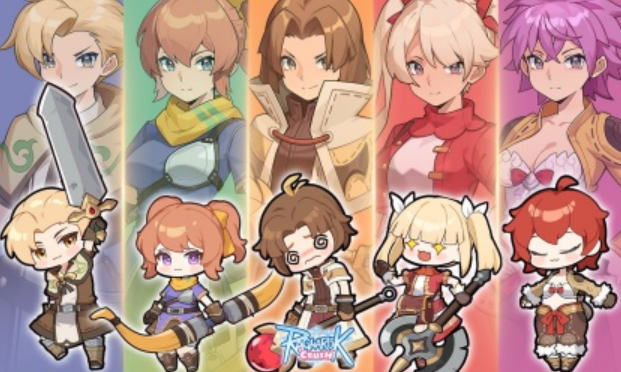
I. Ragnarok Crush Tier List Overview
A good ragnarok crush tier list should measure how much real value a companion gives you during actual gameplay, not just how cool the portrait looks or how rare the pull is. In Ragnarok Crush, a unit can look strong on paper but still feel clunky if it needs too much setup, attacks too slowly, fails to clear waves, or does not help when boss pressure starts building. The best companions are the ones that stay useful across many situations: normal chapter stages, elite waves, boss fights, tower defense-style survival, and board-heavy merge moments.
The rankings also change depending on the game mode. A companion that melts basic mobs may not be the best boss killer. A stall unit may look boring in early chapters but become important when enemies start pushing too hard. A support companion might not top the damage chart, but if it boosts your whole board or helps other units trigger faster, it can be more valuable than another selfish DPS. This is why I do not recommend reading any tier list as a strict law. Treat it like a shortcut, not a prison.
What makes a unit meta-relevant is consistency. The best companions either deal strong damage without needing perfect board luck, improve the team around them, control enemy flow, or survive long enough to keep your run stable. In a match-merge game, board control matters a lot. If a companion benefits from 4-match and 5-match setups, scales well with merges, or turns the Crush mechanic into a bigger payoff, that unit naturally rises in value.
For this article, I am using four practical tiers: SS, S, A, and B. SS-tier companions are the ones I would build without much hesitation. S-tier units are very strong and can carry a lot of accounts, especially if you pull duplicates. A-tier units are useful but more dependent on your team, stage, or investment. B-tier units are not always useless, but they are usually temporary picks, niche tools, or budget options you should replace when better companions appear.
II. Ranking Criteria
The first ranking factor is damage output and scaling. In Ragnarok Crush, raw damage matters because many stages eventually become a race. If enemies pile up too quickly or bosses survive too long, your board advantage disappears. Companions with fast attacks, strong area coverage, reliable burst, or scaling that improves heavily through upgrades are naturally valuable. This is why units like Mistress and Ninja often rank so high. They do not only hit hard; they also fit the pace of the game.
The second factor is utility. Crowd control, buffs, debuffs, attack speed boosts, stuns, slows, and team support can completely change how a run feels. A pure DPS unit may carry easy content, but once stages get harder, utility starts to matter more. If a companion buys your board extra time, helps other allies attack faster, or improves your whole team’s output, that companion can be worth investing in even when its personal damage is not the highest.
The third factor is survivability. Some teams fail not because they lack damage, but because their frontline collapses. A good tank or stall unit lets your damage dealers keep working. In chapter progression and survival-style stages, this can be the difference between clearing with three stars and getting overwhelmed right before the end. That is why frontliners like Lord Knight, Maya, or tanky boss-style companions can still be important even when they are not the flashiest units.
The fourth factor is flexibility. A companion that fits many teams is safer to build than a companion that only works in one exact setup. For free-to-play and low-spend players, flexibility is huge because upgrade materials are limited. If you invest in a unit that only works with a rare combo you do not have, you may slow your account down. The best early investments are companions that perform well even when your roster is still incomplete.
III. Full Ragnarok Crush Tier List
Here is my practical ragnarok crush tier list for general progression. This is built around overall usefulness, chapter pushing, boss value, beginner friendliness, and long-term investment safety.
| Tier | Companions | General Value |
|---|---|---|
| SS Tier | Mistress, Ninja, Whitesmith, Eddga | Best all-around units, strong scaling, high carry value |
| S Tier | Orc Hero, Lord Knight, Assassin Cross, Maya, Garm, High Wizard | Strong meta picks, reliable with investment, good in many teams |
| A Tier | Sniper, Drake, Hunter, Priest, Wizard, Knight | Solid units with situational strengths or lower scaling |
| B Tier | Basic melee fillers, low-impact ranged units, early support substitutes | Usable early, but usually replaced later |
Do not panic if your account does not have SS-tier companions yet. Ragnarok Crush is still a progression game, and a well-upgraded S-tier or A-tier companion can outperform an underbuilt SS-tier unit for a while. The tier list mainly tells you where to put your long-term resources. If you pull Mistress, Ninja, Whitesmith, or Eddga, they are usually worth serious investment. If you are using Orc Hero, Lord Knight, Assassin Cross, Maya, Garm, or High Wizard, you are still in a good place.
The main thing I would avoid is dumping rare materials into too many B-tier or temporary units. Early on, every companion feels useful because your stages are easy. Later, the game starts punishing weak scaling. If a unit does not help with damage, control, survival, or synergy, it becomes dead weight. That does not mean you should never use B-tier companions. It just means you should not treat them like long-term carries unless you have no other option.
IV. SS-Tier Companions
SS-tier companions are the units I would happily build on most accounts. They are not just strong in one stage or one setup. They bring enough value to justify long-term materials, duplicates, and team planning.
Mistress is one of the safest top-tier picks because she fits the rhythm of Ragnarok Crush extremely well. Fast pressure, strong trigger value, and reliable damage make her feel good in both wave clearing and longer fights. The reason players like Mistress so much is simple: she does not need a perfect board to be useful. When the board is moving fast and you are trying to keep enemies under control, a companion that constantly contributes damage is a huge advantage.
Ninja is another top-tier monster because flexibility is king in this type of game. Ninja can slot into many team styles without demanding that you rebuild everything around one gimmick. If you are not sure what your future team will look like, Ninja is one of the safer companions to invest in. Good damage, good tempo, and strong compatibility make Ninja a high-value carry for chapter pushing and general progression.
Whitesmith earns SS-tier value because support and scaling matter more than beginners realize. A companion that improves your team’s overall performance can be better than another selfish attacker. Whitesmith is especially attractive when you already have one or two strong damage dealers and want to make the whole setup more stable. In other words, Whitesmith is not just a unit; it is a force multiplier.
Eddga is the kind of companion that feels especially good when enemy pressure rises. Strong front-facing impact, durable presence, and boss-style pressure make Eddga a great pick for players who need a stronger anchor. If your team keeps collapsing before your backline can do its job, Eddga can help stabilize the run. I would not call Eddga as universally smooth as Mistress or Ninja, but in the right setup, it absolutely deserves top-tier respect.
V. S-Tier Companions
S-tier companions are not weak. In fact, many players will spend most of the game relying on S-tier units because they are easier to build, more available, or better suited to their current roster. The gap between SS and S is often about consistency and ceiling, not basic usefulness.
Orc Hero is a very strong pick when you want reliable damage and scaling. He may not always feel as brainless as the best SS-tier options, but when supported properly, he can hit hard and carry plenty of stages. If you get attack speed support or strong merge opportunities, Orc Hero becomes much more threatening. I like him as a practical carry for players who missed the absolute top-tier pulls.
Lord Knight is one of those companions that grows on you. At first, you might look at Lord Knight and think, “Okay, tanky melee unit, nothing special.” But once stages start demanding more frontline value, Lord Knight becomes much easier to appreciate. A good frontline gives your damage dealers time to work, and that matters a lot in longer fights. If your account lacks durability, Lord Knight can be a very smart investment.
Assassin Cross is a strong offensive pick with good tempo and aggressive value. This type of unit is great when you want to push faster and keep pressure on enemies before they stack up. Assassin Cross may require more support or careful team building than Ninja, but the performance is still strong enough to justify S-tier placement.
Maya is a defensive or control-flavored unit that can shine in stages where survival matters more than pure burst. I would not always build around Maya as the main carry, but I do respect the value. Some players underrate these kinds of companions because they do not instantly delete enemies. Then they hit a stage where their squishy team gets run over, and suddenly Maya makes sense.
Garm is another strong pick that can perform well when you need pressure, control, or sturdy presence depending on how your team is built. I see Garm as a strong flexible unit, but not always the first companion I would max unless my roster already supports that playstyle. Still, Garm is good enough to stay in the S-tier conversation.
High Wizard is tricky because rankings vary. Some players rate High Wizard very highly because AoE magic pressure can feel amazing in wave-heavy content. Others drop High Wizard lower because scaling and consistency can depend on investment and board situation. My take is simple: High Wizard is S-tier when you need AoE and have the resources to support the unit, but can feel closer to A-tier if underbuilt.
VI. A-Tier Companions
A-tier companions are not bad. They are the “good but not always best” group. These units can clear content, support specific team styles, and help beginners progress, but they usually fall short of top-tier picks because of scaling, flexibility, survivability, or late-game impact.
Sniper is a good example. Ranged damage is always useful, especially for players who want safer backline pressure. Sniper can help in early and mid-game stages, and the unit feels straightforward to use. The issue is that Sniper may not bring enough extra utility compared with higher-tier damage dealers. If your only strong damage option is Sniper, build it for now. But if you later pull Mistress, Ninja, or Orc Hero, Sniper may move to a secondary role.
Drake can be useful in certain teams, especially if you need a heavier presence or specific type of pressure. The problem is consistency. Some companions feel great only when the stage matches their strengths. That is fine for a situational pick, but not ideal for a universal investment target. I would use Drake if your roster needs it, but I would be careful about overcommitting rare resources too early.
Hunter and Wizard are decent progression units for early and mid-game. They can fill damage roles and help you move through chapters while your roster is still forming. However, once you start comparing them with higher-tier companions, the difference becomes clearer. They can work, but they are not usually the units that define the meta.
Priest is interesting because support value is always tempting. In some setups, a support-style unit can make your team smoother. But if the support is too passive or does not solve your actual problem, it can feel like a wasted slot. Use Priest-style support when your team already has enough damage and needs sustain or stability. Do not use it as an excuse to ignore your lack of carry power.
Knight can act as an early frontline, but later you usually want stronger tank or stall value. If you do not have Lord Knight, Maya, Eddga, or another stronger frontliner, Knight can hold the line for a while. Just be ready to replace it when your pulls improve.
VII. B-Tier Companions
B-tier companions are mostly budget tools, early-game fillers, or niche units. They are not worthless. In fact, every player uses lower-tier units at some point because nobody starts with a perfect roster. The problem is investment priority. If a companion does not scale well, lacks utility, or gets replaced quickly, you do not want to pour your best materials into it.
The best way to use B-tier companions is as temporary role fillers. Need a frontliner? Use the best one you have until Lord Knight, Maya, or Eddga arrives. Need a ranged attacker? Use a basic ranged unit until Sniper, High Wizard, Mistress, or Ninja takes over. Need support? Use what you have, but do not assume every support is worth maxing.
You should keep B-tier companions if they help you clear current content, complete formation requirements, or provide a missing role. You should replace them when they start falling behind, when their damage becomes irrelevant, or when they no longer contribute meaningful control or survivability. The moment a B-tier unit starts eating materials that could go to your future core team, it becomes a problem.
For low-tier investment, my rule is simple: level enough to progress, but do not hard commit. Avoid spending rare promotion materials, duplicate-focused upgrades, or premium resources unless the game forces you to. Your account will thank you later.
VIII. Best Companions by Role
For damage dealers, my top choices are Mistress, Ninja, Orc Hero, Assassin Cross, and High Wizard. Mistress and Ninja are the most flexible damage-focused options, while Orc Hero and Assassin Cross can perform very well with support. High Wizard is best when AoE pressure matters and you have enough investment to make the damage feel real.
For tanks and stall units, I like Eddga, Lord Knight, Maya, and sometimes Garm, depending on your setup. These units help your team survive longer and prevent enemies from rolling over your board. Do not underestimate tanks in Ragnarok Crush. A dead DPS does no damage, and a collapsed formation usually means the run is already over.
For supports and buffers, Whitesmith stands out because team-wide value is extremely important. Any companion that improves attack speed, boosts allies, or helps your main damage dealers perform better deserves attention. Support units are not always flashy, but they become more valuable as your roster improves. A weak account needs carries first. A stronger account starts needing supports to push the ceiling higher.
For beginner-friendly picks, I would focus on units that are easy to use and stay useful later. Ninja, Mistress, Orc Hero, Lord Knight, Sniper, and High Wizard are all understandable options depending on what you pull. If you have no SS-tier unit, do not restart your whole account emotionally. Build the best flexible unit you have and keep progressing.
IX. Best Companions by Game Mode
For PvE and chapter progression, the best companions are the ones that clear waves efficiently while staying useful against stronger enemies. Mistress, Ninja, Whitesmith, Orc Hero, and High Wizard are very good here. Chapter stages often test whether your team can handle both normal mobs and sudden pressure spikes, so balanced damage and support matter.
For boss and elite fights, single-target pressure, scaling, and survivability become more important. Ninja, Orc Hero, Assassin Cross, Eddga, and Lord Knight are strong picks. If your boss fights are taking too long, you need better damage scaling. If you are dying before the boss goes down, you need a stronger frontline or more support.
For tower defense and survival-style stages, control and stability matter more than pure burst. Eddga, Maya, Lord Knight, Garm, and Whitesmith gain extra value here. These modes punish greedy teams that only stack damage and ignore enemy flow. If enemies keep leaking through or overwhelming your setup, add more stall or control.
For farming and repeat content, speed becomes important. You want companions that clear quickly and do not require too much manual correction. Mistress, Ninja, Orc Hero, and High Wizard are strong farming choices because they help finish stages faster when properly built.
X. Best Team Compositions
A balanced beginner team should include one main damage dealer, one secondary damage dealer, one frontliner, one support or control unit, and one flexible slot. For example, a beginner-friendly setup could look like Ninja + Sniper + Knight/Lord Knight + Priest/Whitesmith + Wizard/High Wizard. This type of team gives you enough damage to clear waves, enough frontline to survive, and enough flexibility to adjust.
A stronger balanced team could be Mistress + Ninja + Whitesmith + Lord Knight + High Wizard. This setup gives you fast damage, flexible carry power, team support, frontline stability, and AoE coverage. It is the kind of team that can handle a lot of general progression without feeling too one-dimensional.
A burst-focused damage team could be Mistress + Ninja + Orc Hero + Assassin Cross + Whitesmith. This team is aggressive and wants to delete enemies before they become a problem. The downside is that if your frontline is too weak or your board goes badly, you may struggle in survival-heavy content. Use this kind of setup when your damage is strong enough to stay ahead of the stage.
A stall or control-based team could be Eddga + Lord Knight + Maya + Whitesmith + Ninja. This setup is less about instant deletion and more about staying alive, holding enemy pressure, and letting your carry finish the job. It is especially useful when you are stuck on stages where enemies hit too hard or pile up too quickly.
A synergy-based team depends heavily on your upgrades and available companions. The idea is to use one or two main carries, then build everything else around making those carries stronger. If your best unit is Ninja, support Ninja. If your best unit is Mistress, create a team that lets Mistress keep triggering value. If your best unit is Orc Hero, add attack speed support and frontline protection.
XI. Match-Merge Mechanics and Meta
The match-merge system is one of the main reasons the ragnarok crush tier list cannot be judged like a normal idle RPG tier list. You are not only selecting heroes and watching them fight. You are also making board decisions. The official game description emphasizes tactical merging and awakening-style growth, while beginner guides explain that matching tiles summons companions and higher matches can improve results.
A 3-match may be enough to summon or progress basic board actions, but 4-match and 5-match setups are where the game starts rewarding smarter play. Bigger matches can create stronger momentum, better companion value, and more powerful combat flow. That means companions that benefit from frequent triggers, faster attacks, or stronger merge outcomes naturally become more valuable.
The Crush mechanic affects rankings because it changes how often units can create meaningful impact. A slow unit that needs perfect setup may look good in a spreadsheet but feel awkward in real gameplay. A fast unit that constantly benefits from board movement may outperform it. This is why Mistress and Ninja are so highly rated by many players. Their value lines up with how the game actually plays.
Units that benefit most from combo play are usually fast attackers, scaling carries, and team buffers. If your board produces frequent merge opportunities, companions that trigger often or boost others can snowball. If your board is messy, flexible units save you. That is why flexibility is one of the most important ranking factors in this article.
XII. Best Starter Picks
For starters, I would focus on companions that are strong without needing a perfect team. Ninja is one of the safest early pulls because of flexibility. Mistress is amazing if you get her early because she can carry many stages. Orc Hero is a strong fallback if you need a reliable damage dealer. Lord Knight is great if your team keeps dying. High Wizard or Sniper can help if you need ranged damage or AoE pressure.
Safe units to build first are the ones that stay useful after the early game. This is why I prefer Ninja, Mistress, Whitesmith, Lord Knight, and Orc Hero over random low-tier fillers. Even if you cannot max them immediately, putting materials into these companions usually feels safer than upgrading a unit you know you will replace soon.
Beginner-friendly options should also be easy to understand. A unit with complicated synergy may be powerful later but frustrating early. New players need units that work even when their board decisions are not perfect. That is why straightforward damage dealers and sturdy frontliners are usually better first investments than niche support units.
If you are completely new and your roster looks bad, do not freeze. Build one good damage dealer, one frontline, and one support or AoE unit. That basic structure can carry you through a lot of content while you wait for better summons.
XIII. Summon and Investment Priorities
Your top summon targets should be Mistress, Ninja, Whitesmith, and Eddga. These companions offer the best long-term value in most situations. If a banner or event increases your chance to get one of them, it is usually worth paying attention to.
Your next priority group should be Orc Hero, Lord Knight, Assassin Cross, Maya, Garm, and High Wizard. These are strong enough to build, especially if you pull duplicates. In many cases, a duplicated and upgraded S-tier unit will outperform a single-copy SS-tier unit for a while. Do not ignore upgrade reality.
The companions that deserve upgrade materials first are the ones you actively use in your main team and expect to keep. Do not upgrade ten units evenly. That is one of the fastest ways to weaken your account. A focused team with two strong carries and proper support usually performs better than a scattered roster of half-built companions.
Bench companions that have poor scaling, low utility, or no clear role. Merge or replace temporary units when better options appear. If the game gives refund or reset options, use them carefully, but do not rely on them as an excuse to invest randomly. Planning still matters.
XIV. Class Tier Insights
Your class choice affects how your companion team feels. Ragnarok Crush includes classic Ragnarok-style classes such as Swordsman, Mage, Thief, Archer, and more, according to official game descriptions and class posts. Each class has a different rhythm, and that changes what you want from companions.
Archer is usually a comfortable beginner path because ranged damage feels safe and straightforward. If you play Archer, you can often lean into damage companions and use your range advantage to keep pressure on enemies. Companions like Ninja, Mistress, Sniper, High Wizard, and Whitesmith can fit nicely depending on your pulls.
Mage tends to care more about burst, AoE, and timing. If you like clearing waves with magic pressure, Mage-style teams work well with AoE companions and supports. High Wizard naturally feels thematically and mechanically comfortable here, while Whitesmith-style support can help your damage flow.
Swordsman wants stability and frontline value. If you play a Swordsman-style path, you may already have some durability, so you can choose whether to double down with tanks or add more backline damage. Lord Knight, Eddga, Maya, and strong carries all make sense depending on your needs.
Thief paths usually reward speed, burst, and aggressive play. If you like fast pressure, companions like Ninja and Assassin Cross fit the vibe well. The risk is that aggressive teams can be fragile, so do not ignore frontline or support needs.
The most important class advice is this: do not build companions only because they match your class theme. Build them because they solve your team’s problem. If your Mage team keeps dying, you need a tank. If your Swordsman team lacks damage, you need a carry. If your Archer team clears slowly, you need better scaling or support.
XV. Progression Tier Advice
In the early game, your priority should be simple: build one main carry and keep your team functional. You do not need a perfect tier list team yet. You need enough damage, enough survival, and enough board value to keep clearing chapters. A-tier companions are perfectly fine here if they fill your missing roles.
In the mid-game, you should start replacing temporary units. This is where the difference between “usable” and “worth building” becomes clearer. If your Sniper, Wizard, or Knight is still doing work, keep using them, but start preparing to transition into stronger S-tier or SS-tier companions. This is also where supports like Whitesmith become more valuable because your main carries are stronger.
In the late game, scaling and synergy matter more than early convenience. The units that survive into late-game teams are the ones with strong scaling, flexible value, or irreplaceable utility. Mistress, Ninja, Whitesmith, Eddga, Lord Knight, Orc Hero, and Assassin Cross are the kinds of companions I would rather see in a serious endgame roster.
Endgame companion value is also tied to duplicates and upgrades. A tier list can tell you who is good, but your account tells you who is realistic. If you have several copies of an S-tier unit and only one copy of an SS-tier unit, the S-tier may be better for now. Always compare theory with your actual roster.
XVI. Tier List Changes After Updates
Tier lists change after updates because balance patches can adjust damage, cooldowns, scaling, support effects, enemy behavior, stage design, and new companion releases. A unit that feels average today can become strong after a buff. A unit that dominates today can fall if the game adds enemies that counter its style.
Newly improved units usually rise when they gain better scaling, faster triggers, stronger utility, or improved survivability. In match-merge games, even a small speed or activation change can matter a lot because the board moves quickly. If a companion starts triggering more often or supporting the team more reliably, its ranking can jump.
Units fall out of the meta when they stop solving current content. For example, a pure wave clearer may drop if bosses become harder. A single-target killer may drop if survival stages become more common. A fragile DPS may drop if enemy pressure increases. This is why flexible units tend to age better than narrow ones.
I recommend updating your personal ragnarok crush tier list after every major patch, new companion release, anniversary event, or class balance adjustment. You do not need to rebuild your account every week, but you should stay aware of changes before spending rare materials.
XVII. Common Team-Building Mistakes
The first big mistake is overinvesting in low-impact units. Early stages make almost everyone look useful, so beginners often upgrade whatever they have. Later, they realize their materials are stuck in companions that do not scale. To avoid this, upgrade temporary units only as much as needed, then save serious investment for better picks.
The second mistake is ignoring synergy. You cannot just throw five random high-rarity companions together and expect magic. A good team needs roles: damage, frontline, support, control, and board value. If your team has five damage dealers and no survival, you may lose. If your team has too much defense and no damage, you may time out or get overwhelmed.
The third mistake is building around rarity instead of performance. Rarity matters, but it is not everything. A lower-rarity or easier-to-upgrade unit can outperform a rare unit with no synergy or no duplicates. Look at what the companion actually does for your team.
The fourth mistake is refusing to replace old favorites. I get it. Sometimes a companion carried your early game, and you feel attached. But progression games require upgrades. If a unit starts falling behind and a better option appears, move on. You can still appreciate the old carry, but your main team needs results.
The fifth mistake is copying tier lists without checking your own account. A tier list is a guide, not your inventory. If you do not own the top units, build the best available substitutes. If your S-tier unit has more upgrades than your SS-tier unit, use the stronger one for now. Smart players adapt.
XVIII. FAQ About the Ragnarok Crush Tier List
Which companion is best overall?
For general use, I would pick Mistress or Ninja as the safest overall answers. Mistress has excellent tempo and pressure, while Ninja is extremely flexible and easy to fit into many teams. If you ask me which one I would be happiest to pull early, I would say either one is a huge win.
Is Whitesmith really SS-tier if it is more support-focused?
Yes, because support that improves the whole team can be more valuable than another damage dealer. Once your roster has strong carries, a unit like Whitesmith can raise your total team performance.
Should beginners follow the same rankings as late-game players?
Not completely. Beginners should care more about easy value and role coverage. Late-game players care more about scaling, synergy, and optimized teams. A beginner can use A-tier units comfortably, while late-game players should slowly transition toward SS and S-tier cores.
Is High Wizard top-tier or not?
High Wizard depends on content and investment. In AoE-heavy stages, it can feel excellent. In content where single-target pressure or durability matters more, it may feel less dominant. I place it in S-tier overall, but some accounts may treat it like high A-tier or low SS-tier depending on upgrades.
Should I reroll for SS-tier companions?
If you are very early and enjoy rerolling, aiming for Mistress, Ninja, Whitesmith, or Eddga is reasonable. But if you already have a decent S-tier start, you do not have to restart forever. Progression and duplicates matter too.
How often should this tier list be updated?
Update it after major patches, new companion releases, class changes, or major event updates. In games like Ragnarok Crush, the meta can shift when one new companion changes team synergy.
Conclusion
A useful ragnarok crush tier list should help you make better decisions, not make the game feel like homework. The simple version is this: Mistress, Ninja, Whitesmith, and Eddga are the safest high-priority companions to build if you pull them. Orc Hero, Lord Knight, Assassin Cross, Maya, Garm, and High Wizard are strong S-tier options that can carry a lot of accounts with proper investment. Sniper, Drake, Hunter, Priest, Wizard, and Knight can help you progress, but they are more situational and should not always receive your rarest materials.
The real trick is not just pulling strong companions. It is knowing how to use them. Ragnarok Crush rewards players who understand board flow, merge timing, role balance, and team synergy. A top-tier companion thrown into a messy team can underperform. A slightly lower-tier companion placed in the right setup can carry harder than expected. That is why you should always ask, “What problem does this unit solve for my team?” before investing.
For beginners, start with one reliable carry, one frontline, and one support or AoE option. For mid-game players, begin replacing temporary units with stronger long-term picks. For late-game players, focus on synergy, duplicates, and companions that scale well into harder modes. Do not build around rarity alone, do not spread materials too thin, and do not ignore utility just because damage numbers look more exciting.
At the end of the day, the best team is the one that clears your current wall while still preparing your account for the next one. Use this tier list as your roadmap, adjust it based on your roster, and keep an eye on updates. The meta will move, new companions will arrive, and rankings will shift, but strong fundamentals—damage, utility, survivability, flexibility, and synergy—will always matter.