Sonic Rumble: The Player’s “How to Stop Getting Bonked Off the Map” Guide (Modes, Characters, Shortcuts, Ranked, Settings, F2P, and Fixes)
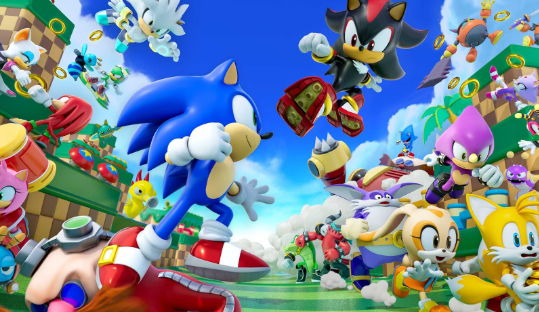
Sonic Rumble is basically what happens when someone looks at the Sonic cast and says, “Okay, but what if we threw them into a chaotic 32-player party arena and let everyone body-check each other for rings?” And honestly? That pitch works. It’s fast, noisy, sometimes unfair in the funniest way, and it has that classic “one more match” energy because rounds are short and the comeback potential is real. SEGA describes it as a multiplayer action/party game for up to 32 players, and that’s not marketing fluff—you genuinely get these messy lobbies where the screen is full of ramps, hazards, flying bodies, and last-second steals.
I. Introduction to Sonic Rumble
A. What is Sonic Rumble and what genre does it belong to?
If you had to explain Sonic Rumble in one sentence to a friend, it’s: a free-to-play party royale where you race, survive, and scrap in obstacle-filled arenas with a giant lobby size. Steam literally calls it an “ultimate arcade royale” with up to 32 players, and that’s the vibe—more party chaos than “serious esport,” but still competitive enough that good players consistently place.
It’s also very “Sonic-but-toyified.” The whole theme leans into Dr. Eggman’s toy world aesthetic, and you’re basically playing as cute toy versions of characters. It’s not a mainline Sonic platformer experience; it’s closer to the Fall Guys family tree, but with Sonic-style speed bursts, bounces, and hazards.
B. Core gameplay loop: race, bump, and survive in 32-player arenas
The loop is simple but addicting:
Queue up →
Drop into a short round (run/race, survival, ring battle, etc.) →
Scramble for position/rings while dodging hazards →
Bump or get bumped →
Qualify or get eliminated →
Repeat until you’re the last one standing or the match ends.
The big “party royale” hook is that your best run can still get ruined by someone body-checking you at the worst possible moment, which sounds annoying (and sometimes it is), but it’s also what creates the highlight-reel chaos that makes the game entertaining to watch and play.
C. Why Sonic Rumble stands out among party and battle royale-style games
Three things make it feel different from generic party royales:
Sonic movement flavor: even if it’s simplified, the dash/jump rhythm feels faster than the average “waddly bean game.”
Ring economy pressure: rings matter constantly—your decisions aren’t just “don’t fall,” but also “how do I keep/steal/secure rings under pressure.”
Cross-platform reach: it’s positioned as free-to-play across mobile and PC platforms, which keeps matchmaking lively and makes it easier to play with friends.
II. How to Download and Set Up Sonic Rumble
A. Sonic Rumble on Android and iOS (Google Play, Apple App Store)
On mobile, you’re basically doing the standard install:
Android: download via Google Play.
iOS: download via the Apple App Store.
If you can’t see it in your store, it’s usually a region listing issue or device compatibility filter. The “safe and sane” route is always the official store listing because updates are smoother and you’re not risking weird account problems.
B. Downloading and installing Sonic Rumble on PC and Windows
On PC, you’ve got two practical options depending on how you like to play:
Steam version (straight-up native PC install).
Google Play Games on PC (SEGA has promoted this route too, including a bonus item promo at one point).
If you’re competitive, the biggest PC advantage is usually input consistency (especially if you’re using a controller or keyboard/mouse mapping) and stable performance—less thermal throttling than some phones.
C. Creating an account, linking platforms, and managing data
This part is boring until it saves you.
Player rule #1: link your account early. Party games are the kind of thing you reinstall when you’re annoyed or switching devices, and you don’t want to lose your cosmetics/progression just because you played as a guest once and forgot. Steam also emphasizes cross-platform positioning, so account linking and data handling matters if you bounce between phone and PC.
III. Basic Controls, Movement, and Mechanics
A. Core controls: movement, dash, jump, and special skills
At a basic level, you’re living on four actions:
Move (obviously)
Dash/boost (your speed and reposition tool)
Jump (platforming, hazard dodge, shortcut access)
Special / skill (varies by character/loadout, depending on what you’ve unlocked)
The skill ceiling comes from doing these under stress while other players are trying to physically ruin your day.
A really important habit: don’t dash on cooldown just because you can. In Sonic Rumble, dash is often your “save” button—your escape from a bad bump line, your way to recover from a stumble, or your last-second push into a ring cluster.
B. Platforming and navigating obstacle-heavy stages
Most stages are obstacle courses disguised as ring arenas:
ramps that fling you forward (or fling you into disaster)
rotating hazards that punish panic movement
chokepoints where 10 players try to fit into one safe line
The biggest movement skill you can learn is choosing your lane early. If you enter a choke late, you’re basically volunteering to get bumped off the optimal route.
My mental checklist when I see a hazard-heavy section:
Where is the “safe lane”?
Where is the “fast lane”?
Where is the “troll lane” (the one where people camp to bump you)?
Then I pick based on match state—if I’m behind, I take risk; if I’m ahead, I take safety.
C. Bumping, knocking competitors, and comeback mechanics
Bumping is the core social mechanic of the game: you can play perfectly and still get launched if you let someone line you up.
Three bump rules that improve your results immediately:
Never stand still at edges
Edges are basically “free elimination zones.” Keep a slight diagonal movement so bumps don’t push you straight out.Use angles, not force
You don’t have to ram someone head-on. Side angles and corner bumps are more reliable because they reduce the chance you bounce off and lose speed.Don’t revenge bump blindly
The “I’m going to get them back” mindset gets you eliminated. It’s almost always better to re-route, secure rings, and bump when it benefits your position.
Comeback mechanics matter because the game isn’t always “first mistake loses.” You can recover if you:
keep dash for a recovery moment,
route into ring clusters efficiently,
and avoid tilt decisions.
IV. Game Modes Explained
A. Main game mode: large-scale ring-collecting free-for-all
The most “Sonic Rumble” feeling mode is the one where you’re basically in a big ring-collecting brawl. The game’s official descriptions highlight a mix of obstacle-course racing, survival arenas, and party action across short matches.
In ring-heavy free-for-all rounds, your priorities shift depending on time:
Early: grab easy rings, avoid fights you don’t need
Mid: contest ring clusters, deny opponents if you can do it safely
Late: protect your lead or full-send aggression if you’re behind
If you’re new, here’s the trap: chasing one opponent around like it’s a vendetta. Rings are the win condition more often than “I bumped someone once.”
B. Squad mode and 4-player team battles
Squad mode turns the chaos into something slightly more structured: your decisions matter because you’re not just saving yourself—you’re contributing to a team result.
Squad fundamentals:
spread out to cover more ring routes
don’t all take the same risky shortcut (one mistake can wipe your team’s momentum)
peel for a teammate if the mode rewards survivability and qualification thresholds
The best squad players aren’t always the best mechanical players—they’re the ones who play like a map: knowing where points/rings are likely to be, and where enemies will contest.
C. Run mode, ring-battle variants, and other party modes
The App Store description calls out multiple gameplay styles including Run, Survival, and Ring Battle, plus “lots more,” with short matches designed for quick sessions.
In “Run” style rounds, it’s more like classic obstacle racing:
route knowledge matters
timing jumps matters
avoiding bump lines matters even more because speed = placement
In “Survival” style rounds:
positioning is king
being near the middle of safe zones is usually smarter than hugging edges
patience beats ego
V. Ranked Mode and Competitive Play
A. How Sonic Rumble ranked works and rank tiers
Ranked in party games is always funny because it’s “competitive chaos.” You’re trying to be consistent in a game where humans are unpredictable.
I’m going to frame ranked like a player:
Ranked rewards consistency more than highlight plays.
If you can reliably qualify and avoid dumb eliminations, you climb.
If you rely on risky clips every round, you’ll spike up and down.
(If your version has specific tier names and seasonal reset rules, treat those as “live systems” that shift—always check the in-client ranked info for current season details.)
B. Best characters and strategies for climbing ranked
In ranked, I value characters that are:
consistent at movement,
good at recovery after bumps,
and not overly dependent on a perfect line.
Strategy-wise:
play safe early, aggressive late (unless you’re behind)
learn 2–3 maps deeply rather than “kinda knowing all of them”
don’t tilt-chase opponents
C. Ranked-specific settings, controls, and playstyle tips
Ranked makes small control issues feel huge. If your dash timing feels inconsistent or your camera is fighting you, you’ll throw rounds you otherwise would’ve qualified.
Ranked settings mindset:
prioritize responsiveness over visuals
lower effects if clutter hides hazards
keep FPS stable (stutter in a jump section is basically a coin flip)
VI. Best Characters and Abilities
A. Character list overview: Sonic, Knuckles, Shadow, and more
The game is built around the Sonic cast—Sonic is obviously the face, and you’ll see staples like Knuckles and Shadow in the mix depending on your unlocks and cosmetics.
What matters more than “who is coolest” is:
how their movement/skill feels in your hands
how reliable they are in hazard maps
how much they forgive mistakes
B. Best general-purpose characters for beginners
Beginner-friendly picks tend to have:
straightforward mobility
clean, predictable skill use
good recovery tools
If you’re new, pick a character that helps you qualify consistently, not one that requires you to outplay everyone to get value.
My beginner advice:
run the same character for 20–30 matches
learn your routes and dash timing
then experiment
Switching characters constantly makes it hard to build muscle memory.
C. Best niche picks for advanced players and specific stages
Once you understand maps, niche picks become useful:
characters/skills that excel in ring-battle zones
characters that bully chokepoints
builds that sacrifice safety for speed if you can execute
Advanced play is mostly about using your skill at the right time—not early, not randomly, but as a tool to win a specific interaction (escape a bump line, secure a ring cluster, deny a choke).
VII. Stages, Maps, and Shortcuts
A. Major Sonic Rumble stages and their layouts
Stages are essentially:
obstacle courses (Run)
survival arenas (Survival)
ring-focused brawl maps (Ring Battle)
The game’s official listings highlight “a vast array of stages with different themes and ways to play,” which is a fancy way of saying: you will absolutely get maps where your usual strategy doesn’t work.
B. Best shortcuts, jumps, and clip points to shave time
Shortcut culture is real in games like this, but here’s the honest truth:
Most “clip points” are either patched, inconsistent, or risky.
The best shortcuts are usually the consistent ones: safe jump skips, ramp lines, and hazard timing routes that reduce travel time without gambling your whole run.
My shortcut rule:
If a shortcut fails more than 1 out of 10 tries, it’s not a ranked shortcut—it’s a content-creator shortcut.
C. Safe paths versus risk-reward routes in key arenas
You should always have two routes in your head:
safe route (qualify route)
risk route (win route)
When to choose which:
If you’re ahead → safe route, avoid bump zones
If you’re behind → risk route, chase ring clusters, take faster lines
If it’s late game → play positionally; ring lead protection matters more than “being flashy”
VIII. Tips, Tricks, and Advanced Strategies
A. Advanced positioning, spacing, and dodging
Spacing matters way more than new players expect because bumps are physics-based chaos.
Positioning tips that win:
approach edges diagonally, not straight
avoid standing behind someone near a ramp (you’ll get bump launched)
don’t clump in a crowd unless you have to
Dodging in this game isn’t “press dodge.” It’s:
stepping out of a bump line
using dash to cut an angle
jumping at the right moment to avoid being shoved off path
B. Using the environment, ramps, and hazards to your advantage
Ramps are not just “go fast.” They’re also:
escape tools
bump amplifiers (you can knock someone into a bad landing)
position resets
Hazards are your best friend if you play smart:
bait opponents into hazard timings
don’t fight in safe zones—fight where the map can help you
C. Baiting opponents, managing ring-leads, and late-match aggression
Late match play is where players throw the hardest.
If you have a ring lead:
stop taking unnecessary fights
hug safer lanes
keep dash for emergencies
let other people grief each other
If you’re behind:
you must create chaos
contest ring clusters aggressively
bump leaders when it’s strategically valuable
The simplest late-game mistake is panicking and taking a 50/50 fight when you could have taken a 70/30 ring route.
IX. Settings, Controls, and Performance
A. Recommended control layout and sensitivity settings
Whether you’re on mobile or PC, your goal is:
reliable movement input
consistent camera control
dash and jump timing you can execute under stress
On mobile:
keep dash and jump where your thumbs can hit without stretching
avoid clutter that causes mis-taps
On PC:
use a controller if that feels natural for platforming
if using keyboard/mouse mapping, make dash/jump comfortable and consistent
B. Gyro and camera settings for better aim and navigation
If your version offers gyro or advanced camera options, treat it like this:
gyro can help with fine camera correction, but it can also make platforming feel wobbly
if you use it, keep it subtle; this isn’t a shooter
Camera tip:
keep your camera stable enough to read hazards early
but responsive enough to track crowded chokepoints
C. Performance-tuning tips for low-end and mid-range devices
If your device stutters, you will lose jumps you “should have hit.”
Best performance settings mindset:
lower effects to reduce clutter
reduce resolution/graphics presets if available
prioritize stable FPS over max visuals
Steam and mobile listings both emphasize short, fast matches, so it’s worth optimizing so each match feels smooth rather than “I hope my phone doesn’t lag in the final.”
X. Events, Rewards, and Progression
A. Daily login rewards and event-specific payouts
Live-service party games live on:
daily rewards
event tracks
limited-time cosmetics
If you want to progress without spending much, you need consistency:
log in, claim, do a few matches, leave
That’s how you build a steady cosmetic/currency pipeline.
B. Ranked events, limited-time modes, and special rewards
Limited-time modes are usually where the “best value per minute” rewards show up, because devs want players to engage with the new thing.
If you’re optimizing:
prioritize limited modes when the reward track is generous
use ranked when you want long-term progression/status
C. How to maximize currency and cosmetic gains without heavy spending
My player method:
focus on completing event missions that align with normal play (don’t force weird tasks that make you lose)
avoid spending currency impulsively on cosmetics you won’t use
save for cosmetics tied to characters you actually enjoy
XI. Monetization and F2P Viability
A. In-app purchases, packs, and what they provide
Sonic Rumble is free-to-play on major platforms, and like most F2P party games, it monetizes through cosmetics and progression systems.
As a player, I judge monetization by one question:
does spending change gameplay power, or mostly appearance?
B. Is Sonic Rumble pay-to-win? Skill vs item balance
This is the spicy part. There was notable community criticism around monetization on Steam around launch, including complaints about expensive cosmetics and perceived advantages tied to paid content.
My grounded player take:
If all purchases are cosmetic, the game stays “skill wins.”
If paid items affect moves/advantages in match outcomes, perception of pay-to-win appears quickly in party royales because tiny advantages snowball into qualification.
So the practical advice is:
play a week as pure F2P
see if your performance feels limited by skill or by access
then decide whether spending is worth it for your enjoyment
C. Best value content and how to prioritize your spending
If you spend at all, my “don’t regret it later” priority order is:
anything that gives long-term value across seasons (passes, sustained reward tracks)
cosmetics you actually use constantly
avoid impulse buys that don’t improve your experience
XII. Community, Codes, and Creators
A. Sonic Rumble creator codes and bonus rewards
Sonic Rumble has an official gift code redemption page and also promotes community reward programs (including things like Twitch Drops on the official site).
If you see “creator code” style campaigns, treat them like:
a way to support creators
sometimes paired with small in-game bonuses
B. How to redeem and track creator-linked codes
The official redemption flow is important because it keeps you safe:
redeem via official channels/pages
avoid third-party sites asking for login credentials
SEGA’s redemption page explicitly notes that you need the app and an account to claim gifts, and that codes are one-use per user.
Also worth noting: SEGA has posted time-limited thank-you codes before (example: a code valid until a specific date).
C. Community guides, YouTube walkthroughs, and Reddit tips
Community content is useful for:
shortcut routes
stage-specific hazard timings
ranked meta discussion
But always sanity-check advice:
if a “shortcut” only works with perfect timing and fails half the time, it’s not a real climbing strat
if a creator claims “free unlimited rings,” close the tab and protect your account
XIII. Troubleshooting and Common Issues
A. Performance, lag, crashes, and net-play issues
If your matches feel laggy or you crash mid-round, do the boring checklist first:
lower graphics/effects
close background apps
reboot device
switch Wi-Fi bands (5GHz often helps if available)
avoid playing on a congested network during peak hours
On PC:
verify game files (Steam)
update GPU drivers
cap FPS to a stable target if uncapped FPS causes stutter
B. Account and data-transfer problems
This is why I kept yelling “link your account.”
If you lose access and you weren’t linked, you’re basically asking support to do magic.
Best practice:
link early
screenshot account identifiers
don’t juggle guest accounts across devices
C. Quick fixes and best practices for smoother matches
My player “smoothness stack”:
stable FPS settings
consistent control layout
predictable camera settings
don’t play overheated (phones throttle hard)
practice one map at a time (reduces panic movement)
XIV. Seasonal Updates and Future Roadmap
A. Major patches, new stages, and balance changes
Sonic Rumble is live-service. Expect:
new stages
new cosmetics
balance tuning
limited-time events
The official site has a news section where update posts and announcements appear.
B. How updates affect ranked meta and favorite builds
In party royales, “meta” often shifts when:
stage pool changes (route knowledge gets reset)
certain skills get tuned
reward structures change how people play (more aggression during certain events)
The best way to stay ahead is simple:
play a few casual rounds after a patch
learn the new hazard timings
then go ranked
C. Where to follow official Sonic Rumble news and dev letters
The safest place for official news is the official Sonic Rumble site (and official platform pages).
XV. FAQ and Player-Focused Tips
A. Frequently asked questions about modes, controls, and rewards
“Is Sonic Rumble actually 32 players?”
Yes—official listings repeatedly emphasize up to 32 players.
“Can I play on PC?”
Yes—Steam is supported, and SEGA has also promoted Windows play via Google Play Games on PC.
“Are codes real?”
Yes—there’s an official gift code redemption page, and SEGA has posted time-limited redeem codes in news posts before.
B. Quick tips for new players to improve within a few sessions
If you want fast improvement, do these five things:
Stop dashing on cooldown—save dash for recovery
Choose a lane early in chokepoints
Avoid edges unless you’re forced
Learn 2–3 maps deeply and master the safe route first
Play for qualification first, then play for wins
You’ll be shocked how quickly your “random eliminations” drop.
C. Long-term habits that separate casual from competitive Sonic Rumble players
Competitive habits look boring, but they win:
consistent settings (don’t change sensitivity daily)
map knowledge (know where ring clusters spawn and where bump traps happen)
emotional control (don’t chase revenge bumps)
adaptation (safe route when ahead, risk route when behind)
post-match reflection (why did I lose that round—route, timing, or tilt?)
Sonic Rumble is chaotic on the surface, but it rewards real skill underneath: route choice, spacing, dash discipline, hazard timing, and knowing when to fight versus when to just qualify and live. If you treat it like “random party nonsense,” you’ll have fun but plateau. If you treat it like a movement game with controlled aggression, you’ll start placing consistently—and ranked stops feeling like a coin flip.